
As gold exports surge, Uganda is taking steps to ensure more of the economic benefits stay within its borders through local refining and structured purchasing…reports Africa Newsdesk
Uganda’s central bank has taken a significant step to reshape the country’s gold sector, signing $160 million worth of contracts with local suppliers to begin purchasing domestically refined gold.
The initiative, led by the Bank of Uganda, involves agreements with EuroGold Refinery Ltd and Feldstein Trading Limited. The move marks a strategic shift aimed at retaining more value within Uganda’s gold industry while reducing reliance on exporting raw or semi-processed gold to international markets, according to Business Insider Africa reports.
Under the arrangement, the central bank will begin by purchasing an initial 100 kilograms of refined gold, valued at approximately $160 million (around Shs592 billion). Unlike previous models, the gold will be sourced from companies refining within Uganda, reinforcing a broader push toward domestic value addition and industrial development.
The programme forms part of Uganda’s Domestic Gold Purchase Programme, which is designed to enhance transparency across the sector, support local refiners, and formalise supply chains that have historically been fragmented. By prioritising locally refined gold, policymakers aim to ensure that a greater share of economic benefits remains within the national economy.
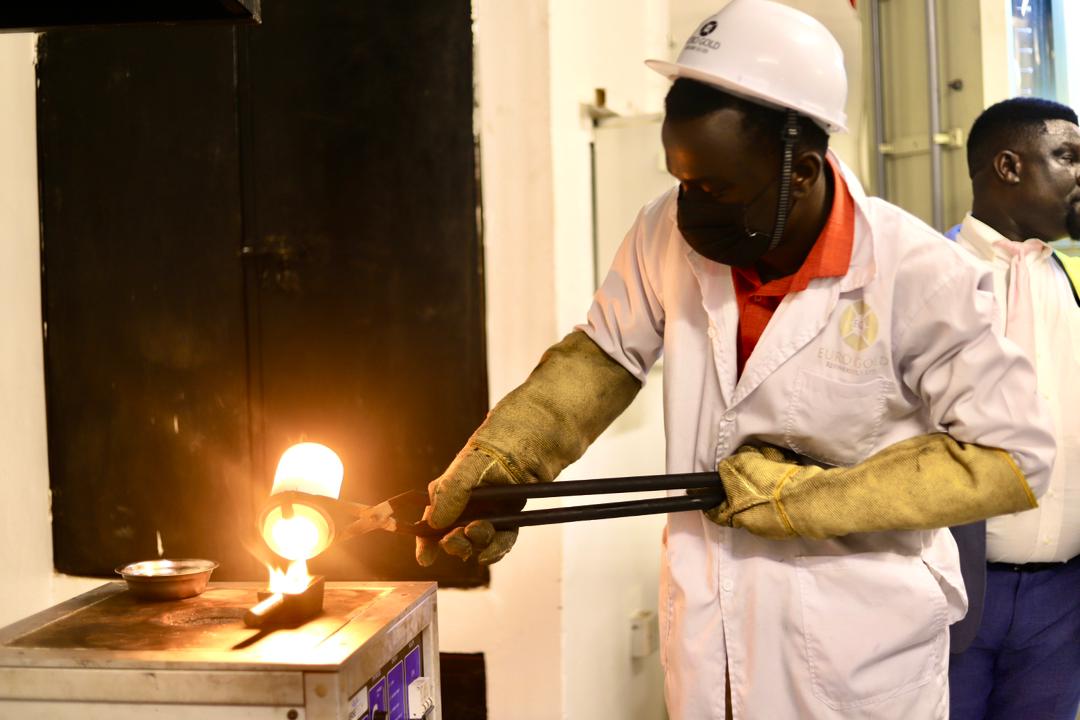
EuroGold, headquartered in Kampala, is widely regarded as the country’s first fully Ugandan-owned gold refinery. The company has played a key role in formalising the sector, particularly by working with artisanal and small-scale miners to refine gold to internationally recognised purity standards. Its inclusion in the programme underscores the government’s intent to strengthen local capacity and build a more integrated gold value chain.
Feldstein Trading Limited has also been brought into the framework to support supply consistency and maintain quality standards. Together, the two firms are expected to anchor a more reliable domestic gold ecosystem, reducing dependence on external intermediaries and improving traceability.
The central bank’s move comes at a time when Uganda’s gold sector is experiencing rapid growth. Gold has emerged as the country’s leading export commodity, accounting for approximately 37% of total export revenue in 2024 and generating around $3.4 billion. Early data for 2025 indicates continued momentum, with export earnings reaching $1.91 billion within the first five months alone.
This surge is being driven in part by strong global gold prices, which have hovered around $3,300 per ounce, as well as increasing production and improved supply chain coordination. The resulting inflows are supporting broader economic activity, including infrastructure development, job creation, and industrial expansion. Uganda’s GDP growth is projected to exceed 10% in the 2025/2026 fiscal year, with the gold sector playing a central role.

Historically, however, much of Uganda’s gold value has been lost through the export of unprocessed or minimally processed materials. By purchasing refined gold domestically, the Bank of Uganda aims to reverse this trend, ensuring that refining, trading, and associated economic activities are anchored within the country.
For investors, the shift signals a maturing market within Africa’s emerging gold belt. Uganda offers a combination of largely untapped reserves and a regulatory environment that is gradually strengthening, making it an increasingly attractive destination for mining and downstream processing investment.
More broadly, Uganda’s approach reflects a growing trend across Africa, where governments are seeking greater control over their natural resources by insisting on local processing and value addition. This strategy is intended to maximise employment, increase fiscal revenues, and build more resilient economies less dependent on raw commodity exports.
As the Domestic Gold Purchase Programme gains momentum, Uganda is positioning itself not only as a major gold producer but also as a regional hub for refining and value-added processing. The success of this initiative will likely serve as a benchmark for other resource-rich countries looking to capture more value from their natural assets while strengthening domestic industries.
Meanwhile, Uganda recorded a sharp rise in merchandise exports in its most recent fiscal period, reflecting strong growth compared to the previous year.
According to data from the country’s finance ministry, export revenues surged by 72%, highlighting a significant expansion in external trade performance. Merchandise exports increased from $844.60 million in January 2025 to $1.45 billion in January 2026.
Further government updates indicated sustained momentum on a month-on-month basis, with exports rising from $1.395 billion in December 2025 to $1.45 billion in January 2026.
The growth was largely driven by strong performance across key commodities, particularly gold and coffee, alongside contributions from industrial products, electricity, beans, and oil re-exports.
In January 2026, Uganda recorded a merchandise trade surplus of $147.26 million, supported by robust export activity. Gold and coffee alone generated approximately $1.07 billion in export earnings during the month.
Gold exports were the standout performer, rising by 182.2% year-on-year—from $323.84 million in January 2025 to $913.95 million in January 2026.