
The move signals a significant change in Kampala’s infrastructure approach after earlier China backed plans failed to materialise….reports Africa Daily Newsdesk
Uganda has shifted its financing strategy for its $3.19 billion standard gauge railway, turning to the United States as a preferred development partner after China withdrew from the long delayed project, according to officials familiar with the discussions.
The move signals a significant change in Kampala’s infrastructure approach after earlier China backed plans failed to materialise. Uganda had initially awarded the contract in 2015 to China Harbour Engineering Company, on the condition that Beijing would provide financing. However, repeated delays led to the cancellation of the deal in January 2023, Business Insider Africa reported.
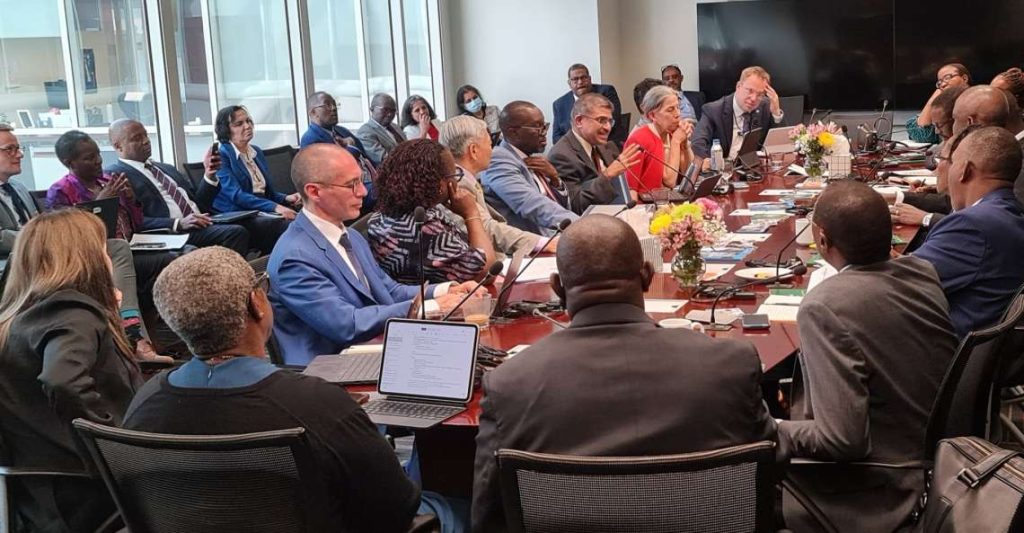
Speaking during a meeting of finance ministers from Uganda, Kenya and Rwanda in Washington, held alongside the IMF and World Bank 2026 Spring Meetings, Finance Ministry permanent secretary Ramathan Ggoobi confirmed that Citibank would act as lead arranger for the project’s funding. The bank is expected to coordinate financing efforts as Uganda seeks to secure international backing.
Uganda has also opened discussions with the World Bank as part of a broader push to diversify funding sources and reduce reliance on a single partner, Business Insider Africa reported. The railway project is seen as critical to improving regional connectivity, cutting freight costs, and boosting trade competitiveness across East Africa.
The project regained momentum in October 2024 when Uganda signed a new construction agreement with Turkish firm Yapi Merkezi to build the line linking Kampala to Malaba on the Kenyan border. Once completed, the railway will connect to Kenya’s network and provide access to the port of Mombasa.
In the longer term, Uganda, Kenya and Rwanda plan to extend the railway corridor to South Sudan and the Democratic Republic of Congo, creating a broader regional network aimed at strengthening trade integration across East and Central Africa.