
South Africa plans to release approximately 2.5 million hectares of state-owned land to black farmers as part of efforts to transform commercial agriculture….reports Africa Daily News Desk
South Africa is seeking to expand black ownership of commercial agriculture through access to land, affordable financing and farmer training, as the government looks to address inequalities in the sector and strengthen food security. The initiative includes releasing approximately 2.5 million hectares of state-owned land to black farmers and expanding blended finance schemes to help emerging farmers build commercially viable businesses.
The government’s approach was outlined in a message to South Africans following a visit to Redlands Farm, a commercial dairy farm in Stutterheim in the Eastern Cape. Owned and operated by young black farmers, the farm has expanded its operations with support from the Land Bank.
Redlands Farm benefits from the Land Bank’s Blended Finance Scheme, which combines government grant funding with loan finance. The scheme is intended to help farmers overcome financial barriers to investment in farming inputs, infrastructure and additional land.
The government said such financing arrangements were helping emerging farmers move beyond subsistence farming and establish commercially successful agricultural businesses.
According to a 2025 study by the University of Pretoria cited in the message, there is a strong correlation between agricultural investment and poverty reduction.
South Africa’s farming sector employs approximately 944,000 people, while another 200,000 workers are employed across the broader agricultural value chain.
The country’s agricultural sector has more than doubled in size since the end of apartheid in 1994, while agricultural exports reached a record R270 billion in 2025, making South Africa the world’s 32nd-largest agricultural exporter, according to the statement.
The country’s agricultural exports include table grapes, maize, beef, wine, citrus, sugar and wool. Nearly half of these exports go to other African countries, while the European Union, Asia, the Middle East and the Americas account for other major markets.
Advances in seed breeding, animal genetics and agricultural inputs have also contributed to improved productivity and efficiency across the sector.
Despite this growth, the government acknowledged persistent inequalities in commercial agriculture, describing the sector as comprising “two agricultures”. Predominantly white-owned commercial farms account for most commercial agricultural output, while black farmers contribute around 10 per cent, according to the message.
The government said expanding black participation in commercial farming was necessary both to address historical inequalities and to strengthen national food security. With the population growing and demand for food increasing, it argued that South Africa needed to broaden its productive agricultural base rather than rely on a relatively small section of the population.
A key component of this strategy is providing aspiring farmers with secure land ownership. Under the Proactive Land Acquisition Strategy, the government is releasing approximately 2.5 million hectares of state-owned land across the country to black farmers and providing them with title deeds.
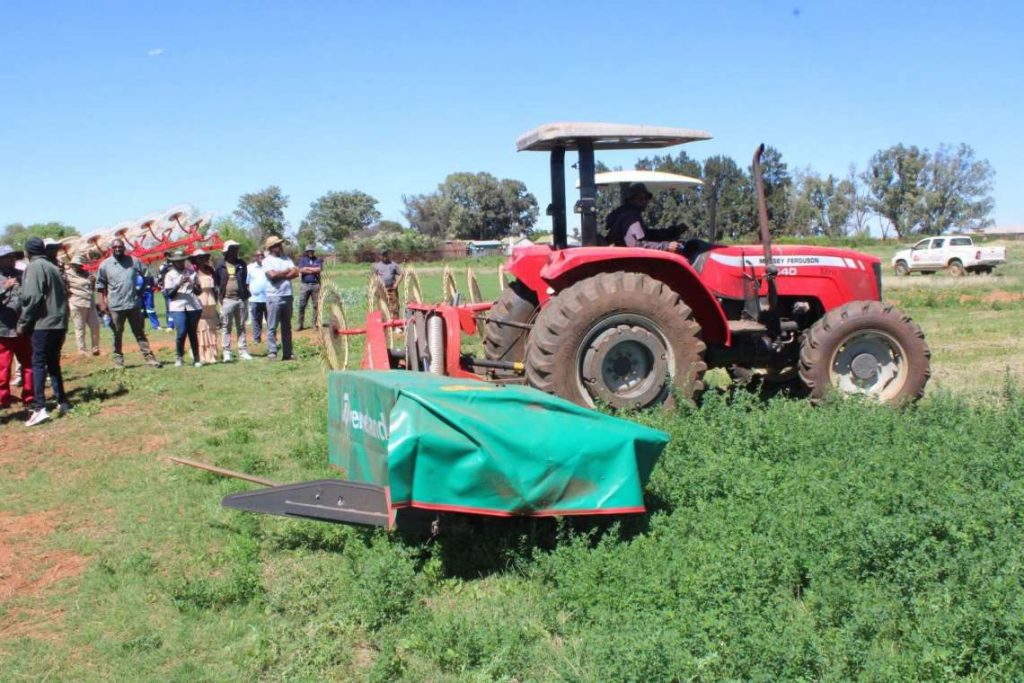
However, access to land alone is not considered sufficient to establish successful commercial farms. The government also highlighted the importance of practical experience, mentorship, technical knowledge, training and access to modern agricultural technologies.
It commended programmes run by industry organisations, including the Citrus Growers’ Association, Grain South Africa, the National Wool Growers’ Association, Potatoes South Africa, Red Meat Industry Services, the Milk Producers’ Organisation and Fruit South Africa. These organisations support efforts to develop a more inclusive agricultural economy.
Affordable, long-term financing is another priority. The Land Bank and the Department of Agriculture introduced the blended finance instrument to address funding challenges faced by emerging commercial farmers. Commercial banks have subsequently joined the programme.
The government called on additional commercial banks and agribusinesses to participate in blended finance initiatives and develop further funding instruments to support agricultural investment.
It also said it was working to expand and diversify export markets for South African agricultural products while engaging with farmers and agribusinesses on new breeding techniques and advances in agricultural biotechnology.
The government said stronger partnerships among public institutions, farmers, businesses, lenders, traditional leaders and communities would be essential to sustaining growth, creating jobs and expanding agricultural production.
The long-term objective is to bring more land under cultivation, develop a new generation of black commercial farmers and increase food production for domestic consumption and international markets.