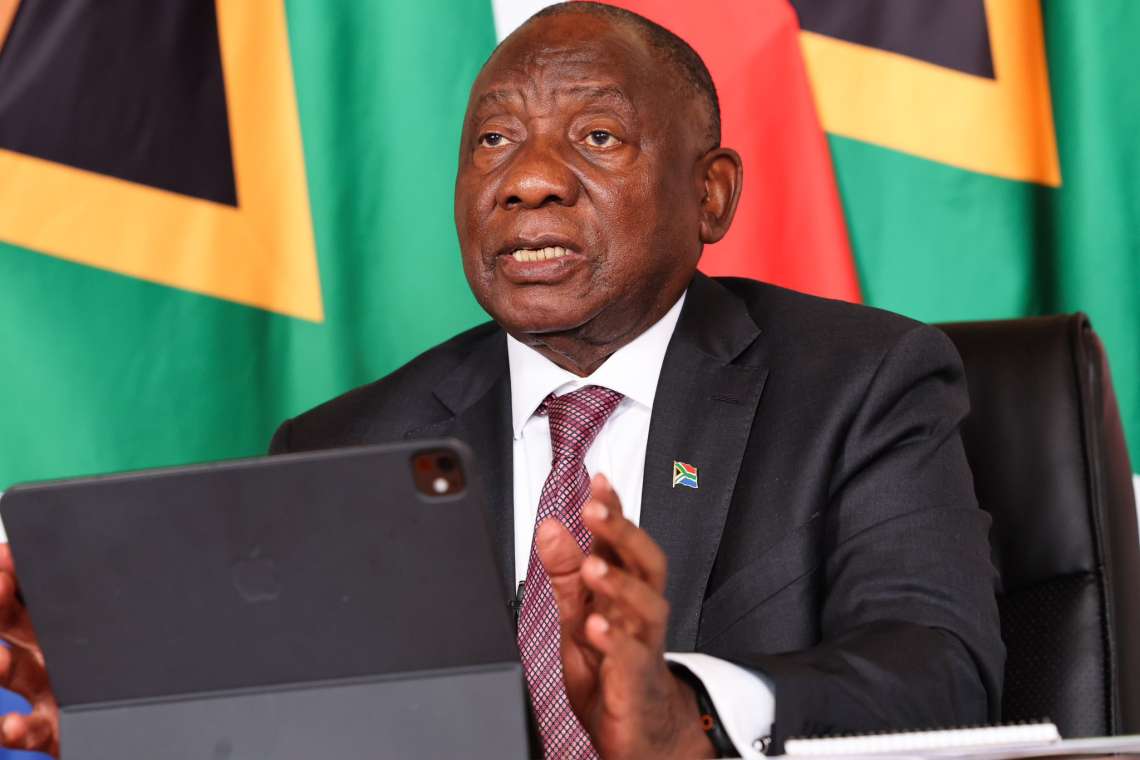

President Cyril Ramaphosa has urged South Africans to protect the constitutional values of equality, non-racialism and human dignity alongside the country’s diverse cultural heritage. ..reports Asian Lite News Desk
South African President Cyril Ramaphosa has called on citizens to protect the constitutional values of equality, non-racialism, non-sexism, democracy and human dignity, saying they form part of the country’s shared heritage.
In a message following Heritage Day, Ramaphosa said South Africa’s diverse languages, cultures and traditions were important aspects of its national identity, but argued that the values established by the country’s democratic Constitution were equally central to its heritage.
“Heritage is not only what we celebrate. It is also what we defend,” Ramaphosa said.
He said South Africans had made a historic choice in 1994 to acknowledge the injustices of the past while committing to building a democratic nation in which people from different backgrounds could live together.
“Our constitutional order gives expression to the values of non-racialism, non-sexism, equality, democracy and human dignity,” he said.
“These values are as much our heritage as the cultures we practice and the languages we speak, the traditions we observe and the cultures we celebrate. They express who we are and who we aspire to become.”
Ramaphosa said violence against women could not be allowed to define South African society, describing the abuse, rape and killing of women as “a stain on our national conscience”.
“We cannot claim to be a society founded on freedom, equality and human dignity while half of our population lives in fear of violence,” he said.
The president also addressed xenophobia and migration, saying South Africa remained committed to African unity while stressing that migration should take place within the law.
“The peoples of Africa provided moral and material support to our liberation struggle, and our democracy,” Ramaphosa said.
“Democratic South Africa remains committed to advancing the ideals of African unity and integration.”
He added that the government had a responsibility to manage the country’s borders effectively and that everyone living in South Africa was required to respect its laws.
On race relations, Ramaphosa said the country must not return to the racial divisions of the apartheid era. He also defended measures aimed at addressing historical inequalities, arguing that there was “no moral equivalence” between redress and apartheid.
“There is no equivalence between legitimate, constitutionally grounded measures of redress and the systematic racial oppression of apartheid,” he said.
Ramaphosa also warned against rhetoric that could deepen divisions between communities, saying South Africans had a responsibility to protect the country’s social fabric.
“We must guard against words and actions that polarise communities, inflame public opinion and reopen the wounds of our past,” he said.
He acknowledged that the Constitution protected freedom of expression but said the right carried responsibilities, particularly in a society facing violence against women, high levels of violent crime and tensions around undocumented migration.
Ramaphosa criticised inflammatory statements about foreign nationals and language that glorifies violence, while also taking aim at claims of a “white genocide” made overseas.
“At a time when unemployment is high and we need to grow our economy and attract investment, travelling to foreign capitals to spread the falsehood of a ‘white genocide’ and discourage investment in one’s own country is neither responsible nor patriotic,” he said.
The president concluded by saying South Africa’s diversity should not obscure the constitutional principles that unite its people.
“We may be a diverse nation, but we are united by the constitutional values that make us South African,” he said.
He called on citizens to renew the commitment made in 1994 to build the country together, describing that commitment as both a shared heritage and a shared responsibility.