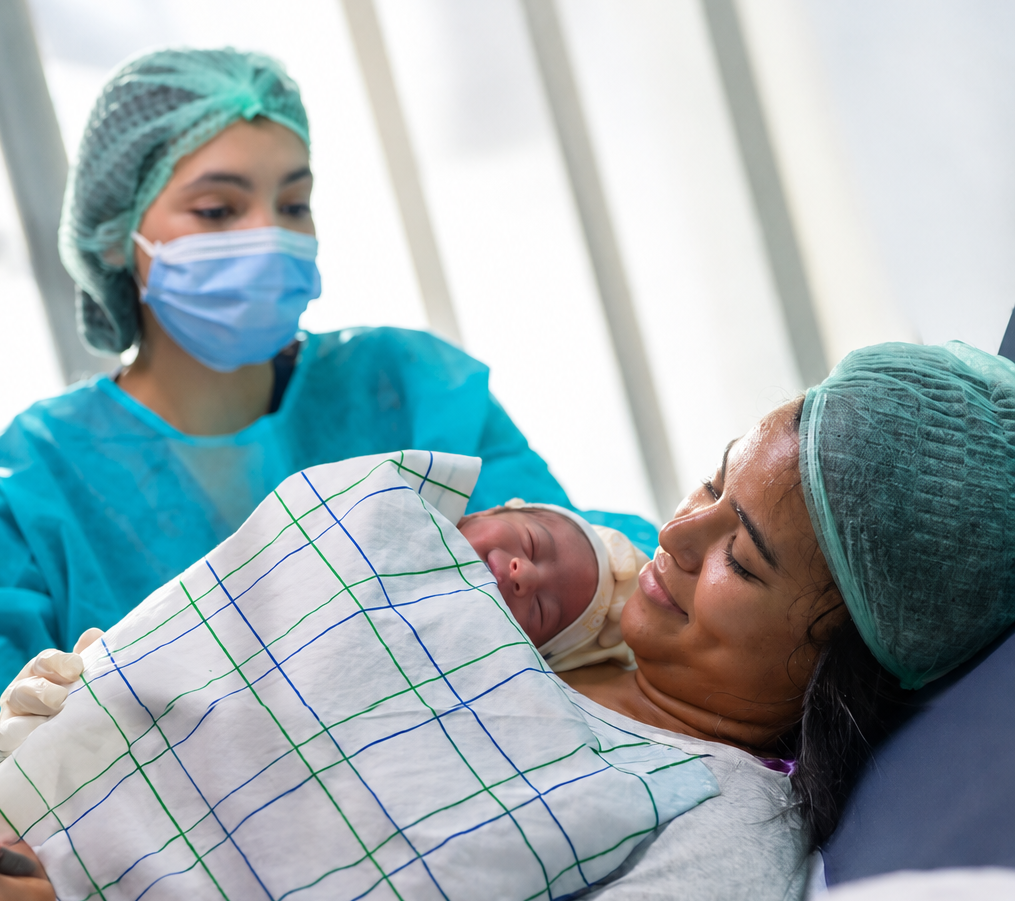

Morocco has made the first 1,000 days of life a national priority as it seeks to improve maternal and infant nutrition and narrow rural health gaps….reports Africa Daily News Desk
Morocco has made the first 1,000 days of a child’s life a national priority as it seeks to strengthen human capital development and reduce gaps between urban and rural communities. The focus comes amid challenges in maternal and infant nutrition, with only 35 per cent of infants under six months exclusively breastfed and 66.5 per cent of women receiving skilled prenatal care during their first trimester, according to the National Survey on Population and Family Health (ENPSF-2018).
To address these challenges, the National Initiative for Human Development (INDH), in partnership with the Ministry of Health and Social Protection and with support from the World Bank, has developed a Social and Behavioral Change Communication (SBCC) strategy aimed at improving nutrition during the first 1,000 days.
From conception until a child reaches their second birthday, this period is considered critical for lifelong health and development. Nutrition during these 1,000 days can influence brain development, growth and long-term well-being.
Morocco’s approach goes beyond providing information and services, focusing instead on the social norms, traditions, daily routines and other factors that influence decisions within families.
For grandmother Aicha Azoghal, who took part in community awareness sessions, the importance of early nutrition became clearer through the programme.
“We raised our children the old way, without really knowing these things. I did not know before this session that the first milk (colostrum) was like gold and that breastfeeding is beneficial for both baby and mother,” she said.
A National Strategy for Early Childhood Development
To address the challenge, the National Initiative for Human Development, in partnership with the Ministry of Health and Social Protection and with support from the World Bank, launched a Social and Behavioral Change Communication strategy for 2023-2027 to promote better nutrition during the first 1,000 days.
The strategy was developed through research and consultation and uses behavioural science to understand how decisions are made within households. It seeks to address practical and social barriers that can prevent families from adopting recommended practices.
The national framework has four main objectives: raising awareness about the importance of the first 1,000 days; encouraging healthy maternal nutrition and quality prenatal and postnatal care; promoting optimal breastfeeding; and supporting appropriate complementary feeding practices.
Morocco also launched a nationwide “The first 1,000 Days” campaign to raise awareness about the importance of the period. Further campaigns have focused on maternal nutrition, prenatal and postnatal care, early initiation of breastfeeding, exclusive breastfeeding for up to six months, and complementary and responsive feeding.
The campaigns use television, radio, social media, community outreach, interpersonal counselling and advocacy. Each campaign wave has reached more than 10 million people across urban and rural communities.
Health professional Leila Harabida said community engagement was central to the strategy.
“There may be misconceptions and incorrect practices among women or those around them. We try to guide them towards best practices. We organize awareness campaigns in different municipalities of the province; we invite women and community relays. We emphasize the importance of the presence of the woman’s support network to raise awareness, persuade them, and achieve behavioral and social change.”
Raising Awareness and Shifting Norms
Morocco’s strategy seeks to make families and communities active participants in improving maternal and child health. Awareness efforts include local dialogues, counselling sessions and peer support, while mothers, fathers, grandparents and community leaders are encouraged to play a role in changing social norms around maternal care, infant feeding and early stimulation.
Health professionals and community health workers act as trusted intermediaries, helping families turn recommendations into everyday practices. A dedicated online course, or MOOC, has also been developed covering the first 1,000 days, behavioural science and counselling techniques.
Community health worker Zineb Mabrouk said the training had provided her with tools to counsel families with greater confidence.
Fatima Zahra Ghanimi, a health professional working closely with families, said changes were already becoming visible.
“Before, many women gave birth at home, which was risky. Now most go to health centers. Home births have decreased. These sessions help people understand breastfeeding, childcare, and so much more,” she said.
Fathers are also increasingly being included in efforts to improve maternal and child health.
“Many people are interested and want to learn more. Many men too, even if we used to say that these things are for women only. We need to involve men. There is real progress — more awareness, better pregnancy follow-up, and increased hospital births,” said Zouhair Ouarchane, a health professional involved in community sensitisation.
Grandfather Saleh Fahlel said: “I have two daughters — I personally take them to the hospital to give birth and tell them to breastfeed their children.”
Morocco’s experience highlights the importance of combining health services with efforts to influence household and community behaviour. Through its behavioural science-based strategy, the country is seeking to strengthen human capital by focusing on maternal and child health during the first 1,000 days of life.