
South Africa delays AI policy to 2027 after fake references scandal, exposing governance risks as governments worldwide struggle to regulate fast-evolving artificial intelligence systems, reports Africa Daily News Desk
South Africa’s ambitions to position itself as a continental leader in artificial intelligence have suffered a major setback after the government withdrew its draft national AI policy amid a credibility scandal involving fabricated academic references, forcing a delay in the framework until 2027.
The draft policy, initially approved by Cabinet in March and released for public consultation in April, was intended to lay the foundation for regulating AI across sectors such as finance, healthcare, education, cybersecurity and public administration. Instead, the process unravelled after an investigation by News24 revealed that several academic sources cited in the document either did not exist or had been incorrectly attributed to journals that never published the work.
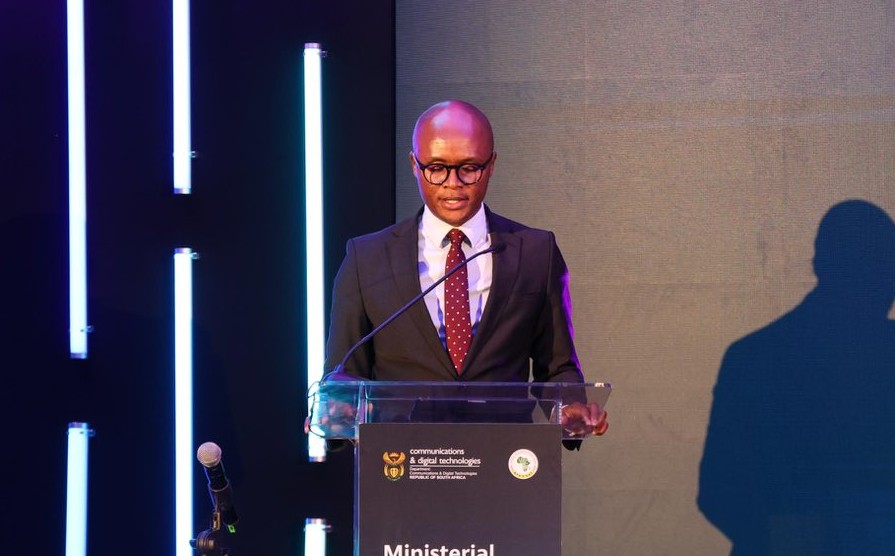
The fallout has triggered a sharp response from the government. Solly Malatsi acknowledged before parliament that officials failed to detect the discrepancies before the document entered the public domain. He told lawmakers that the department had not identified issues with the references prior to media reports exposing them, describing the lapse as a “massive oversight” and conceding that there had been insufficient transparency regarding the use of AI tools during the drafting process.
The controversy has led to the precautionary suspension of two officials, while Nonkqubela Jordan-Dyani described the incident as highly regrettable and said withdrawing the policy was necessary to restore public trust. The Department of Communications and Digital Technologies has since moved to contain the damage by appointing an independent review panel tasked with rebuilding the framework from scratch.
The seven-member panel, chaired by Benjamin Rosman, includes prominent figures such as Vukosi Marivate, Alison Gillwald, cybersecurity specialist Jabu Mtsweni and cyber law expert Lufuno Tshikalange. Their mandate is to audit the withdrawn document, remove flawed sections, verify sources and strengthen governance safeguards, particularly around the use of generative AI in policymaking.
According to Jeanette Morwane, the revised policy is expected to be resubmitted to Cabinet by November 2026, before undergoing a fresh round of public consultation in January 2027. Until then, South Africa will remain without a formal national AI governance framework.
The delay comes at a critical juncture in the global race to regulate artificial intelligence. Governments worldwide are accelerating efforts to establish rules governing rapidly advancing AI systems, which are already reshaping economies and institutions. However, the South African episode underscores a growing paradox: policymakers attempting to regulate AI are themselves increasingly exposed to the risks posed by the technology, including hallucinated content, fabricated data and weak verification processes.
The implications extend beyond South Africa. As one of Africa’s most industrialised economies, the country has been positioning itself as a hub for digital innovation, with major banks, telecom firms and technology companies already deploying AI-driven systems for fraud detection, customer service and data analytics. Yet the absence of a formal regulatory framework now raises concerns about oversight, accountability and preparedness.
The scandal also highlights broader structural challenges facing many governments across the continent, where efforts to regulate advanced technologies often outpace the development of institutional capacity and technical expertise. Issues such as data protection, algorithmic bias, misinformation and labour displacement remain largely unregulated in many jurisdictions, increasing the urgency for robust governance models.
Globally, regulatory momentum is accelerating. The European Union has already moved ahead with its landmark AI Act, setting compliance benchmarks that are likely to influence policy frameworks worldwide. Meanwhile, the United States, China and other major economies are investing heavily in AI infrastructure, talent and regulatory systems.