
Bill Gates has urged governments to consider taxing AI and reserving certain jobs for humans as automation accelerates…reports Asian Lite News Desk
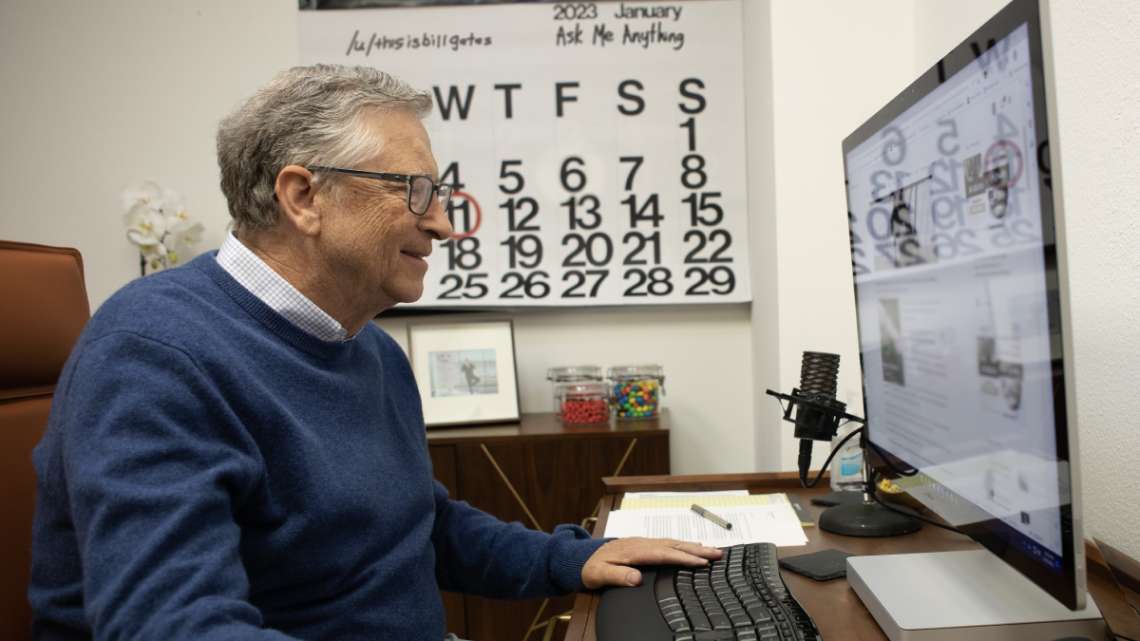
Microsoft co-founder Bill Gates has called for society to decide how to tax artificial intelligence (AI) and which jobs should be reserved for humans, warning that the technology could transform employment on an unprecedented scale. His remarks come amid growing concerns about AI-driven job losses and tighter US immigration policies affecting India’s technology industry.
Speaking on CNN’s State of the Union on Sunday, Gates was asked by host Jake Tapper about his earlier warning that AI-related job losses across sectors would be “unprecedented” and his proposal to reserve certain occupations in education and healthcare for human workers.
Gates said his concerns were driven by the pace at which AI models were improving and the financial incentives for businesses to replace human labour with automated systems.
“In the years ahead, we really do need to make a decision as a society, how do we tax AI usage or robot usage? And where do we want to make sure the human jobs are preserved?” he said.
“Until people get their mind around how powerful this is, and, therefore, what it’s going to be doing to these jobs, the idea that you need to reserve things for humans may sound bizarre, but, in fact, we will get there,” he added.
Gates, who played a prominent role in the development of personal computing, said earlier technological advances such as personal computers and the internet had been significant but were not comparable to the potential impact of AI.
He also warned that the immediate danger lay in the misuse of AI by malicious actors, particularly for cyberattacks.
Gates predicted that AI companies’ reliance on self-regulation would give way to greater government oversight. He said he expected the development of government safety bodies comparable to those overseeing aviation and medicines.
The Microsoft co-founder said he had spoken to several politicians about his concerns and hoped to discuss them with US President Donald Trump and members of his administration in the future.
His warning comes as India’s technology sector faces significant changes from AI adoption, alongside tighter immigration rules in the United States. Indian professionals account for a substantial share of US H-1B visa beneficiaries, making changes to employment and immigration policies particularly relevant to the country’s IT services industry.
The National Association of Software and Service Companies (Nasscom) has said recruitment in the technology sector is expected to shift from hiring large numbers of workers towards a greater emphasis on specialised skills as AI improves productivity.
“AI is accelerating productivity and changing the nature of work, but it is also expanding the opportunity frontier,” Nasscom chairperson Sindhu Gangadharan said in February, according to The Hindu BusinessLine.
At the same time, Indian IT companies are facing pressure from US immigration and labour policies.
On Thursday, US Labour Secretary Keith Sonderling suspended eight companies, including Infosys, Tata, Wipro and HCL, from the Permanent Labour Certification (PERM) programme, a key step in employer-sponsored green card applications. The action was taken amid ongoing investigations, according to the report.
US Vice President JD Vance also warned at a campaign rally in Ohio last week that companies replacing American workers with legal immigrants could face “a big fat tariff”.
Meanwhile, the Trump administration’s $100,000 fee on certain new H-1B petitions has been blocked by two federal judges.
The H-1B visa programme allows US employers to hire foreign workers temporarily for speciality occupations. Data from US Citizenship and Immigration Services show that 71 per cent of approved H-1B petitions in fiscal 2024 were for beneficiaries born in India.
The PERM programme involves labour certification for employers seeking to sponsor foreign workers for permanent residence in the United States.
Gates’s comments add to the debate over how governments should respond to AI-driven changes in employment, including whether taxation, regulation and restrictions on automation in certain occupations may be needed to protect human workers while allowing technological development.