
Human rights commission urges authorities to ensure immigration and business laws are enforced fairly and without discrimination based on nationality….reports Africa Daily News Desk
Kenya’s National Commission on Human Rights (KNCHR) has called on the government to adopt a lawful, fair and non-discriminatory approach in enforcing immigration and business regulations involving foreign nationals, amid concerns over alleged threats, intimidation and other human rights violations.
In a press statement issued on Monday, the Commission said it was concerned about the potential human rights implications arising from recent government directives and public statements concerning foreign nationals engaged in small-scale businesses and trade in Kenya.
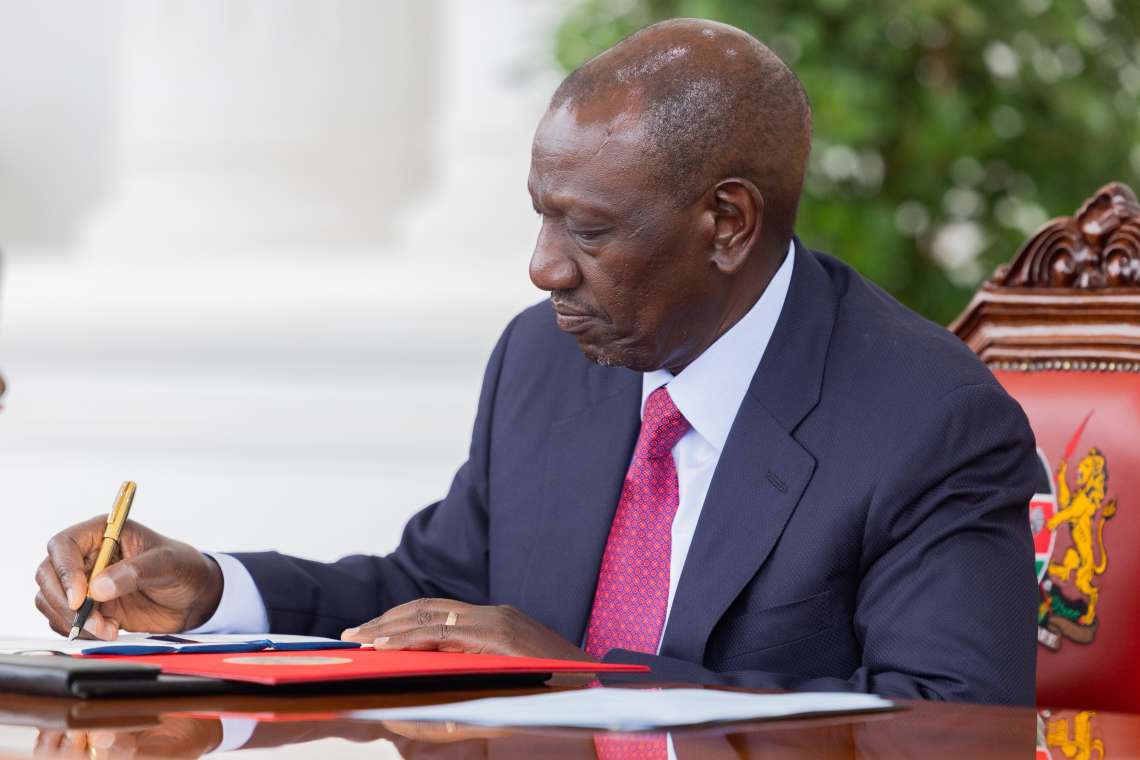
The KNCHR said its concerns followed a directive issued by President William Samoei Ruto on September 2 ordering the immediate closure of small businesses operated by foreign nationals, as well as a September 6 statement by the Cabinet Secretary for Investments, Trade and Industry clarifying the government’s position on work visa applications for foreign nationals.
The Commission said it had received petitions from refugee communities and other migrant populations in several counties alleging threats, intimidation, discriminatory treatment and attacks.
While reports from Miritini in Mombasa County illustrated the potential for violations, the KNCHR stressed that the issue represented a broader national concern and should not be viewed as limited to a particular locality.
The human rights body acknowledged the government’s legitimate responsibility to regulate immigration, employment, trade, investment and commercial activities, ensure compliance with applicable laws, promote fair competition and safeguard economic opportunities for Kenyan citizens and local enterprises.
However, it stressed that enforcement measures must be implemented lawfully, fairly, consistently and without discrimination based on nationality.
The Commission said such measures must comply with Kenya’s Constitution, domestic legislation and regional and international human rights obligations, including the principles of legality, equality before the law, non-discrimination, due process and protection against arbitrary or disproportionate administrative action.
As a member of the East African Community and a party to the EAC Common Market Protocol, Kenya is also committed to the progressive integration of partner states through the free movement of people, goods, services, capital and labour, as well as rights of residence and establishment, the Commission noted.
It added that while the exercise of such rights remains subject to national laws and administrative procedures, enforcement must be balanced with the protection of individual rights and freedoms.
The KNCHR reiterated that Article 21 of Kenya’s Constitution places a fundamental obligation on the state and public institutions to observe, respect, protect, promote and fulfil the rights and fundamental freedoms guaranteed under the Bill of Rights.
“Kenya must not wait for violations to occur before putting in place appropriate preventive safeguards,” the Commission said, stressing that enforcement measures must be lawful, necessary, proportionate, non-discriminatory and procedurally fair.
The Commission cautioned government agencies against carrying out summary enforcement actions that impose punitive consequences on individuals before they are given due process, including a fair opportunity to be heard and, where applicable, to challenge decisions through lawful mechanisms.
It also warned members of the public against taking the law into their own hands through physical or online threats, attacks, harassment or intimidation targeting foreign nationals.
The KNCHR called on the government to ensure that immigration and business laws are enforced through individualised assessments of specific legal violations rather than collective profiling or targeting of foreign nationals, migrants or refugees.
It further urged authorities to provide special safeguards for vulnerable groups, including refugees, asylum seekers, victims of trafficking, migrant workers and children, and establish accessible mechanisms through which affected foreign nationals can verify their legal status and obtain information on how to regularise their immigration or business status where permitted by law.
The Commission also called for stronger oversight and accountability to ensure enforcement does not facilitate xenophobia, hate speech, extortion, vigilante action or other human rights violations.
It said the government should learn from the violations, trauma and economic disruption associated with Operation Usalama Watch in 2014 and strengthen monitoring of enforcement activities nationwide.
The KNCHR said it would continue monitoring the situation, engaging relevant authorities and migrant and refugee communities, and documenting alleged human rights violations for possible investigation and litigation.
It also urged anyone experiencing or witnessing threats, intimidation, unlawful eviction, destruction of property, violence, discrimination or other human rights violations to report them to the relevant authorities or the Commission.