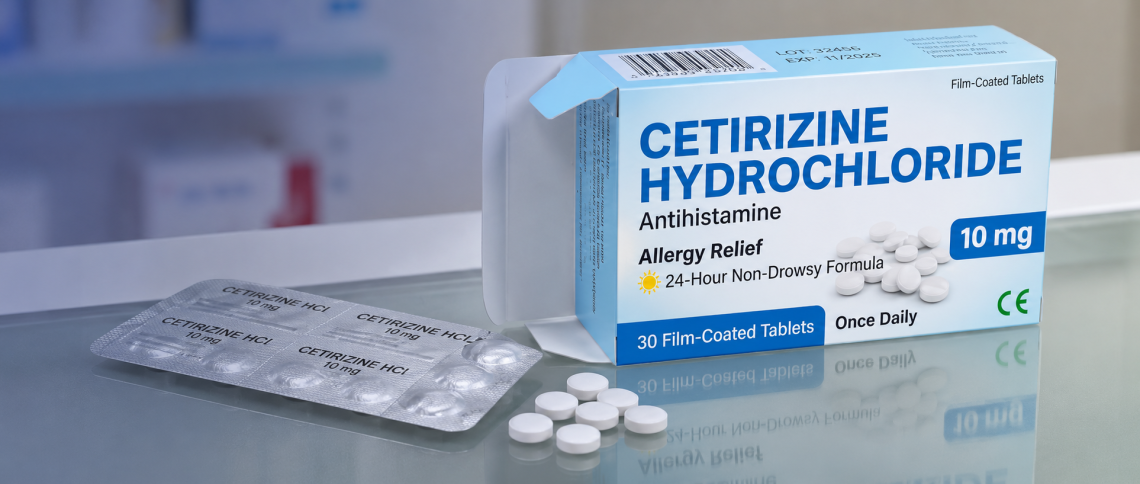

Kenya’s pharmacists warn against inserting cetirizine tablets for vaginal tightening, citing risks of discomfort, tissue injury and unsafe medicine use….reports Africa Daily News Desk
The Pharmaceutical Society of Kenya (PSK) has warned the public against using cetirizine tablets for vaginal tightening, cautioning that the practice promoted on social media is medically unsafe and could cause discomfort and tissue injury. The pharmacists’ body has urged people to use the commonly available allergy medicine only for its approved purpose and seek professional advice before attempting unfamiliar health treatments.
In a public statement issued in Nairobi on 5 November 2026, the PSK expressed concern over discussions circulating on social media encouraging women to insert cetirizine tablets into the vagina to achieve tightening.
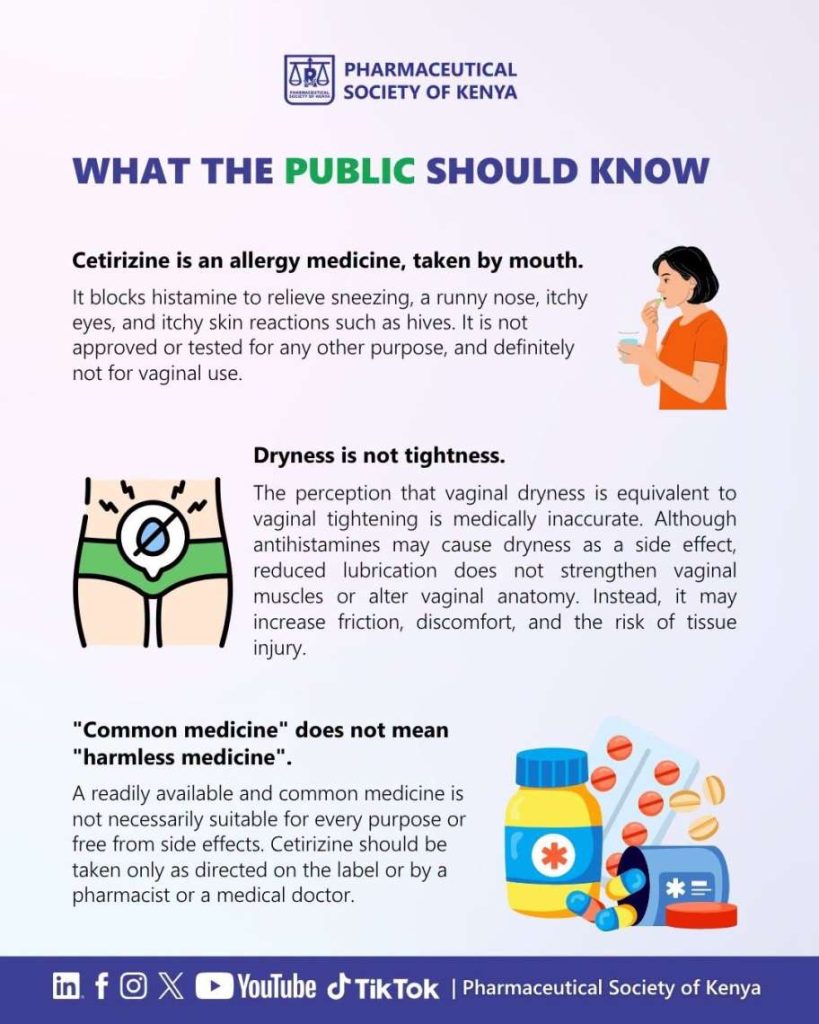
The organisation, which represents pharmacists in Kenya, said cetirizine is an antihistamine designed to be taken orally to relieve allergic reactions and has not been approved or tested for vaginal use.
It also challenged claims that vaginal dryness caused by antihistamines could produce a tightening effect, describing the assumption as medically inaccurate.
According to the PSK, although antihistamines can cause dryness as a side effect, reduced lubrication does not strengthen vaginal muscles or alter vaginal anatomy. Instead, it can increase friction, discomfort and the risk of tissue injury.
“Cetirizine is an allergy medicine, taken by mouth,” the organisation stated, explaining that the medicine works by blocking histamine to relieve symptoms such as sneezing, a runny nose, itchy eyes and skin reactions, including hives.
The society also warned that cetirizine tablets are manufactured for swallowing and their ingredients have not been tested on delicate vaginal tissue.
It cautioned that the widespread availability of a medicine should not be mistaken for proof that it is harmless or suitable for every purpose. Cetirizine should only be taken according to the instructions on its packaging or under the guidance of a pharmacist or medical doctor.
Why Are Pharmacists Warning Against Cetirizine Misuse?
The warning comes amid concerns over the growing circulation of unverified medical claims on social media, where medicines are sometimes promoted for purposes beyond their intended use.
The PSK said the rapid spread of such information could expose members of the public to unnecessary health risks, particularly when people attempt treatments without consulting qualified healthcare professionals.
The organisation urged anyone who had already attempted the practice to stop immediately and seek medical attention if they experienced pain, bleeding, burning, itching, unusual discharge or fever.
It stressed that people experiencing such symptoms should consult a doctor and would be treated with respect and without judgement.
The pharmacists’ body also raised concerns about reports of increased demand, rising prices and stock shortages of cetirizine in some outlets.
It urged pharmacies to maintain ethical pricing and ensure that patients who genuinely require the medicine for allergies are not deprived of access.
The society further advised consumers to purchase medicines only from premises licensed by the Pharmacy and Poisons Board (PPB), where a registered pharmacist is present.

What Does the Society Want the Public to Do?
The PSK has called on different groups, including members of the public, media organisations, healthcare professionals and government regulators, to take responsibility for preventing medicine misuse.
It advised the public to consult pharmacists before using medicines for purposes for which they were not designed and warned against relying on social media as a source of medical advice.
Media organisations and content creators were also urged to exercise responsibility when sharing information about medicines and health interventions, ensuring that their content is evidence-based and does not put public health at risk.
The society called on its members to continue counselling patients, avoid promoting or knowingly dispensing medicines for misuse, and report suspected adverse reactions to the Pharmacy and Poisons Board through its pharmacovigilance channels.
It also reaffirmed its commitment to working with the PPB, the Ministry of Health and other healthcare professionals to strengthen medicine safety and protect the public from harmful practices.
Dr Wairimu Njuki, President of the Pharmaceutical Society of Kenya, issued the statement as the organisation sought to address misinformation surrounding cetirizine and reinforce responsible medicine use.
The society’s message was that medicines should be used for their intended purposes, with appropriate professional guidance. It encouraged anyone uncertain about a medicine or its use to consult a pharmacist rather than follow unverified claims circulating online.