
Joint Egyptian-Spanish mission discovers Fifth Dynasty tomb containing decorated chapels of two ancient officials….reports Africa Daily News Desk
Egypt has announced the discovery of a more than 4,000-year-old tomb dating back to the late Fifth Dynasty at the Mariette Cemetery near the ancient Saqqara necropolis in Giza Province, west of Cairo.
The tomb was uncovered by a joint Egyptian-Spanish archaeological mission and dates to the reign of King Djedkare Isesi, who ruled during Egypt’s Fifth Dynasty between 2494 and 2345 BC, according to Egypt’s Ministry of Tourism and Antiquities.
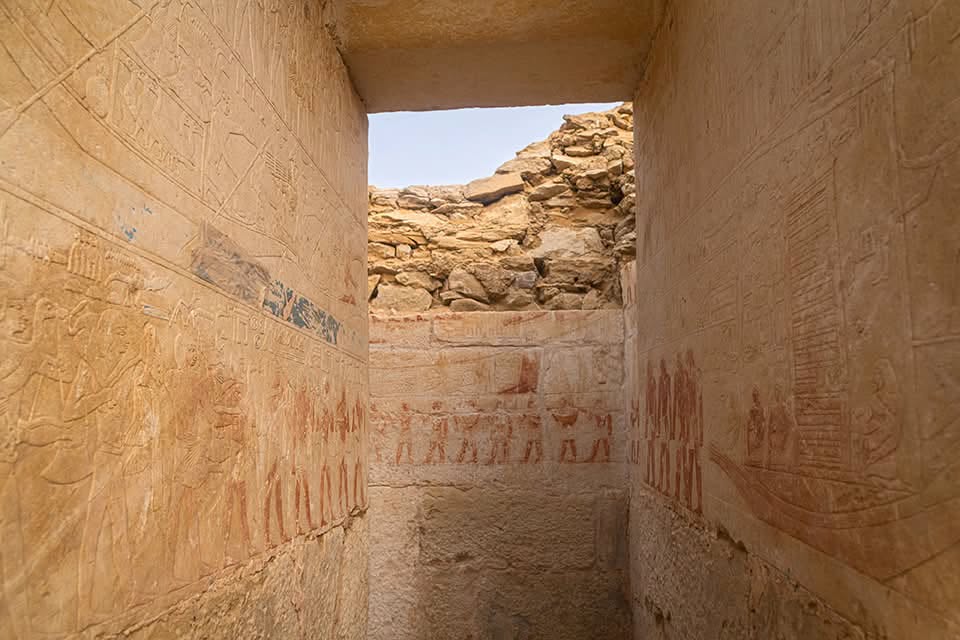
The medium-sized mastaba tomb contains two funerary chapels belonging to Yunmin, a senior official, and his father, Ity.
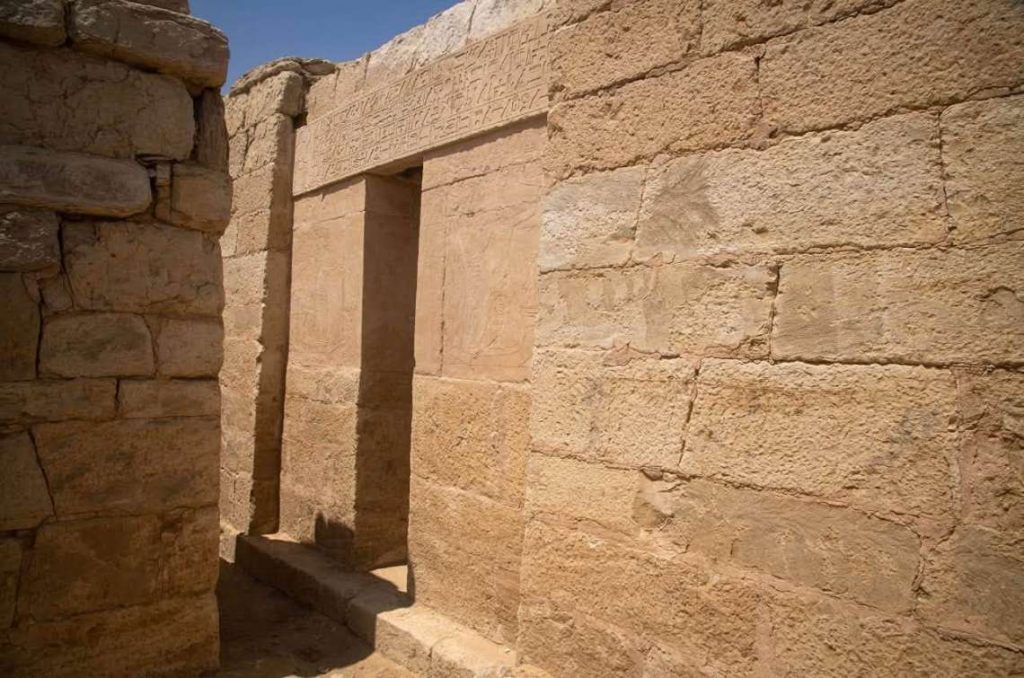
Yunmin held several prominent positions, including judge, court director and chief of scribes responsible for handling petitions and complaints.
Archaeologists discovered a distinctive facade at Yunmin’s chapel featuring funerary texts and an offering formula, alongside a formal depiction of the tomb’s owner.
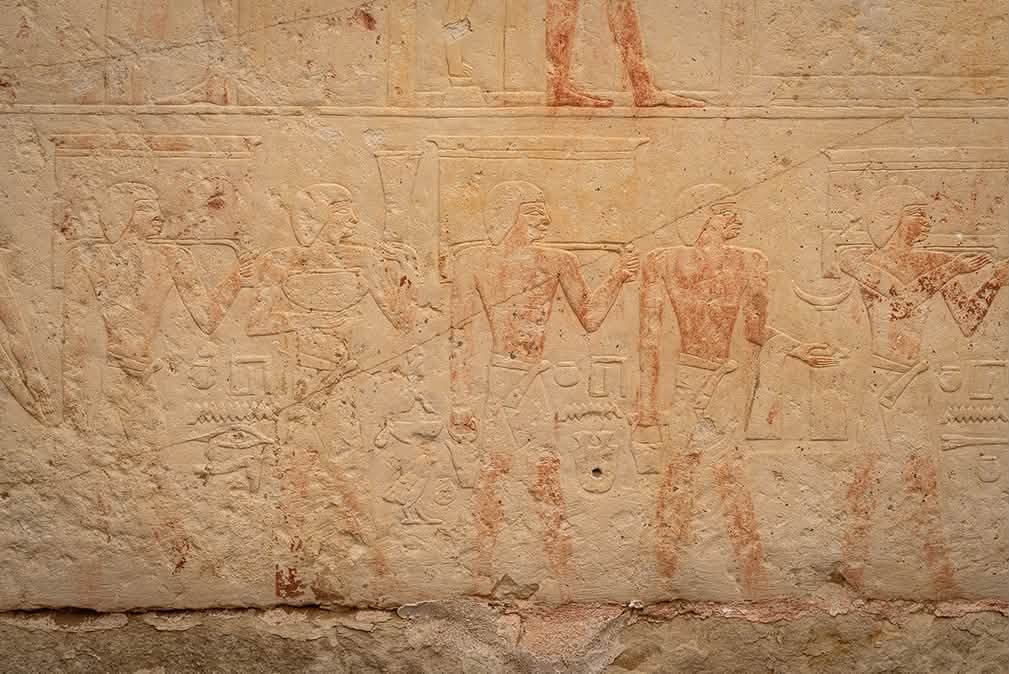
The chapel walls were decorated with high-quality raised reliefs showing scenes of agricultural activities and processions carrying offerings for the deceased.
The second chapel belonged to Yunmin’s father, Ity, who worked as a scribe involved in the administration of agricultural lands and offerings.
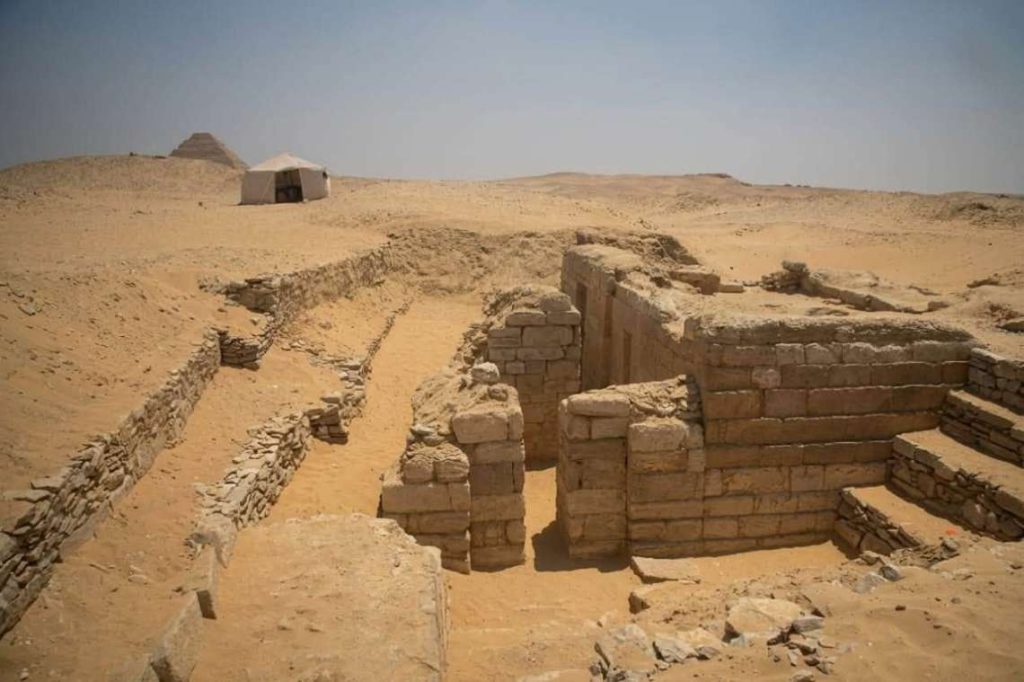
It features a false door, a common architectural element in ancient Egyptian tombs believed to serve as a symbolic passage between the world of the living and the dead. The chapel also contains colourful wall decorations depicting offering scenes, although much of the original paint has faded over time.
Hisham El-Leithy, Secretary-General of Egypt’s Supreme Council of Antiquities, said the discovery provides important new information about the Saqqara cemetery during the late Fifth Dynasty.
He said the find also offers further insight into the architectural styles and artistic traditions associated with tomb construction during the period.
Saqqara, located south of Cairo, is one of Egypt’s most significant archaeological sites and served as a vast burial ground for the ancient Egyptian capital of Memphis. The area is home to the famous Step Pyramid of Djoser and numerous tombs, temples and monuments spanning several periods of ancient Egyptian history.
The latest discovery adds to a series of archaeological finds announced by Egyptian authorities in recent months.
In July, Egypt’s Ministry of Tourism and Antiquities revealed the discovery of another Pharaonic tomb on the West Bank of Luxor during ongoing excavations in the Theban Necropolis.
That tomb was uncovered by a Dutch archaeological mission, with inscriptions identifying its owner as Paser. Initial analysis of wall reliefs suggested the structure dates to Egypt’s New Kingdom, between 1550 BC and 1069 BC.
Archaeologists are continuing detailed documentation and analysis of the Luxor tomb to identify those buried at the site and reconstruct their histories.
Egypt has intensified archaeological excavations across several ancient sites in recent years, with authorities hoping new discoveries will deepen understanding of the country’s ancient civilisation while also strengthening its appeal as a global tourism destination.
The newly discovered Saqqara tomb is expected to undergo further study, with researchers examining its inscriptions, reliefs and architectural features to gain a clearer understanding of the lives and administrative roles of the two officials buried within it.