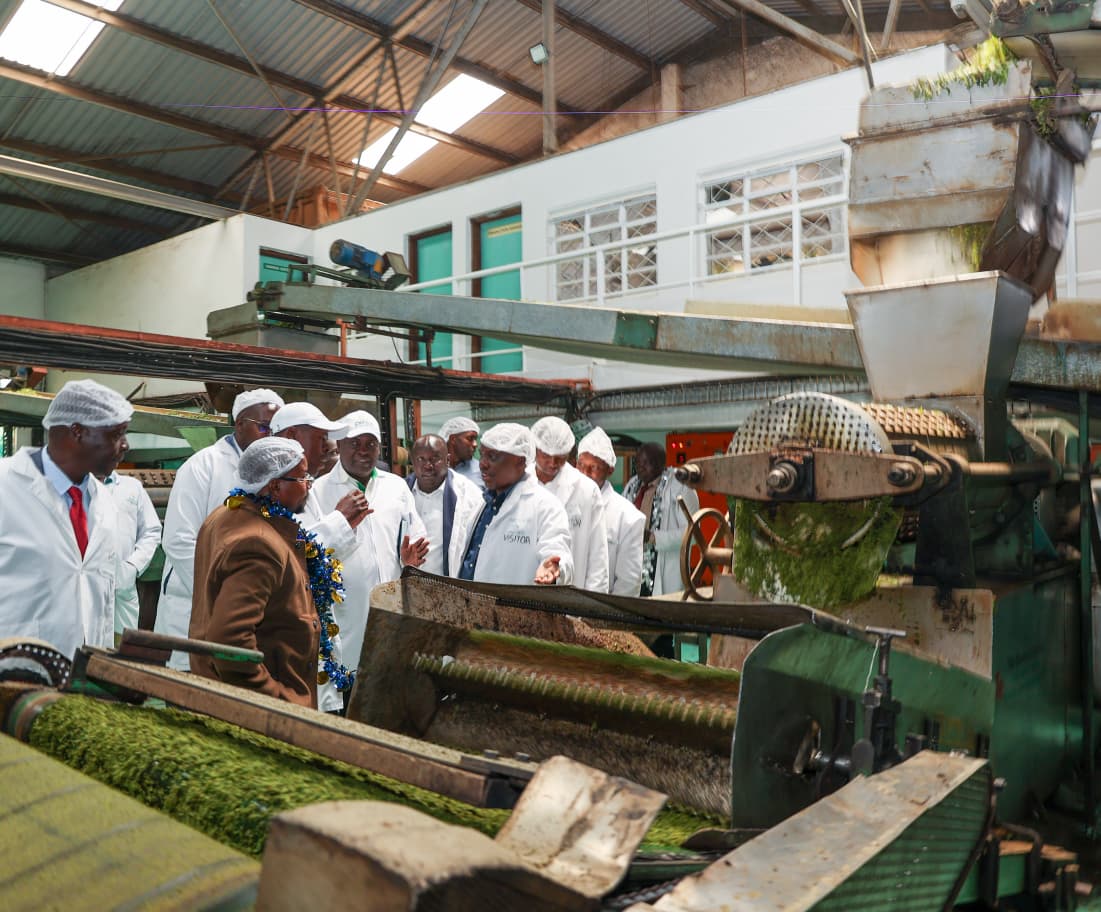

The government plans to shift focus from bulk exports to value added tea products, including increased production of orthodox tea, which fetches higher prices in global markets….reports Newsdesk
Tea farmers in Kenya are set to benefit from a major sector overhaul after the government announced a Sh3.5 billion investment to modernise tea factories, boost value addition and increase earnings, with prices rising to Sh26 per kilogram.
Speaking at Olenguruone Tea Factory, Agriculture Principal Secretary Kiprono Rono said the funding will be used to upgrade 19 factories to meet international standards, improve efficiency and reduce production costs.
He said the reforms are part of a broader strategy to revive the tea industry, with a target of raising farmer earnings to Sh100 per kg by 2027 through higher value addition, better pricing and improved market access.

Rono also announced a revised payment of Sh26 per kg for farmers, up from the previous Sh16, calling it an initial step towards improving incomes.
The government plans to shift focus from bulk exports to value added tea products, including increased production of orthodox tea, which fetches higher prices in global markets.
He urged factories to diversify and invest in processing capabilities to meet international demand, while also embracing digital systems to improve transparency and efficiency.
At the same time, Rono issued a warning to the board of the Kenya Tea Development Agency over alleged corruption and misuse of funds meant for factory operations.
Under the new reforms, tea factories will be granted greater autonomy, including the ability to conduct direct sales, a move aimed at eliminating middlemen and improving returns for farmers.
Service level agreements will also be introduced to ensure farmers receive better quality services from factories.
Officials said the reforms will also include digitised payments and the removal of VAT on tea exports to enhance competitiveness.

Willy Mutai of the Tea Board of Kenya said modernisation, research and improved processing standards will help strengthen Kenya’s position in the global tea market.
He added that new regulations will ensure timely payments to farmers, with at least 50 percent paid upfront and the balance settled within three months to ease cash flow challenges.
The reforms also aim to increase local value addition to at least 40 percent of total production, reducing reliance on bulk exports and enhancing price realisation.
Authorities further stressed the need to maintain consistent green leaf quality, particularly in western Kenya, to attract premium buyers and improve competitiveness at international auction markets such as Mombasa.