
An investigation says Chinese military researchers used artificial intelligence models developed by leading US technology companies for defence research, despite American restrictions on advanced AI technology…reports Africa Daily News Desk
Chinese military researchers used artificial intelligence models developed by leading US technology companies to support defence research despite Washington’s efforts to restrict China’s access to advanced American technology.
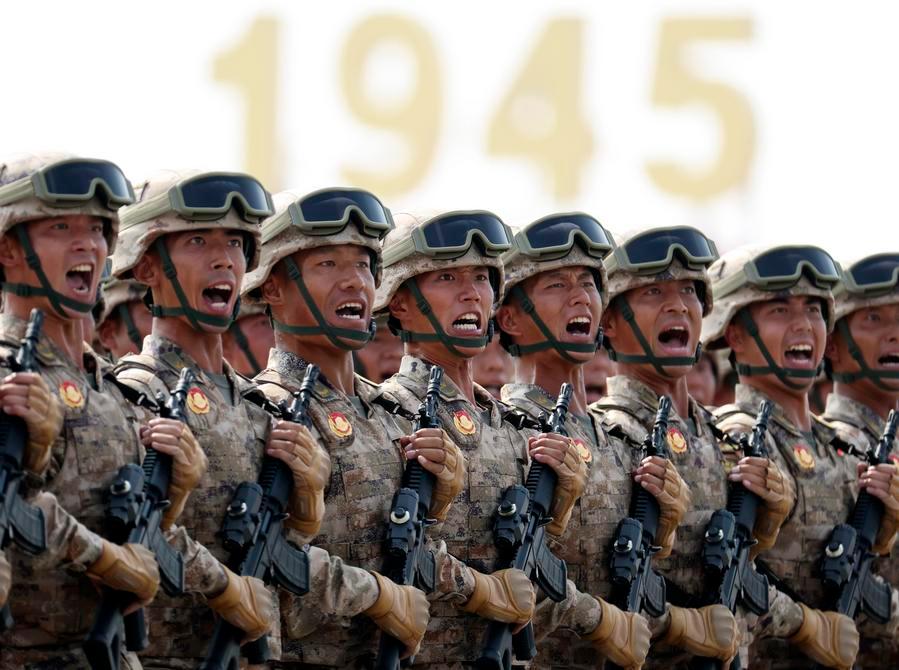
The report said researchers linked to China’s People’s Liberation Army (PLA) used AI models from US companies, including OpenAI, Meta and Anthropic, in studies involving military applications. Researchers accessed the models indirectly through open-source weights or model distillation techniques rather than through direct support from the companies.
There is no evidence that OpenAI, Meta or Anthropic knowingly assisted the PLA. The findings underline the challenge facing the United States as it seeks to prevent advanced AI technology from strengthening China’s military capabilities. AI has become a major area of strategic competition between the world’s two largest economies, with both investing heavily in technologies that could influence future warfare.
The United States has introduced measures to limit China’s access to advanced AI technology. In early 2025, the Trump administration temporarily paused sales of Nvidia’s custom H20 AI chips to China. Although sales later resumed under revised rules, experts warned that restricting computer hardware alone would not prevent AI software and models from moving across borders. The findings suggest those concerns have proved well-founded.
According to Reuters, “Sunny Cheung, a Jamestown fellow who analysed over 60 of the papers, said Chinese military scientists are systematically capturing the reasoning steps of Western models to adapt them for surveillance, cyber warfare and tactical decision-making.”
The report highlights the growing difficulty of enforcing export controls designed to keep advanced American AI technology out of China’s military research pipeline. US officials have argued that powerful AI systems could improve intelligence gathering, battlefield planning, autonomous weapons and cyber operations, making AI controls an important element of the country’s national security strategy.
The developments come as China continues to expand its defence presence across Africa through arms exports, military training and wider security cooperation. Beijing has become one of Africa’s largest suppliers of military equipment, exporting fighter aircraft, drones, armoured vehicles, naval vessels and air defence systems to countries across the continent.
Nigeria and Algeria are among the largest African buyers of Chinese military equipment. Tanzania and several other countries have also strengthened defence ties with Beijing through military training, joint exercises and broader security cooperation. China also operates its first overseas military base in Djibouti, giving it a strategic presence near one of the world’s busiest shipping routes. The base supports Chinese naval operations in the region and reflects Beijing’s broader efforts to expand its international security role.
The combination of AI research and expanding defence partnerships illustrates China’s growing military ambitions beyond its borders. While the Reuters investigation focuses on the use of American AI models in Chinese military research, it also comes against the backdrop of Beijing’s increasing influence in regions where it has steadily deepened defence and security relationships.
For Washington, the findings are likely to reinforce concerns that technological restrictions alone may not be enough to prevent advanced AI capabilities from reaching strategic competitors. The report also highlights the wider challenge governments face in controlling rapidly evolving AI technologies that can be adapted through open-source methods and indirect techniques, even as export controls on hardware and other sensitive technologies become more stringent.