
The IMF’s policy-setting committee has warned that wars, trade tensions, energy disruptions and rising public debt threaten global economic stability….reports Asian Lite News Desk
The International Monetary Fund (IMF) has warned that the global economy remains vulnerable to wars, trade tensions, energy disruptions and rising public debt, despite economic growth proving more resilient than expected. The fund’s policy-setting committee said governments must strengthen economic stability and international cooperation as geopolitical and financial risks continue to mount.
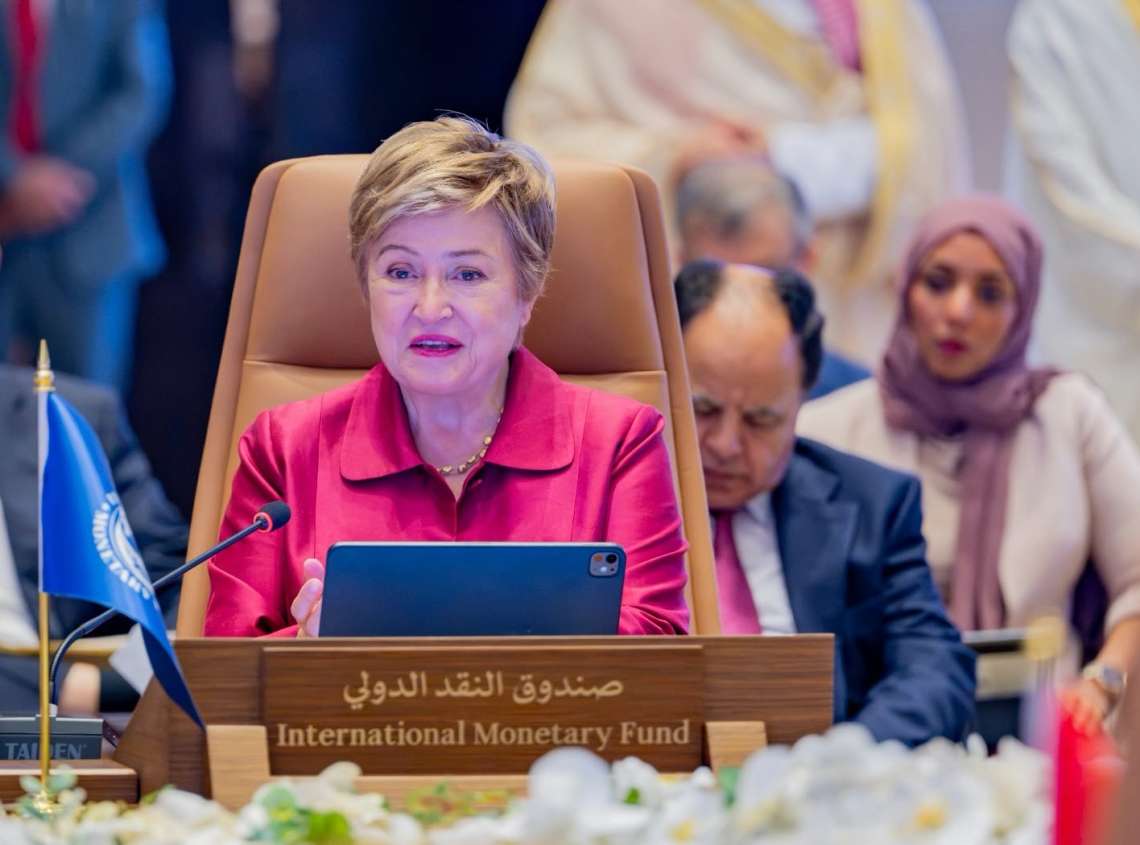
In a statement issued on Saturday after its 54th meeting in Bangkok, the International Monetary and Financial Committee (IMFC) said the global economy had weathered successive shocks but cautioned against assuming that resilience would continue.
“The global economy has weathered the latest in a series of shocks better than expected, but continued resilience should not be taken for granted,” the committee said.
The statement was issued under the chairmanship of Saudi Finance Minister Mohammed Aljadaan.
IMF warns of growing global economic risks
The committee highlighted the humanitarian and economic costs of ongoing wars and conflicts, noting that poorer countries were bearing a disproportionate share of the burden.
It warned that escalating geopolitical tensions could disrupt international trade routes, push up commodity prices and worsen energy and food insecurity.
Uncertainty surrounding global energy supplies, trade policies and the financial consequences of prolonged conflicts continues to pose challenges for governments and businesses.
Although global growth has remained broadly stable despite successive shocks, the committee said governments had less capacity to absorb further disruptions.
Rising debt and financial pressures threaten stability
The IMFC identified rising sovereign bond yields, high public debt and refinancing pressures as additional threats to financial stability.
Countries with substantial borrowing requirements or limited access to international capital markets could face particular difficulties as financing conditions tighten.
The committee called for sound macroeconomic policies and credible fiscal frameworks to strengthen economic resilience. It also urged governments to address fiscal weaknesses while protecting vulnerable populations and maintaining investment needed for long-term growth.
Central bank independence was described as essential to maintaining policy credibility and controlling inflation expectations.
Technology presents opportunities and uncertainties
The committee also examined the growing influence of advanced intelligence technologies on the global economy.
It acknowledged that rapid technological progress was supporting investment and trade, with the potential to improve productivity. However, uncertainty surrounding the economic and financial consequences of these technologies could amplify existing vulnerabilities.
The IMFC stressed the importance of continued cooperation between governments and international financial institutions to address emerging challenges.
Bangkok Blueprint and digital finance safeguards
The statement welcomed the Bangkok Blueprint, an initiative aimed at strengthening safeguards in digital finance, improving cybersecurity resilience and enhancing international efforts to combat digital fraud.
The committee also called for greater cooperation to address excessive global economic imbalances, trade tensions and distortions affecting international commerce.
It emphasised the importance of secure and resilient energy supplies, alongside freedom of navigation, for maintaining global economic stability.
Call for debt restructuring reforms
The IMFC renewed its commitment to improving sovereign debt restructuring, particularly for low-income countries and vulnerable middle-income economies.
It called for greater transparency from both borrowers and creditors, as well as more predictable arrangements for restructuring sovereign debt.
The committee’s assessment underlined the need for governments to balance fiscal discipline, economic growth and social protection while preparing for further geopolitical and financial shocks.