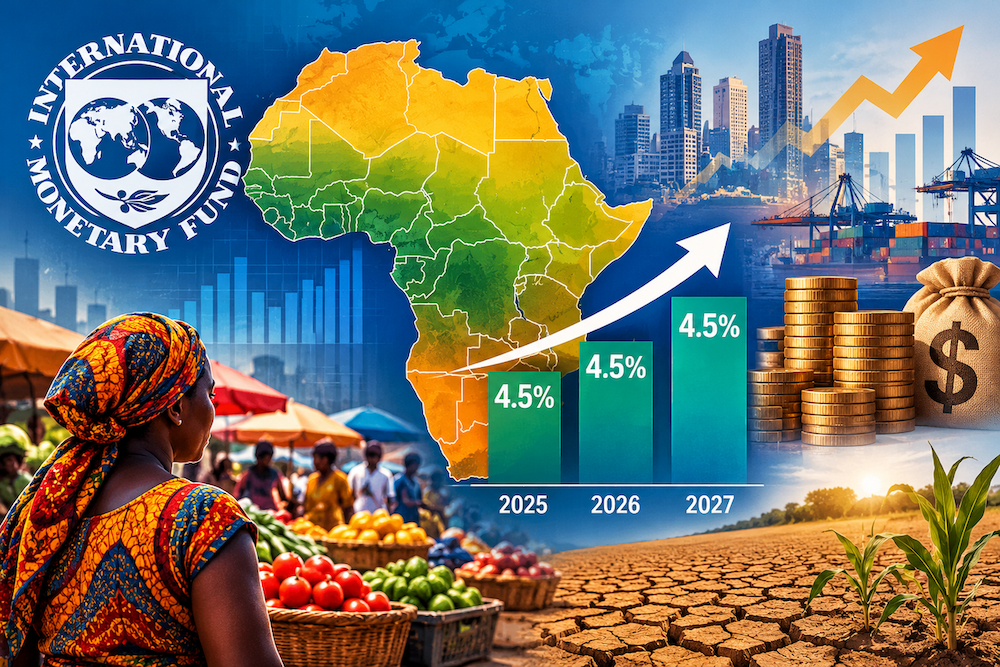

The IMF projects 4.5% growth for Sub-Saharan Africa in 2026 and 2027, but warns that inflation, debt costs, falling aid and El Niño pose risks…reports Africa Daily News Desk
Sub-Saharan Africa’s economy is projected to grow by 4.5 per cent in both 2026 and 2027, despite rising inflation, high borrowing costs and mounting external risks, according to the International Monetary Fund’s October 2026 Regional Economic Outlook Update. The forecast suggests continued regional resilience, but masks widening differences between resource-rich economies and countries with less access to commodity revenues.
The IMF said global supply adjustments, favourable export receipts in some countries and earlier economic reforms had helped cushion the impact of the war in the Middle East. However, it warned that declining aid, limited foreign-exchange reserves and high interest payments left many countries with little room to absorb further economic shocks.
The growth forecast for 2026 is 0.2 percentage points higher than the IMF’s April projection, while the outlook for 2027 remains broadly unchanged. Regional growth was estimated at 4.5 per cent in 2025.
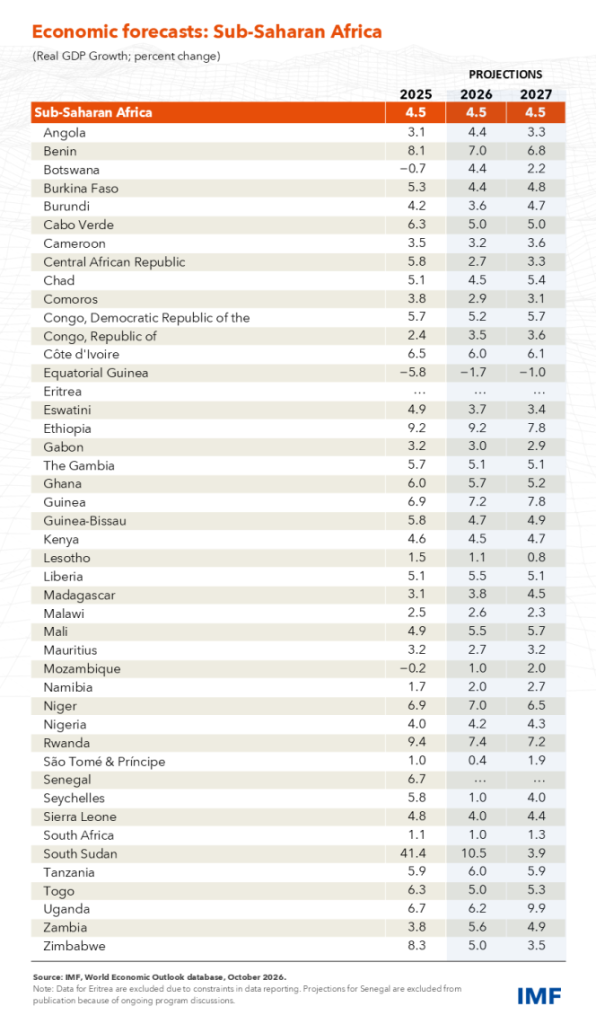
IMF forecasts uneven growth across African economies
The report highlights differences in the outlook for countries depending on their economic structure. Oil-exporting economies are projected to grow by 4.1 per cent in 2026, compared with 4 per cent in 2025. Growth in other resource-intensive economies is expected to remain at 3.8 per cent.
Non-resource-intensive economies, meanwhile, are forecast to see growth ease from 6.4 per cent in 2025 to 6 per cent in 2026. The IMF said the regional outlook assumes a gradual normalisation of energy supplies and prices in the Gulf, continued economic reforms and limited disruption from the El Niño weather phenomenon.
Also Read: African Union Steps Up Push for Sustainable Institutional Financing
The report noted that companies had adapted to supply disruptions by changing sourcing arrangements and logistics, while increased oil production outside the Gulf and the release of inventories had helped ease immediate pressures. However, prolonged disruption could eventually affect investment, employment and household consumption.
Higher energy and fertiliser costs remain a concern. The IMF’s October 2026 World Economic Outlook projects an average oil price of $96 a barrel in 2026, easing to $87 in 2027. Fertiliser prices are projected to rise by 26 per cent in 2026 compared with the previous year.
Inflation and debt pressures threaten stability
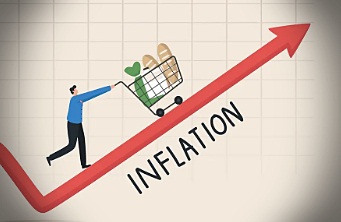
Median inflation across the region is projected to rise from 3.4 per cent in 2025 to 4.3 per cent in 2026 and 5 per cent in 2027. Higher fuel and transport costs are expected to feed into food prices, while expensive imported inputs could affect agricultural production.
Public finances have improved following fiscal adjustments in several countries. The median fiscal deficit narrowed to 3.1 per cent of gross domestic product (GDP) in 2025, while median public debt fell from 56.3 per cent of GDP in 2024 to 53 per cent in 2025. The IMF projects median public debt at 51.7 per cent of GDP in 2026.
Nevertheless, borrowing costs continue to restrict government spending. Interest payments are estimated to absorb a median of around 12 per cent of government revenue, excluding grants, over 2025-27.
The report also warned that declining international aid could intensify financing pressures. After falling by roughly a quarter in 2025, bilateral aid to the region is projected by the Organisation for Economic Co-operation and Development to decline by a further 12 per cent in 2026.
El Niño poses further risks to growth
The IMF identified renewed energy supply disruptions, worsening financing conditions, further aid reductions and severe weather events as major risks to the regional outlook.
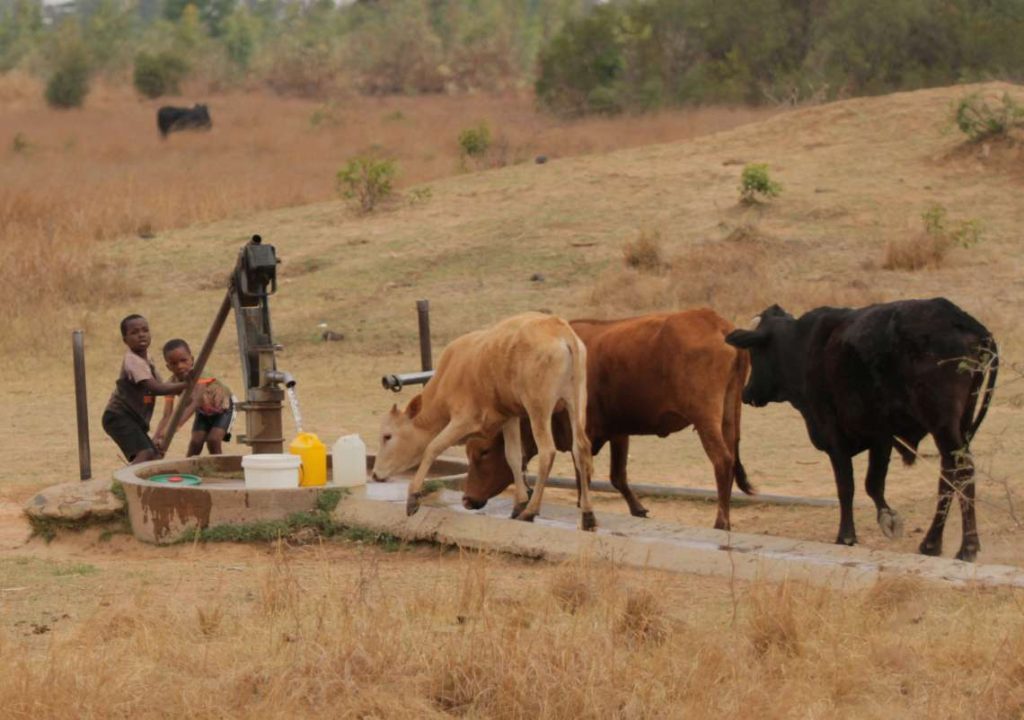
Its report warns that a strong El Niño could disrupt food and electricity supplies during 2026-27, particularly in Southern Africa. Below-normal rainfall could affect crops and rural incomes in parts of Malawi, Mozambique, Zambia and Zimbabwe, while lower reservoir levels could constrain hydropower generation.
In a scenario involving higher global agricultural prices and lower crop yields in Southern Africa, IMF simulations indicate that median regional GDP growth could be 0.5 percentage points lower and median inflation 2.6 percentage points higher in 2027.
IMF urges targeted support and continued reforms
The IMF called on governments to preserve fiscal stability while protecting vulnerable households and productive investment. It recommended saving most temporary revenue gains from commodities, strengthening domestic revenue collection and avoiding permanent spending increases funded by short-lived windfalls.
The report also urged governments to replace broad fuel subsidies with targeted assistance for vulnerable households, improve social protection systems and strengthen debt transparency.
Investment in electricity supply, digital connectivity, skills and the business environment was identified as essential for raising productivity and supporting private-sector growth.
The IMF said rebuilding fiscal and foreign-exchange reserves, improving debt management and strengthening the capacity to deliver assistance would help countries withstand future shocks and support longer-term living standards.