
Algeria expands the death penalty to forest arsonists and serious child kidnappers after deadly wildfires, as questions grow over the disaster’s true toll…reports Africa Daily News Desk
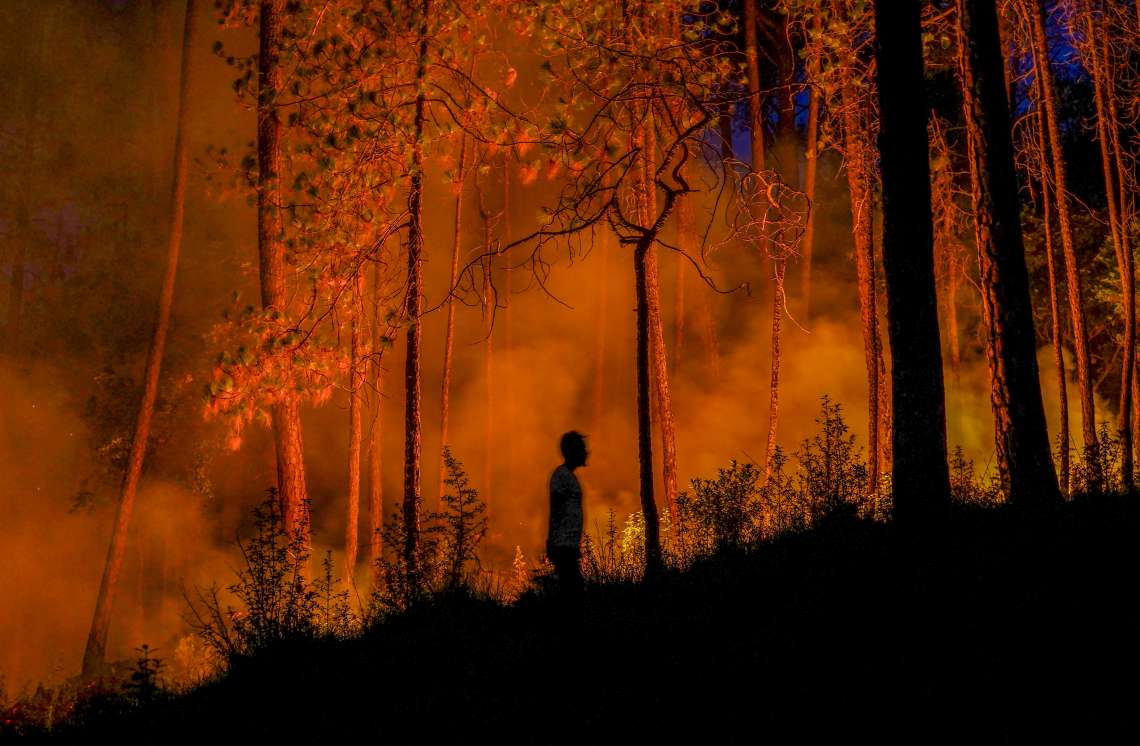
Algeria’s lower house of parliament has approved legislation allowing the death penalty for people convicted of deliberately setting fire to forests and fields, following a devastating summer wildfire season that exposed deep concerns over the country’s ability to prevent and respond to major fires.
The National People’s Assembly voted on Thursday to amend the penal code, expanding capital punishment to deliberate arson involving forests, woods and planted or unplanted fields. The measure also extends the death penalty to certain child abduction cases, particularly where kidnapping is accompanied by torture, sexual assault or mutilation.
The legislation was introduced after President Abdelmadjid Tebboune ordered the Justice Ministry to amend criminal law following a wave of fires in northeastern Algeria during a period of extreme heat.
Justice Minister Lotfi Boudjemaa defended the tougher penalties in parliament, describing them as an appropriate legal response to serious crimes. He said investigations had indicated that some arson had reached the level of organised crime and alleged that certain cases involved links to foreign parties.
The government has previously suggested that some of the fires may have been deliberately started. The new legislation also covers certain deliberate destruction of public or private property carried out for foreign parties in circumstances involving treason, espionage or organised crime.
Death toll disputed
The official death toll from the summer fires remains 12, according to Algerian authorities and reports from AFP. However, independent reporting has suggested the actual number of deaths could be considerably higher.
Journalist Nozha Khelalef has been compiling names from family death notices, local authority records and information shared by communities. Her independently assembled tally has put the number of deaths in Jijel province alone at about 200.
Le Monde also reported that an independent count had exceeded 200 deaths, while noting that Algerian authorities had not released an updated official figure after announcing the provisional total of 12 on August 26.
The discrepancy has added to questions over the scale of the disaster and the availability of reliable information following the fires. In Jijel, one of the worst-hit areas, entire communities were affected as flames swept through coastal and mountainous areas.
Although the death penalty remains part of Algeria’s penal code, the country has not carried out an execution since 1993. Courts have continued to hand down death sentences for some offences, but a de facto moratorium has prevented executions for more than three decades.
The new legislation therefore represents a significant expansion of the crimes for which capital punishment can be imposed.
Amnesty International has criticised the move, urging Algeria not to resume executions and arguing that authorities should instead strengthen wildfire prevention, emergency response and protection of communities. Human rights groups have also questioned whether the death penalty can effectively deter arson.
The government maintains that suspects facing capital punishment will retain legal safeguards, including appeal procedures and the possibility of seeking a presidential pardon.
Climate pressure adds to wildfire threat
Forest fires are a recurring summer hazard in northern Algeria, but increasingly severe heat and drought have made conditions more favourable for rapid fire spread.
In July, civil protection authorities reported more than 100 fires within a 24-hour period during a heatwave, with temperatures forecast to reach 48C in parts of the country.
Climate change is increasing the intensity of heatwaves and drought conditions across the Mediterranean, creating longer and more dangerous wildfire seasons. That means Algeria faces a challenge extending beyond identifying and prosecuting suspected arsonists, with prevention, land management, early warning systems and emergency response also central to reducing future losses.
The bill will now go before Algeria’s Council of the Nation, the upper house, for review before it can be formally ratified by President Tebboune.