
The Democratic Republic of Congo has received the first doses of ERVEBO vaccines as an Ebola outbreak spreads across six provinces and 56 health zones….reports Africa Daily News Desk
The Democratic Republic of Congo has received the first doses of ERVEBO Ebola vaccines as authorities intensify efforts to contain an outbreak that has affected six provinces and 56 health zones.
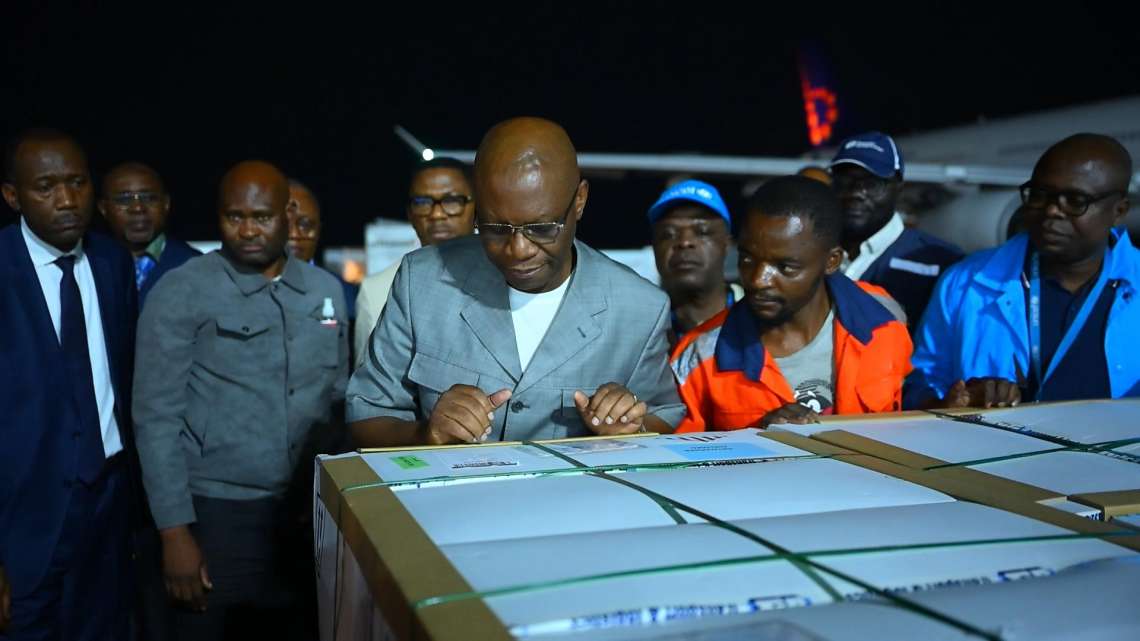
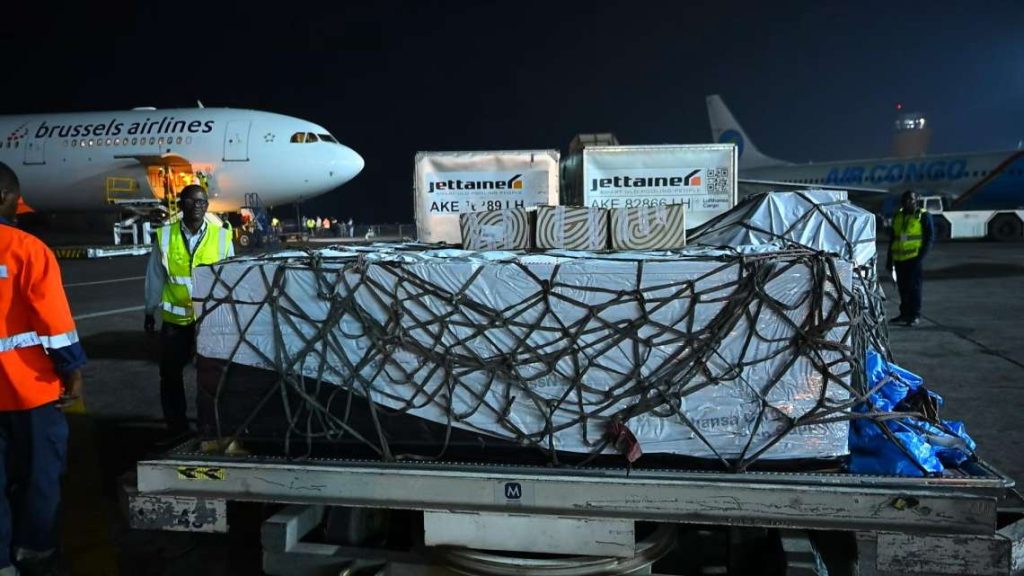
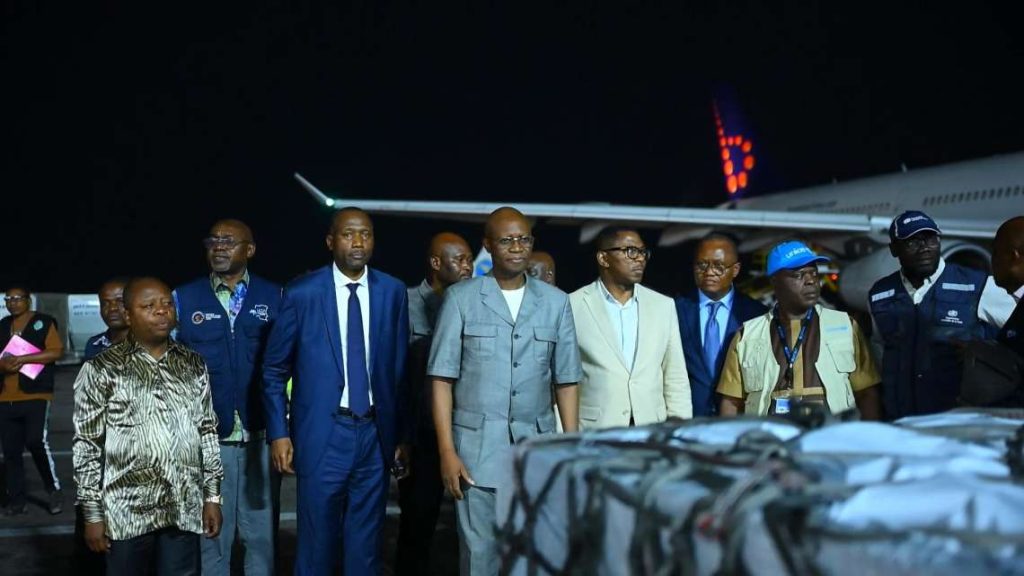
Public Health, Hygiene and Social Welfare Minister Dr Samuel Roger Kamba received the first shipment at N’djili International Airport in Kinshasa on Friday, August 21.
A total of 16,520 doses arrived on August 21, with the remaining doses expected to bring the allocation to 50,120 vaccines between August 21 and 24. The vaccines, funded by Gavi and manufactured by MSD in Germany, transited through Switzerland, Luxembourg and Belgium before reaching Kinshasa.
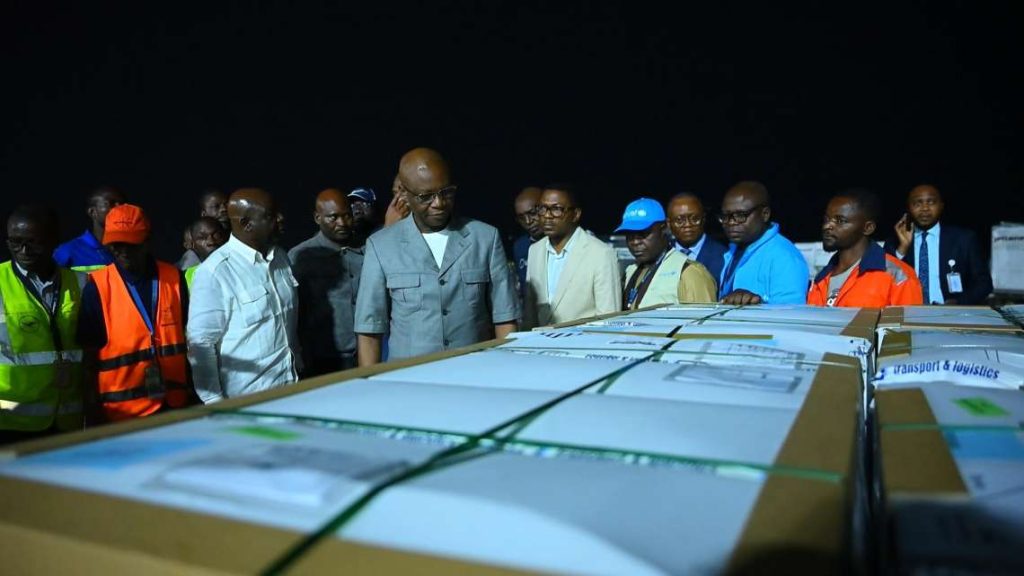
The latest allocation is intended to strengthen the government’s Ebola response and protect populations in affected and at-risk areas with support from international partners.
According to an August 18 situation update from the Congolese Ministry of Health, 5,208 confirmed Ebola cases had been recorded across six affected provinces: Ituri, North Kivu, South Kivu, Haut-Uele, Bas-Uele and Tshopo.
The outbreak has affected 56 health zones, with 730 patients in isolation or hospitalised. A total of 1,115 people had recovered, while 2,476 deaths had been reported. The overall case fatality rate stood at 47.5 per cent, while contact tracing coverage was 84 per cent.
Ituri has recorded cases in 28 of its 36 health zones, making it the most extensively affected province. North Kivu has reported cases in 12 of 34 health zones, while South Kivu has one affected zone out of 34.
Haut-Uele has reported cases in six of its 13 health zones, Bas-Uele in two of 11 and Tshopo in seven of 23.
Health authorities said the response was being intensified through stronger epidemiological surveillance, community prevention measures and rapid treatment of cases to prevent new chains of transmission.
Vaccination remains a central part of the response, with ERVEBO being deployed to protect exposed populations. The health authorities said 2,000 doses were already available in Tshopo and that a request had been made for an additional 500,000 doses to expand vaccination coverage.
Treatment efforts are also being expanded. Health authorities have introduced remdesivir and are examining the use of monoclonal antibodies and other antiviral medicines as part of efforts to improve patients’ chances of recovery and reduce mortality.
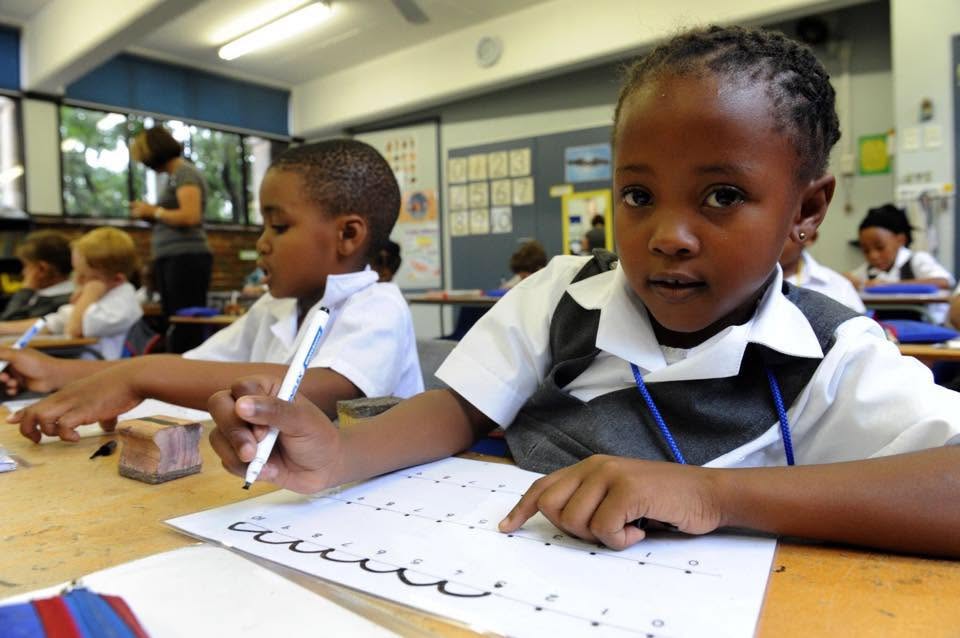
The outbreak is also affecting preparations for the 2026-27 school year. Authorities said the reopening of schools would be adapted according to the level of health risk.
In 18 high-risk health zones, a light distance-learning programme will be introduced for four weeks. The programme will rely on printed teaching materials, local radio and monitoring by teachers, without requiring families to have internet access or digital equipment.
The measures are part of a broader effort to maintain essential services while limiting the risk of further transmission in areas affected by the outbreak.
The Ministry of Health said the situation remained subject to change as information from provinces and different response pillars is consolidated, validated and harmonised.
The latest vaccine delivery comes as authorities seek to strengthen surveillance, vaccination and treatment while expanding community-level prevention measures across the six affected provinces.
The government’s response is being supported by international partners as health officials work to contain transmission, protect vulnerable populations and improve access to care in the affected areas.