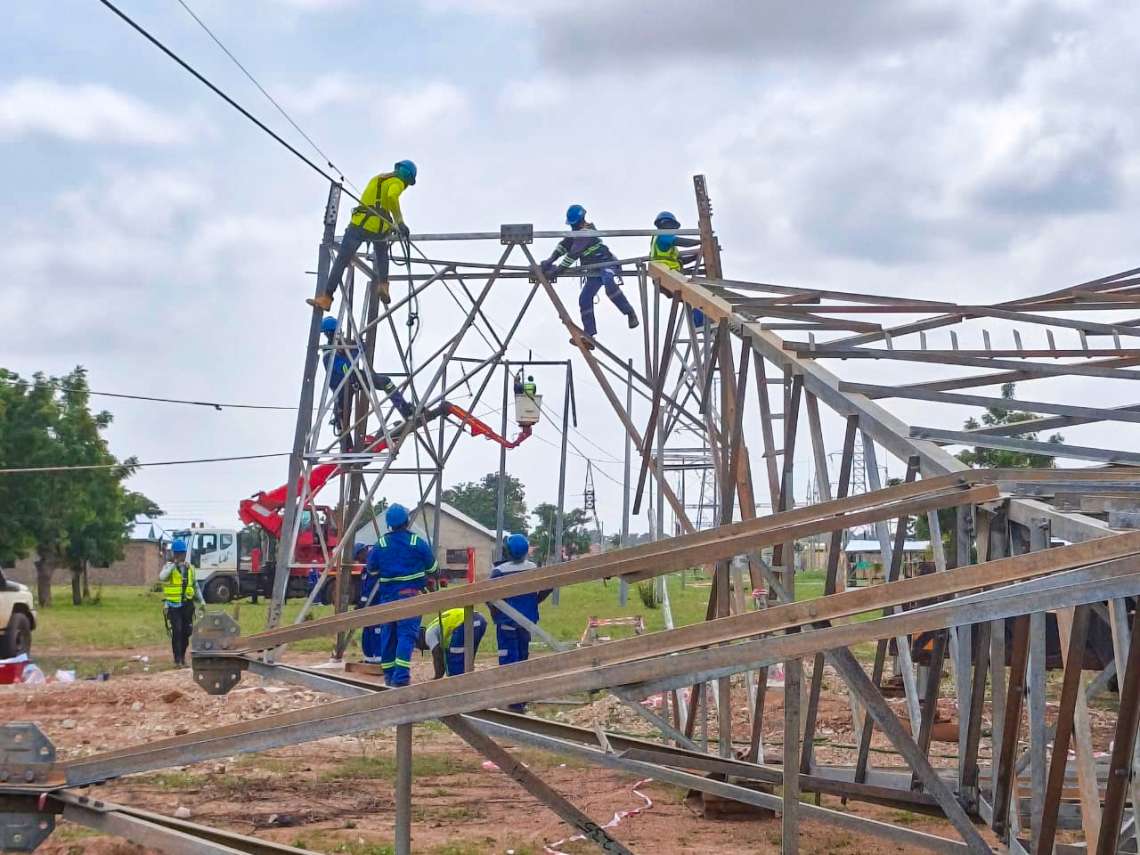

A major fault on Ghana’s national electricity grid, coupled with flood-related infrastructure shutdowns, has caused widespread power outages across the country, disrupting homes, businesses and transport….reports Africa Daily News Desk
A major fault on Ghana’s national electricity grid, compounded by flood-related infrastructure shutdowns, has triggered widespread power outages across the country, leaving the capital Accra, the commercial hub of Kumasi and much of northern Ghana without electricity.
The blackout followed severe flooding caused by persistent heavy rains, which forced Ghana Grid Company Limited (GRIDCo) and the Electricity Company of Ghana (ECG) to temporarily shut down the Mallam and Achimota Primary Substations in the Greater Accra Region as a safety precaution.
In a joint statement, the two utilities said the flooding had affected critical electricity infrastructure, making it necessary to suspend power supply from the affected facilities to protect lives, operational personnel and electrical equipment.
The situation worsened after a major fault developed on the national transmission network in the early hours of Wednesday, forcing several power plants across the country to shut down and resulting in widespread electricity outages.
The combined impact of the grid fault and flood-related shutdowns disrupted electricity supply across multiple regions, affecting homes, businesses and essential services.
“Our engineers and system operators are working continuously to restore power in the shortest time possible without compromising safety,” GRIDCo said.
GRIDCo and ECG said engineers were continuously monitoring the impact of the flooding on the transmission and distribution network while carrying out detailed assessments before restoring electricity supply to affected substations.
The utilities warned that additional outages could occur in other flood-affected areas if conditions deteriorate.
“As the heavy rains and flooding persist, the public is advised that power supply may be temporarily interrupted in other affected areas, where necessary, as a precautionary measure to protect lives, property, and critical electricity infrastructure whenever safety risks are identified,” the joint statement said.
The blackout caused significant disruption to daily life across Ghana.
Many commuters struggled to travel to work after their mobile phones ran out of charge, preventing some from making digital payments for public transport or booking taxis through ride-hailing applications such as Uber.
Small businesses that rely on electricity and digital payment systems also faced disruption, while many households were left without power for several hours. Larger institutions, including hospitals, continued operating with the help of backup generators.
Ghana has experienced recurring electricity shortages for years, commonly referred to as “dumsor”, an Akan expression meaning “on and off”. Although the frequency of power cuts has declined in recent years following improvements to the country’s electricity system, Wednesday’s outage was among the most extensive in recent times.
GRIDCo and ECG urged the public to exercise extreme caution around electricity installations while the adverse weather continues.
The utilities asked residents to immediately report fallen electricity poles, exposed or damaged power lines, flooded electrical installations and other electricity-related hazards to the nearest ECG office or through the company’s customer service channels to support rapid emergency response efforts.
The companies apologised for the inconvenience caused by the outages and thanked customers for their patience and cooperation.
They said every effort would be made to restore electricity supply as quickly as possible once weather conditions improve, floodwaters recede and engineers determine that it is safe to resume operations at the affected substations.