
Pope Leo urges governments to reject politics driven by power, domination and unjust wealth….reports Africa Newsdesk
Pope Leo XIV used the final days of his Africa tour to deliver a strong political and geopolitical message on inequality, resource exploitation, governance and social justice, urging leaders in Equatorial Guinea and across the world to reject “economies of exclusion” and place human dignity above power and wealth.
During meetings with political leaders, prisoners, young people and church communities in Equatorial Guinea, the Pope repeatedly warned against the dangers of unchecked political power, widening inequality and the exploitation of natural resources in conflict ridden regions.
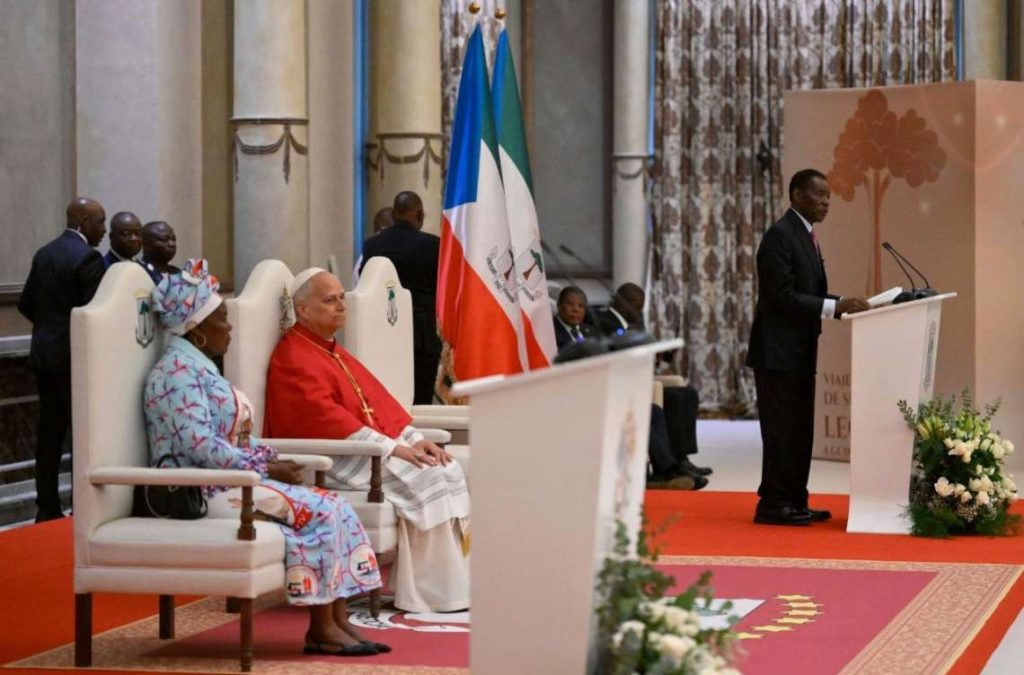
Addressing President Teodoro Obiang Nguema Mbasogo and senior government officials, Pope Leo said political leadership must be rooted in justice, solidarity and respect for human dignity rather than “the pursuit of unjust wealth and the illusion of dominion”.
Referring to Equatorial Guinea’s ambitious “City of Peace” development project, the Pope urged leaders to reflect on whether political systems serve people or merely reinforce power structures and inequality.
He drew a sharp contrast between what he described as the “city of God”, founded on compassion and justice, and the “earthly city”, driven by greed, domination and the pursuit of worldly glory.
In one of his strongest interventions during the trip, the Pope condemned global economic systems that deepen inequality and marginalisation.
“Exclusion is the new face of social injustice,” he said, warning about the growing divide between wealthy elites and ordinary citizens despite rapid technological advances and expanding access to artificial intelligence and digital technologies.
Echoing the legacy of Pope Francis, whose first death anniversary was marked during the visit, Pope Leo declared: “We also have to say no to an economy of exclusion and inequality. Such an economy kills.”
He also linked armed conflicts to the exploitation of oil and mineral resources, warning that wars increasingly ignore international law and the rights of local populations.
The remarks carried particular significance in Equatorial Guinea, a resource rich Central African nation where oil wealth transformed the economy after major discoveries in the 1990s, but where critics have long argued that economic gains remained concentrated among a small elite.
In his homily in the eastern city of Mongomo, the Pope said the country had been blessed with “great natural wealth” and urged authorities and citizens alike to ensure that prosperity becomes “a blessing for all”.
The Pope also warned against the militarisation of emerging technologies and called on global leaders to act responsibly amid growing geopolitical instability.
“The destiny of humanity risks being tragically compromised without a change of direction in political responsibility,” he said.
Alongside his political messaging, Pope Leo focused heavily on youth empowerment and social inclusion. Visiting the Pope Francis Technology School in Mongomo, he praised vocational and technological education as essential for building “free and responsible consciences” among young people.
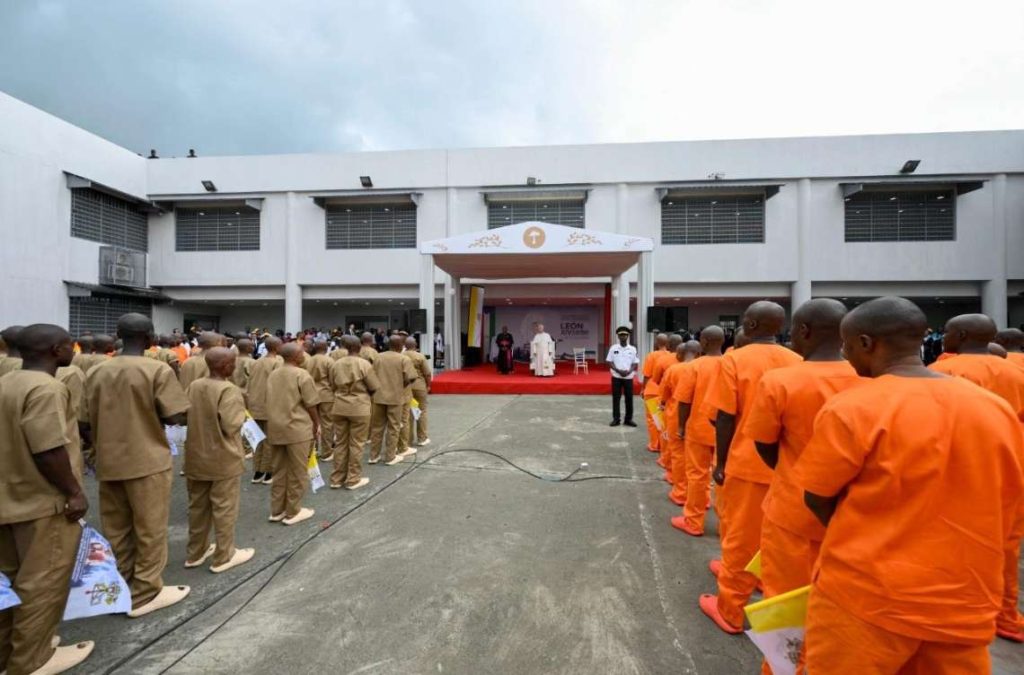
During an emotional visit to Bata prison, the Pope addressed inmates held in harsh conditions and stressed that no person should be excluded from compassion or dignity.
“No one is excluded from God’s love,” he told prisoners.
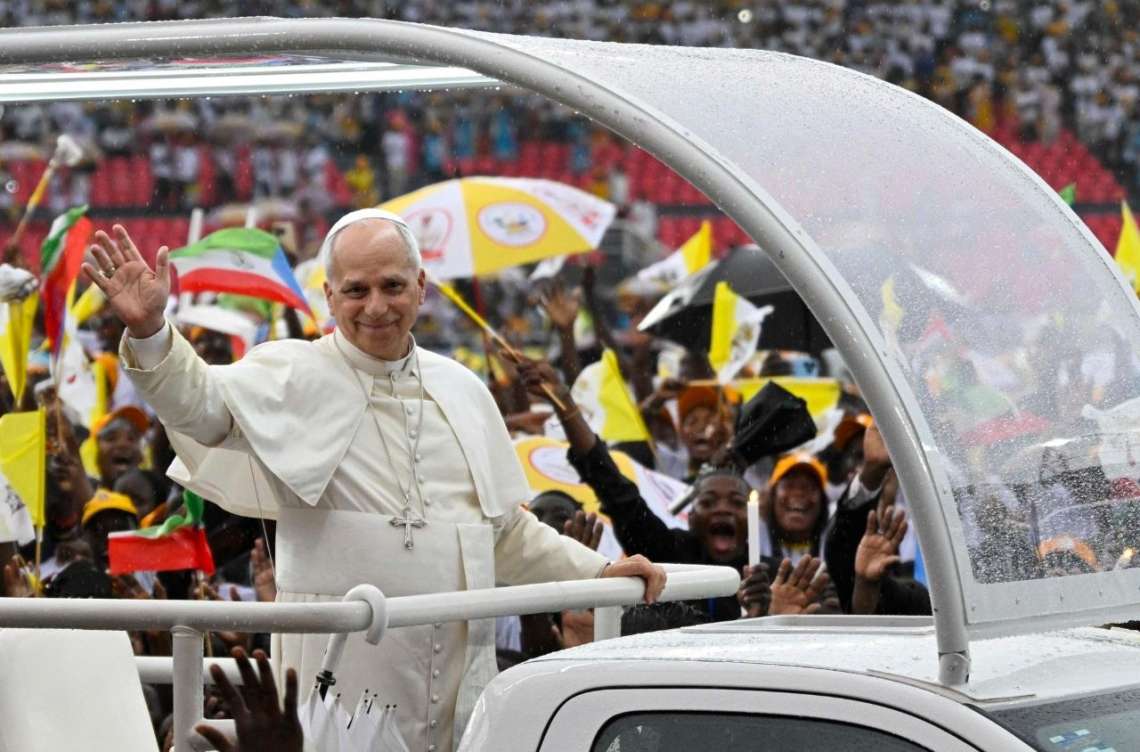
The Pope later concluded his final evening in Africa with a mass gathering of young people and families in Bata, where tens of thousands sang and danced through torrential rain as he called for unity, hope and solidarity in uncertain times.
Pope Leo is expected to conclude his 11 day Africa tour on Thursday before returning to Rome.