
Ethiopia’s federal government and Tigray authorities have accused each other of launching attacks, raising fears of a return to full scale conflict…reports Africa Daily News Desk
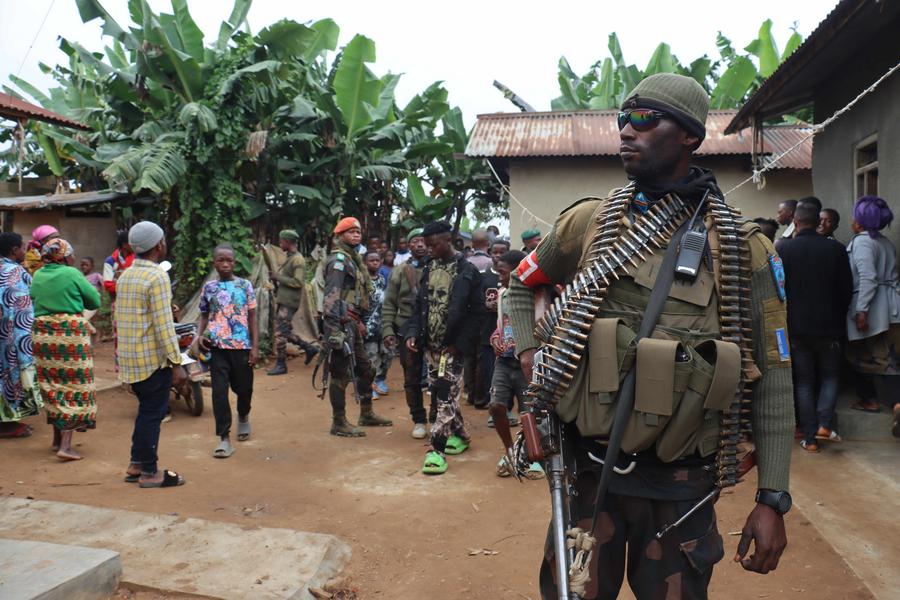
Ethiopia’s federal government and authorities in the Tigray region have accused each other of launching fresh military offensives, as renewed fighting and the seizure of airports deepen fears of a wider conflict in northern Ethiopia.
The escalation comes just days after seven armed groups, including the Tigray People’s Liberation Front (TPLF), announced the formation of the Ethiopian Peoples’ Forces Alliance for Survival, a coalition that says it wants to remove Prime Minister Abiy Ahmed’s government and establish an inclusive transitional administration.
In its founding statement, the alliance said its members had agreed to coordinate their political, civic and organisational capacities to remove what it described as the “personalist, dictatorial and genocidal regime” of the Prosperity Party and establish a transitional government guided by a transitional charter.
The alliance said its objectives included stopping wars, safeguarding the population, guaranteeing human and democratic rights, maintaining peace and security, addressing the country’s social and economic crisis and restoring Ethiopia’s regional and international standing.
The seven groups named in the statement are the Amhara Fano National Movement, Oromo Liberation Army, TPLF, Ogaden National Liberation Front, Afar Revolutionary Democratic Unity Front, Benishangul Peoples’ Liberation Movement and Gumuz Peoples’ Democratic Movement. Reuters and AP have also confirmed the composition of the newly announced alliance.
The coalition’s statement said the groups had taken “the historic responsibility of overthrowing this regime” and pledged to work towards an inclusive transitional government. It also said differences among the groups would be resolved peacefully through what it described as the freely expressed will of the people and a lawful order.
The development has added to tensions between Addis Ababa and Tigray, where the TPLF was the dominant political force during the 2020 to 2022 conflict.
The Tigray regional government, meanwhile, has rejected the federal government’s account of the latest fighting.
In a statement dated September 24, Tigray’s Communication Affairs Bureau said federal forces had launched offensives against Tigray Security Forces in southern Tigray and from the direction of the Afar region on September 23, following what it described as extensive drone strikes and air and artillery bombardment.
“The Tigray Security Forces were compelled to defend themselves,” the statement said.
Tigray also accused the African Union of failing to adequately address the deteriorating situation and said peace and dialogue remained its “strategic choice”, provided mediation was impartial and independently engaged with both sides.
In a separate statement responding to an AU press release, the Tigray government said it had repeatedly asked the bloc to help secure implementation of the November 2022 Cessation of Hostilities Agreement and address humanitarian and economic conditions.
It alleged that key provisions of the agreement remained unimplemented and cited continued displacement, restrictions on services and economic difficulties in parts of Tigray.
The federal government has given a sharply different account, accusing the TPLF of launching a major offensive into neighbouring areas.
Tigrayan forces have seized control of airports in Mekelle, Axum and Shire, prompting Ethiopian Airlines to suspend flights to the region. AFP reported on Thursday that Tigrayan leaders described the situation as a “full-blown war”, while the two sides continued to accuse each other of starting the latest escalation.
The United Kingdom has called for an immediate end to hostilities and a return to African Union led dialogue. It also rejected the Alliance for Survival’s stated objective of overthrowing Ethiopia’s government and urged all sides to pursue a peaceful political solution.
The AU has also called for de escalation, while the renewed fighting has raised fresh concerns about the future of the 2022 peace agreement.
The latest developments therefore involve not only renewed fighting between federal and Tigrayan forces, but also the emergence of a broader seven group alliance whose stated objective is to bring about a political transition in Ethiopia.