
DR Congo’s government and M23 have agreed on a roadmap for the next phase of peace negotiations under the Doha framework…reports Africa Daily News Desk
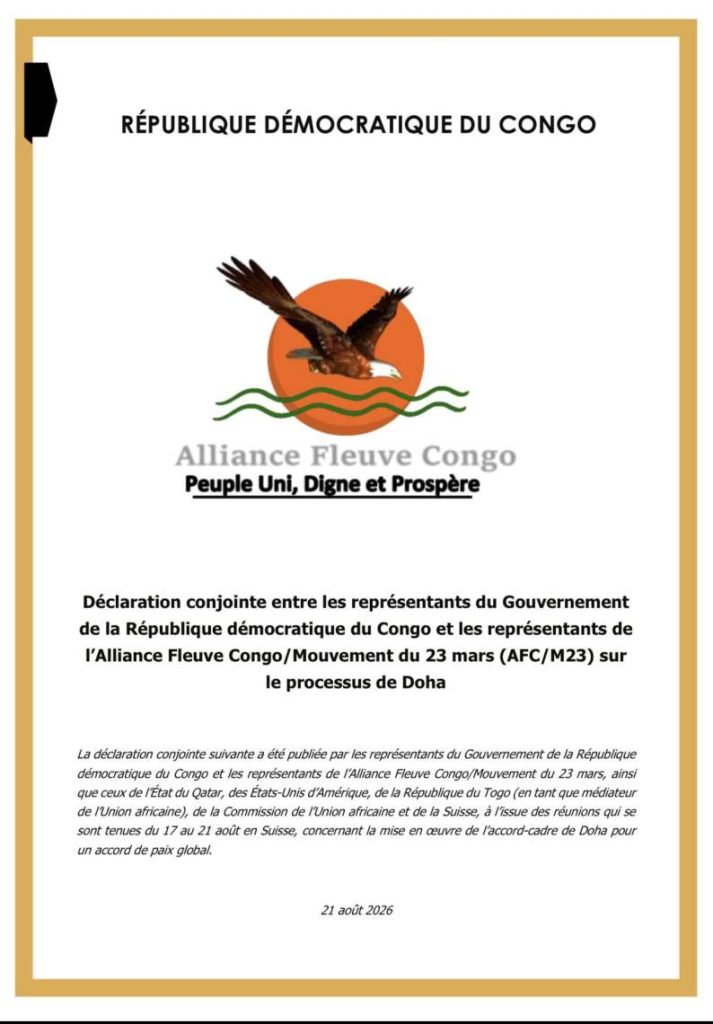
The Democratic Republic of the Congo (DRC) government and the March 23 Movement (M23) rebel group have agreed on a roadmap setting out the sequence and timeline for further peace negotiations, in a move aimed at advancing efforts to end the conflict in the country’s east.
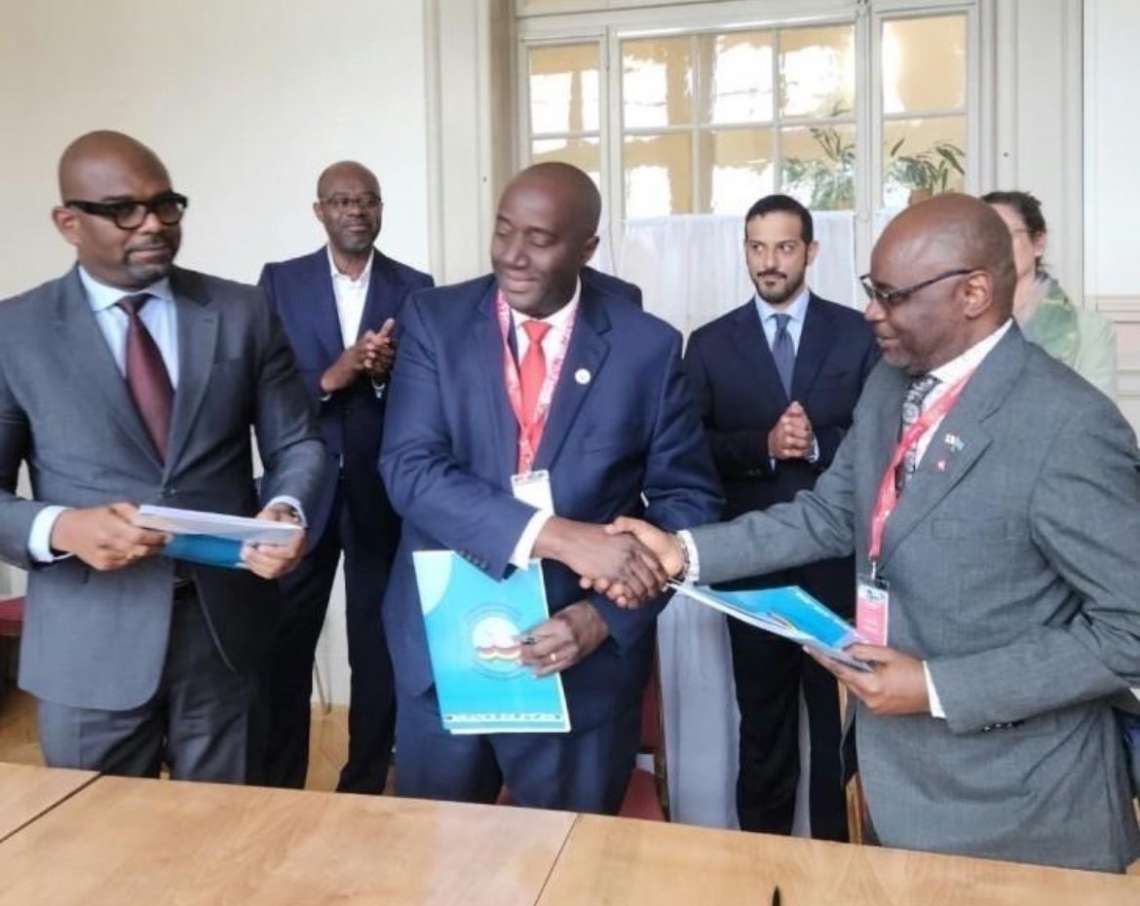
The agreement was reached during meetings held in Switzerland from August 17 to 21, where the two sides reviewed progress and challenges in the Doha peace process and discussed the implementation of commitments already made under the Doha Framework Agreement.
According to a joint statement, the discussions resulted in a roadmap outlining the sequence and timetable for the next phase of negotiations. The two sides also agreed to establish a mechanism to regularly assess progress and tackle challenges linked to the implementation of obligations and commitments under the framework.
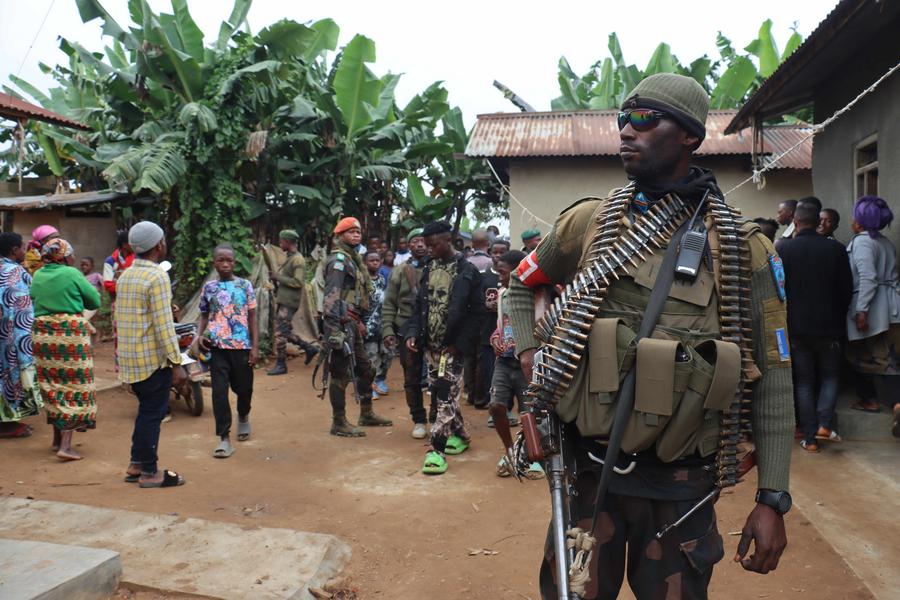
The agreement comes as diplomatic efforts continue alongside a fragile security situation in eastern DRC, where fighting between government forces and M23 has displaced civilians and heightened humanitarian concerns.
The two sides also welcomed progress in putting a ceasefire verification mechanism into operation. Its first verification mission is scheduled for August 24 in Minembwe, in South Kivu Province, according to the statement.
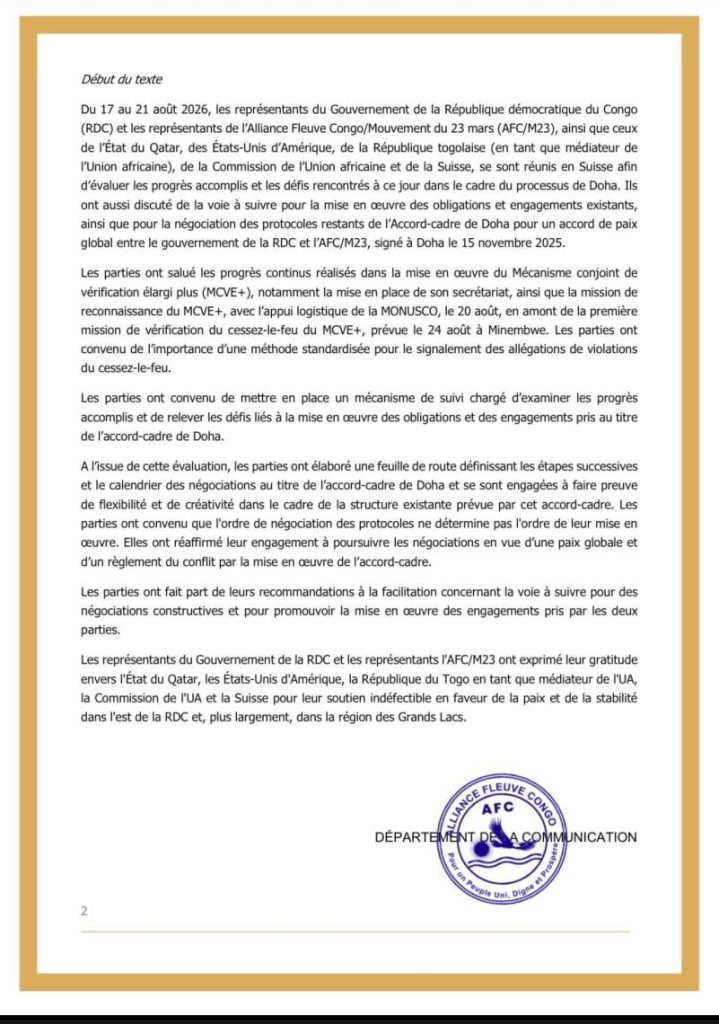
They stressed the importance of adopting a standardised system for reporting alleged ceasefire violations, a step intended to improve the monitoring of the truce and provide a clearer mechanism for addressing claims of breaches.
Both parties reaffirmed their commitment to continuing negotiations aimed at achieving a comprehensive peace agreement and resolving the conflict.
The latest discussions build on earlier talks held in Switzerland as part of efforts to advance the Doha peace process.
In April, the DRC government and M23 said they had made progress during Swiss-hosted negotiations on humanitarian access and ceasefire monitoring.
Following meetings held from April 13 to 17 in Montreux, Switzerland, the two sides said they had made “substantial progress” towards concluding a protocol covering humanitarian access and judicial protection.
The discussions focused on ensuring that vital humanitarian assistance could reach communities affected by the fighting in eastern DRC. The parties agreed to refrain from destroying or seizing property considered indispensable to the survival of civilians.
They also pledged to facilitate rapid, safe, sustainable and unhindered humanitarian access, as well as the free movement of aid workers, relief supplies and humanitarian convoys in conflict-affected areas.
The two sides further agreed to release prisoners within 10 days under previously established arrangements, with the measure intended to build confidence between the parties and support the broader peace process.
The latest roadmap represents another attempt to give structure and momentum to negotiations between Kinshasa and M23, while the ceasefire verification mechanism is expected to play a key role in monitoring developments on the ground.
Since January 2025, M23 has intensified its offensives in North Kivu and South Kivu, capturing several key cities and worsening the security and humanitarian situation in eastern DRC.
The conflict has drawn renewed international attention, with diplomatic initiatives seeking to secure a lasting ceasefire and establish conditions for a wider political settlement.