
Archbishop of Canterbury Sarah Mullally has visited Cape Coast Castle in Ghana, where thousands of enslaved Africans were imprisoned before being transported across the Atlantic…reports Africa Daily News Desk
Archbishop of Canterbury Sarah Mullally has visited Cape Coast Castle in Ghana, where thousands of enslaved Africans were imprisoned before being transported across the Atlantic. During the visit, she prayed for healing, justice and reconciliation while acknowledging the Church’s role in the transatlantic slave trade.
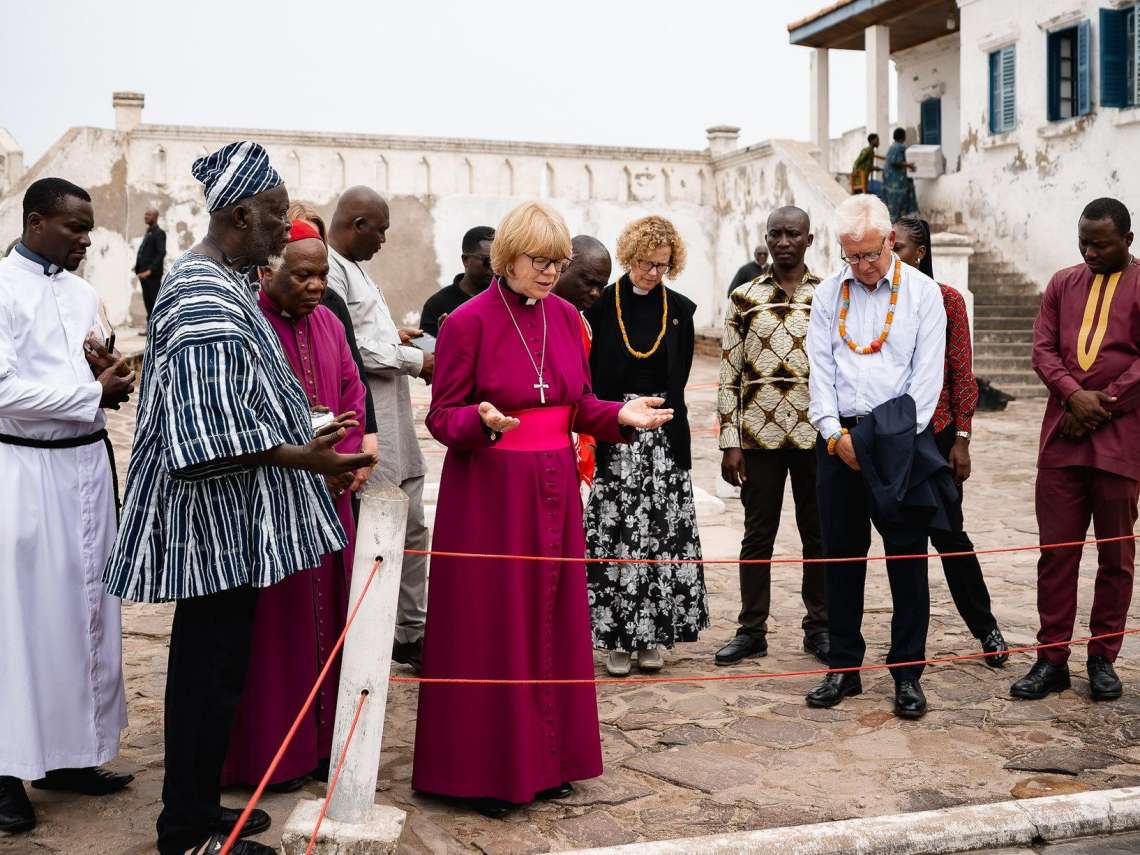
The Archbishop of Canterbury, Sarah Mullally, has visited Cape Coast Castle in Ghana, a former British slave fort, where she prayed for healing and reconciliation while acknowledging the Church’s role in the transatlantic slave trade.
During the visit, Archbishop Sarah toured the historic castle, where enslaved Africans were imprisoned in underground dungeons before being transported across the Atlantic to the Americas on British slave ships.
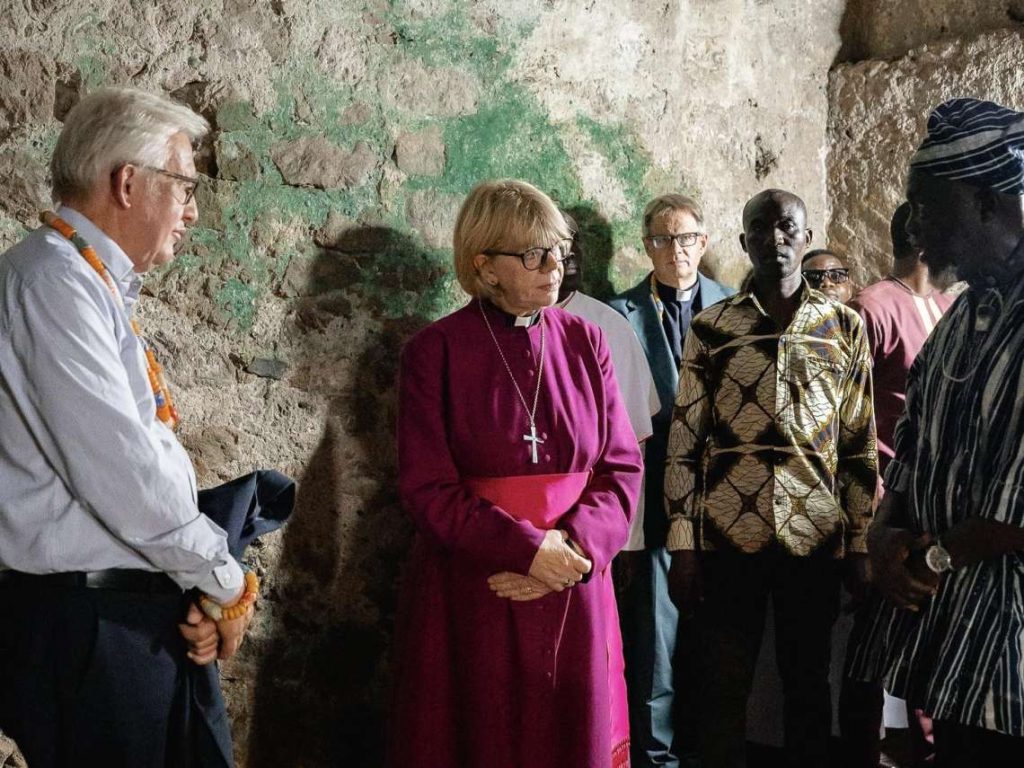
Photo credit Nana Osei Adu-Boahene / Lambeth Palace
She walked through the infamous “Door of No Return”, the final exit through which enslaved Africans passed before boarding slave ships. After stepping through the doorway, the Archbishop turned back and prayed at the shoreline where the ships once departed.
The Archbishop also visited the underground cells where enslaved men and women were held, the women’s quarters, and the area where captives were branded before being forced onto ships.
As part of the tour, she prayed inside a former Anglican chapel located above the male dungeons. The chapel, which now serves as an educational library and place of worship, stands as a reminder of the Church’s historical involvement in the transatlantic slave trade.
Reflecting on the visit, Archbishop Sarah said the experience highlighted the scale of suffering endured by those held at the castle.
“Being at Cape Coast Castle and seeing the horrific conditions that thousands of people were kept in, it is impossible not to feel the weight of the immense evil that drove the transatlantic slave trade.
“We have a God who loves each one of us, who created each of us with an individual value and worth, and yet that was not recognised here.
“I pray not only in lament for the Church’s involvement in the slave trade, but also for hope – hope that the God of healing can bring justice and reconciliation to all who are still impacted by its legacy. In the name of Jesus Christ, who came to set people free, I pray that we have the courage to continue our journey of repentance, and to strive for a world in which all of God’s children are treated with dignity.”
Cape Coast Castle was one of the principal sites used during the transatlantic slave trade, where thousands of Africans were detained before being transported to the Americas. Today, it serves as a museum and memorial to those who suffered under slavery and is recognised as a UNESCO World Heritage Site.