
The Cradock Four case remains a powerful symbol in South Africa’s pursuit of justice, with victims’ families still demanding full accountability decades later, Newsdesk reports
One of apartheid South Africa’s most feared police commanders has testified at a fresh inquiry into a notorious 1985 killing, as the country revisits unresolved crimes from the era of racial segregation, The Washington Post reported.
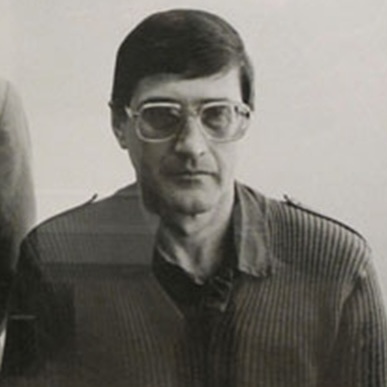
Eugene de Kock, widely known as “Prime Evil” for his role in the killing of anti apartheid activists, appeared before the inquiry examining the deaths of the Cradock Four — a case that remains one of the most shocking symbols of state brutality under apartheid.
According to The Washington Post, de Kock denied direct involvement in the abduction and murder of the four activists — Matthew Goniwe, Fort Calata, Sicelo Mhlauli and Sparrow Mkonto — who were stopped at a police roadblock, abducted and later found burned.
However, he told the inquiry that apartheid era security forces maintained extensive surveillance lists of activists. Police had compiled photographs and profiles of around 6,000 individuals labelled as “known terrorists”, who were to be tracked and killed if arrest was not possible, he said.
Despite this, de Kock claimed the Cradock Four were not on those lists.
The inquiry has also heard allegations of attempts to cover up the killings. De Kock testified that a senior officer approached him for assistance in interfering with forensic evidence. “He wanted to know if I could get another firearm,” de Kock said, adding that he was asked whether it would be possible to manipulate ballistic findings, as reported by The Washington Post.
The renewed investigation forms part of South Africa’s broader effort to address unresolved atrocities committed during apartheid, many of which went unpunished despite the work of the Truth and Reconciliation Commission in the 1990s.
De Kock, who commanded a notorious counterinsurgency unit, was convicted in 1996 on multiple charges including murder, kidnapping and torture. He was sentenced to two life terms plus 212 years in prison before being released on parole in 2015.
The Cradock Four case continues to hold deep symbolic significance in South Africa’s struggle for justice, with families of the victims still seeking full accountability decades after their deaths, The Washington Post reported.
Eugene Alexander de Kock is a former South African police colonel who became one of the most infamous figures of the apartheid era for his role in state sponsored violence.
Nicknamed “Prime Evil” by the press, De Kock led C10, a covert counterinsurgency unit of the South African Police that operated from the 1980s to the early 1990s. The unit was responsible for the abduction, torture and killing of suspected anti apartheid activists, including members of the African National Congress.
After the end of apartheid in 1994, De Kock testified before the Truth and Reconciliation Commission, where he detailed the extent of the unit’s operations and acknowledged the suffering caused to victims’ families.
In 1996, he was convicted on 89 charges, including crimes against humanity, and sentenced to two life terms plus an additional 212 years in prison. During and after his trial, he also accused senior apartheid era officials of authorising or enabling the activities of his unit.
De Kock was granted parole in 2015 after serving nearly two decades in pris