
UN reports reveal that 840 million women and girls have experienced physical or sexual violence, while only a small proportion seek help or report abuse….reports Asian Lite News Desk
Nearly one in three women worldwide have experienced physical or sexual violence, yet only seven per cent report it to the police, highlighting the scale of a global crisis in which survivors often remain silent and perpetrators escape justice. Two new United Nations reports warn that barriers within justice systems, social pressures and institutional failures are undermining women’s confidence in seeking protection.
The findings were published ahead of the International Day for the Elimination of Violence against Women on 25 November. A 2026 report by the UN Office on Drugs and Crime (UNODC) and UN Women found that partners and family members were responsible for 60 per cent of the 78,000 intentional killings of women and girls recorded worldwide last year.
The reports also reveal the difficulties survivors face when attempting to report abuse, access support and secure convictions against perpetrators.
UN Women Deputy Executive Director Nyaradzayi Gumbonzvanda said fewer women were seeking help in countries where reporting trends had been monitored, warning that confidence in justice systems was declining.
“The silence is getting louder in most countries where we have tracked it over time. Fewer women are seeking help today than before. We are going backwards,” she said during a briefing at UN Headquarters in New York.
“Our data shows justice systems globally make silence the safest choice a woman can make.”
Gumbonzvanda urged communities and institutions to believe survivors, even when they cannot provide physical evidence or recall every detail of their experiences.
“It costs nothing to believe someone. And it changes everything to believe a survivor, every single time,” she said.
Why are so few survivors seeking justice?
UN Women’s report, Access to Justice for Women Survivors of Violence, draws on information from 54 countries and examines the obstacles women encounter when seeking assistance and navigating legal systems.
An estimated 840 million women and girls have experienced physical or sexual violence during their lifetime. However, only 23 per cent of survivors seek help from family members, their communities or authorities.
The report also highlights the low rate of successful prosecutions. Between 63 and 97 per cent of reported cases do not result in a conviction, according to Kalliopi Mingeirou, Chief of UN Women’s Ending Violence Against Women Section.
“Cases fall out of the system along the way. Survivors face repeated questioning and intimidation. Perpetrators in positions of power are often never convicted,” she said, warning of a culture of impunity.
The figures vary considerably across regions. In Asia, just 16 per cent of survivors seek help, compared with 31 per cent in Africa and 40 per cent in Latin America and the Caribbean.
In the European Union, 64 per cent of survivors confide in someone close to them, but only 14 per cent report abuse to the police.
The reports also highlight the growing threat of online violence. Around 70 per cent of women in public life surveyed by UN Women, including human rights defenders, activists and journalists, said they had experienced online abuse.
Mingeirou warned that women were increasingly being pushed out of digital spaces and public life rather than perpetrators being held accountable.
Gumbonzvanda also raised concerns about the use of artificial intelligence to create deepfake images of women, warning that such material could have lasting consequences for survivors.
Africa records highest femicide rate
Africa recorded the highest rate of intimate partner and family-related femicide, at 2.9 victims per 100,000 female population. The Americas followed with 1.4, Oceania with 1.1, Asia with 0.6 and Europe with 0.5.
The findings also indicate that femicide rates are declining more slowly than overall homicide rates. Between 2010 and 2025, homicide rates fell nearly twice as fast as femicide rates in the Americas and around 1.5 times as fast in Europe.
UNODC Executive Director Monica Juma warned that harmful social attitudes and weak institutional safeguards contributed to an environment in which violence against women could become normalised.
“Frightening attitudes, social norms, and the failure of institutional safeguards create an environment in which killing a wife, daughter, mother, or sister becomes ‘tolerable’,” she said.
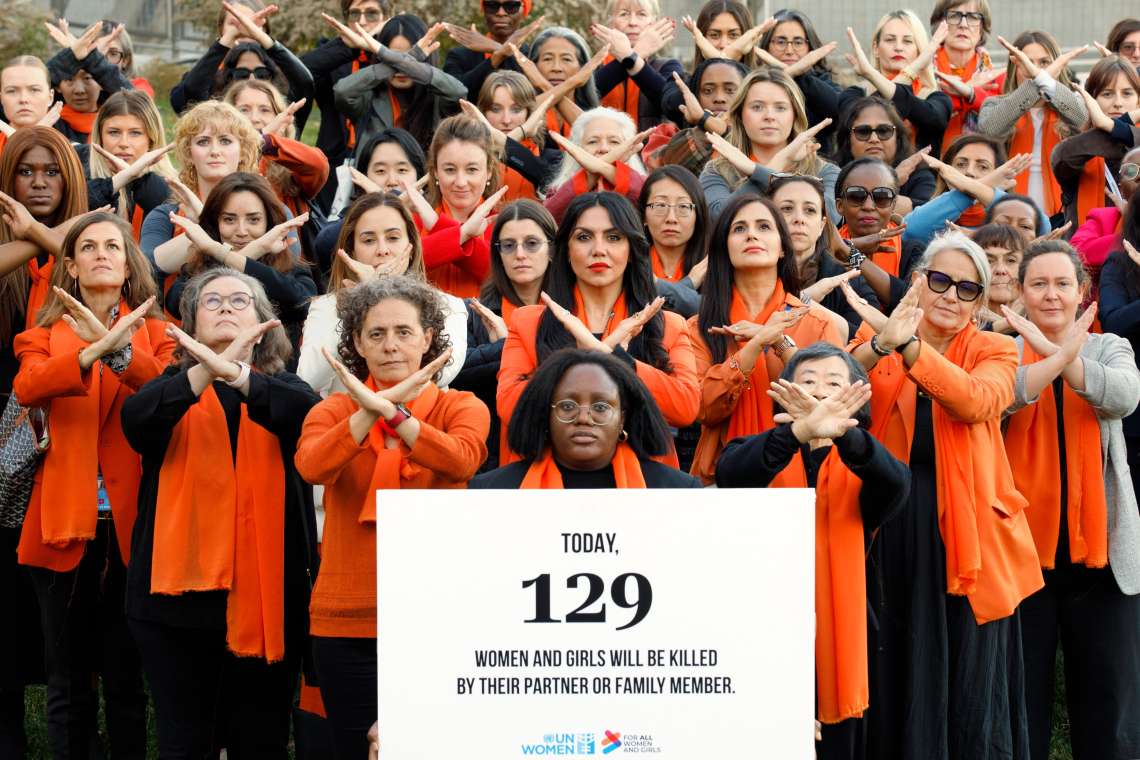
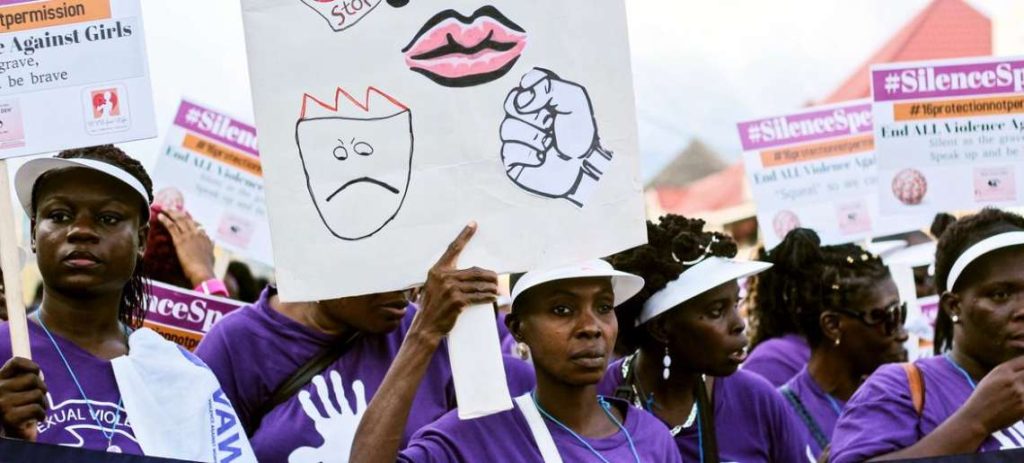
The findings come as the United Nations prepares to launch its annual 16 Days of Activism against Gender-Based Violence campaign on 25 November. The campaign will run until Human Rights Day on 10 December.
This year’s theme is ‘UNiTE to End Violence Against Women and Girls: Ensure Justice, Protect Survivors, End Impunity’.
UN Women and UNODC are calling on governments, businesses, the United Nations, media organisations, women’s groups and communities to strengthen prevention, improve support for survivors and ensure perpetrators are held accountable.
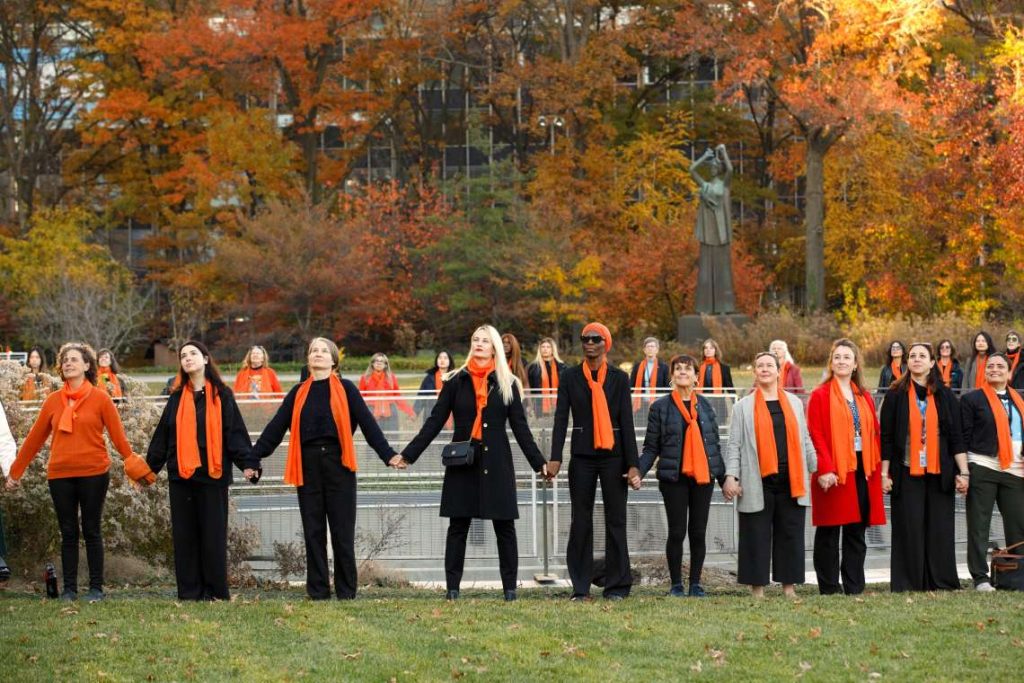
The campaign also encourages people around the world to ‘orange the world’ as a symbol of solidarity against violence towards women and girls.
Gumbonzvanda called on police to register complaints and investigate cases, courts to hear survivors without subjecting them to further intimidation, governments to provide effective protection services and technology companies to take action against online abuse.
She also delivered a message to survivors, stressing that they should not have to prove their worthiness of support or protection.
“To every survivor watching today, we believe you every single time. You should never have to prove that you deserve to be believed.”