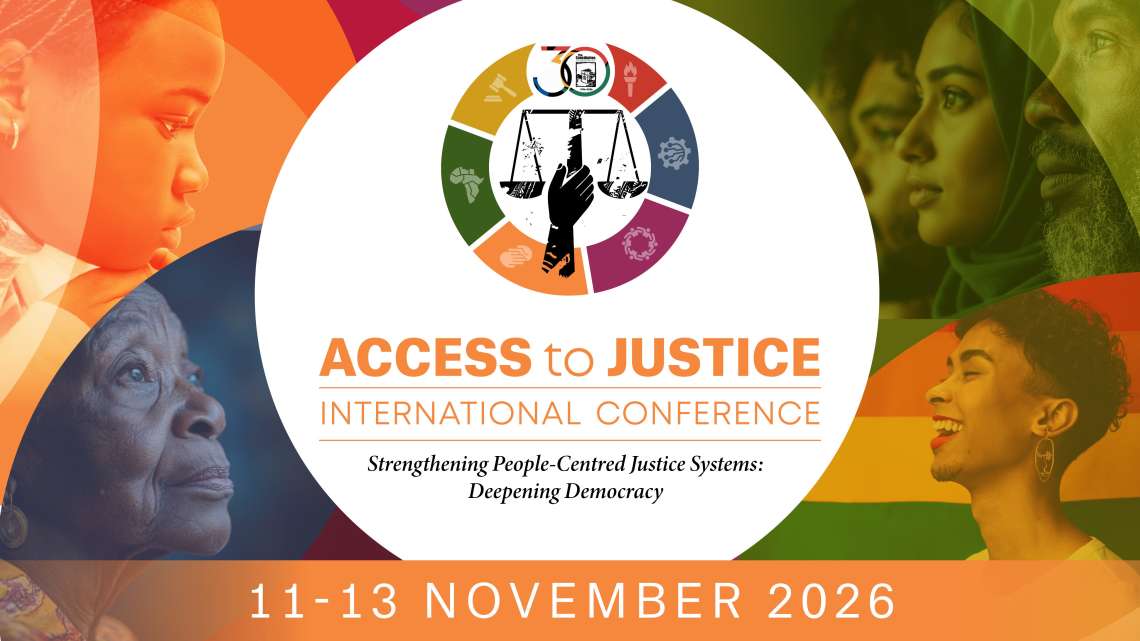

South Africa will host an international access to justice conference at Sun City from November 11 to 13, bringing together ministers, judicial leaders and representatives of major international organisations…reports Africa Daily News Desk
South Africa will host an international conference on access to justice from November 11 to 13, bringing together senior government officials, judicial leaders, international organisations and legal experts to discuss ways of strengthening justice systems and improving access to legal services. The conference, organised as part of the 30th anniversary celebrations of the country’s 1996 Constitution, will focus on judicial transformation, the rule of law and inclusive justice systems.
Justice and Constitutional Development Minister Mmamoloko Kubayi will host the three-day Access to Justice International Conference at the Sun City Convention Centre in the North West Province.
The event comes as South Africa marks three decades since the adoption of its Constitution in 1996, which transformed the country from a system built on colonial domination and apartheid exclusion into a democratic state founded on human rights, dignity, equality and freedom.
The 30-year milestone provides an opportunity to reflect on the country’s constitutional journey, recognise its achievements and address the challenges facing its democratic institutions.
Since 1996, the Constitution has helped anchor political stability, support a vibrant civil society and provide a moral and legal framework during periods of change. However, persistent inequality, corruption, gender-based violence, unemployment and declining public trust in institutions continue to place pressure on its promises.
Against this backdrop, the international conference will provide a platform for governments, judiciaries, academic institutions, civil society organisations, international bodies and development partners to discuss emerging challenges and explore practical ways to improve access to justice.
The discussions will focus on sharing international experiences and best practices, promoting people-centred justice solutions, strengthening institutional cooperation and examining how digital transformation, legal aid and alternative dispute resolution can improve access to justice.
The conference will also seek to develop practical strategies to ensure that justice services are accessible to vulnerable and underserved communities.
Minister Kubayi said access to justice was closely connected to broader social and economic rights guaranteed by the Constitution.
“Access to justice cannot be separated from access to the broader social and economic rights guaranteed by our Constitution. Through this conference, we want to strengthen partnerships and encourage innovative approaches to access to justice, including improved access to legal aid, digital justice services, alternative dispute resolution and more responsive support systems for victims of crime. Our collective ambition must be to build justice systems that people can access, understand and trust,” she said.
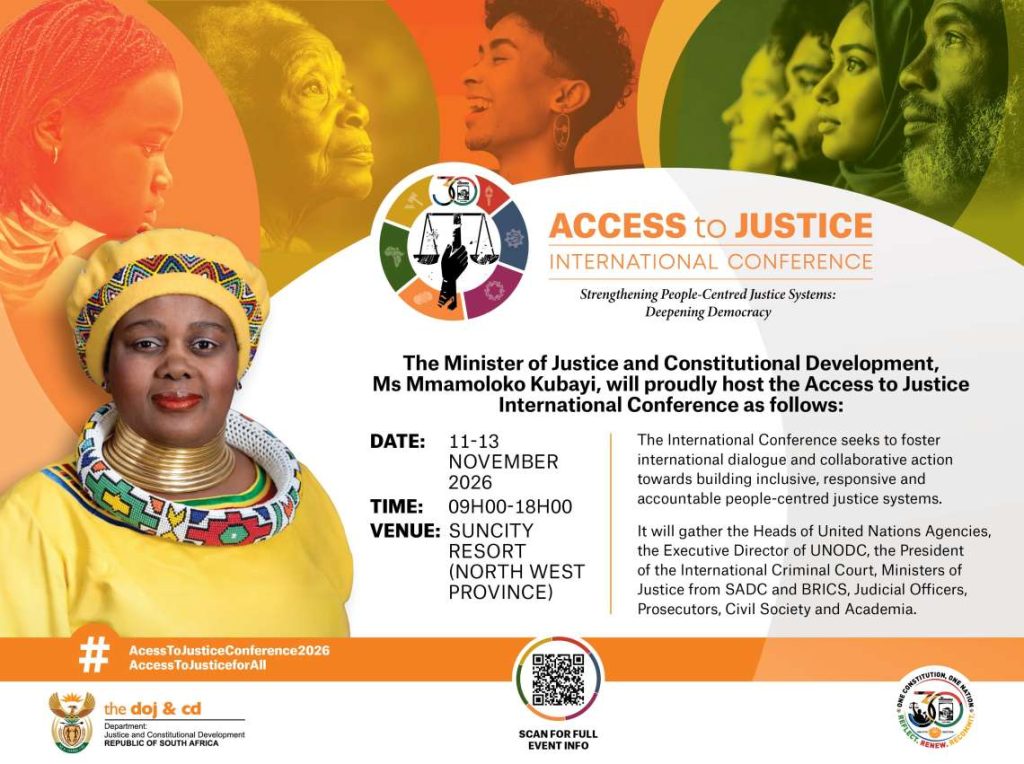
The conference is expected to bring together senior representatives from international institutions, including heads of United Nations agencies and the Executive Director of the United Nations Office on Drugs and Crime (UNODC).
The President of the International Criminal Court (ICC), the ICC Deputy Chief Prosecutor and representatives of the Organisation for Economic Co-operation and Development (OECD) are also expected to participate.
Ministers from Southern African Development Community (SADC) and BRICS countries will attend, alongside judicial officers, prosecutors, civil society representatives and academics.
The programme will include a gala dinner, a high-level segment and expert panel discussions aimed at translating shared experiences into practical reforms that uphold human dignity, protect rights and improve justice services.
The conference is also expected to strengthen regional and international commitments to the rule of law, judicial transformation and the development of accessible, inclusive, efficient and resilient justice systems.
It will provide an opportunity for participating countries and organisations to exchange good practices, build partnerships and identify innovative approaches to addressing barriers to justice.
The initiative forms part of South Africa’s wider efforts to advance the constitutional principles of equality, dignity and freedom while strengthening public confidence in its justice institutions.
Further information about the conference and its programme is available on the South African Department of Justice and Constitutional Development’s website.