An Interview with Michael Forester by Aiswari A.V. & Gayathri Mohan
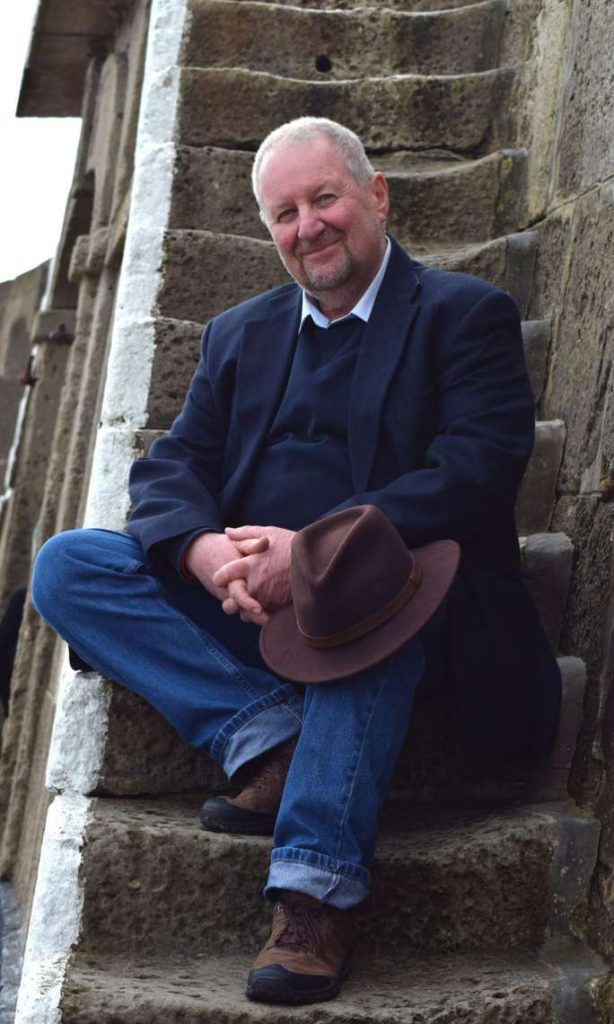
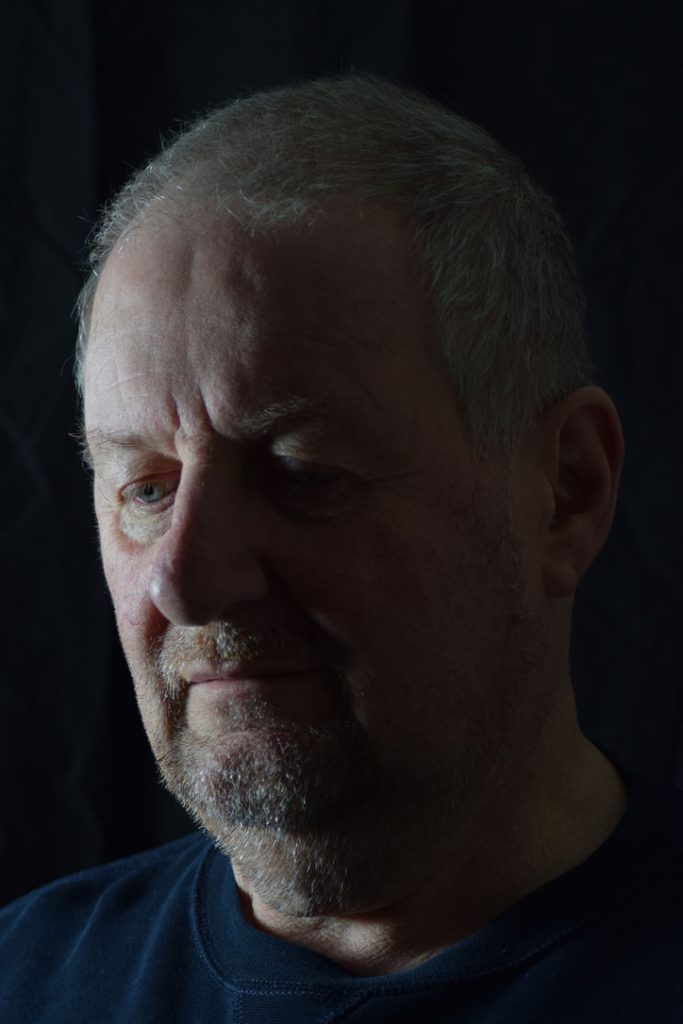
Living between the New Forest and the southern English coast, Michael Forester has forged a literary career defined by spiritual inquiry, formal versatility, and a deep attunement to the natural and metaphysical world. Nearly profoundly deaf, Forester has turned silence into a creative medium, producing books that span fiction, poetry, memoir, and spiritual reflection. A graduate of Oxford University and a former business consultant, he experienced a spiritual awakening at the turn of the millennium that redirected his life toward writing and public speaking. His travels—from the Amazon to South Africa, Nepal, and the Philippines—inform his meditative explorations of identity, interdependence, and transformation.
In this interview, Forester reflects on how his body of work—ranging from Forest Pathways and Flashes of Insight to Requiem and A Home for Other Gods—interrogates the boundaries between self and cosmos, sound and silence, faith and imagination. Speaking of landscapes both external and interior, he describes nature as a mirror for the soul’s unveiling, words as “fingers pointing at the moon,” and writing itself as a form of pilgrimage toward awareness.
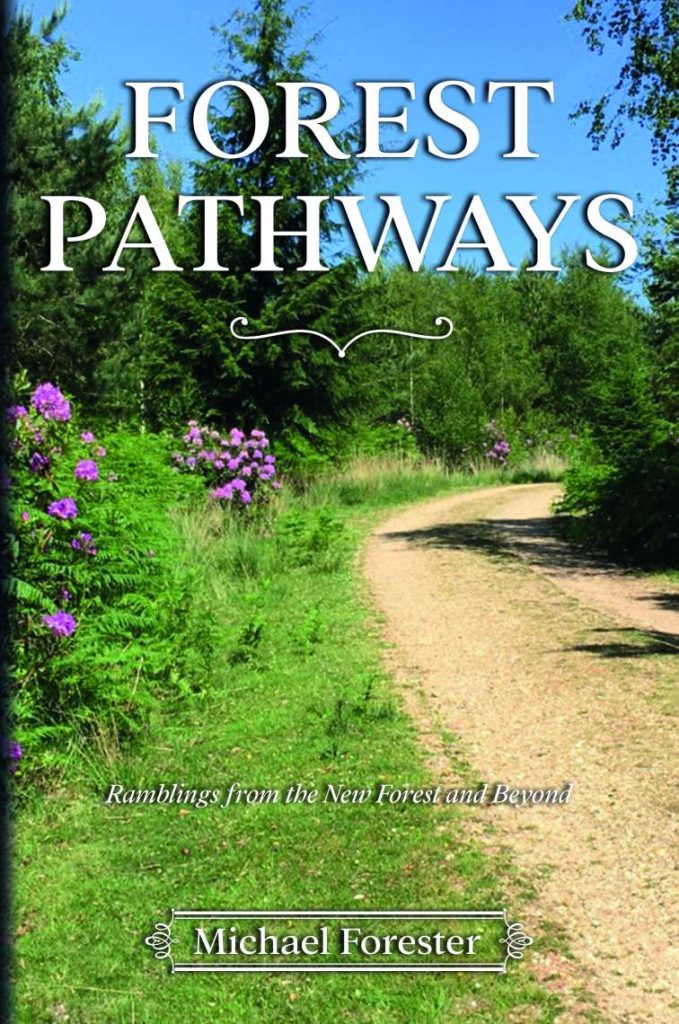
In Forest Pathways, you use the natural landscape—particularly the New Forest—as both a physical and spiritual setting. How do you see the relationship between landscape and inner transformation in your work, and to what extent do you view nature as a mirror for the human soul’s journey toward enlightenment and self-discovery?
I wrote most of Forest Pathways by dictation whilst walking in the New Forest during lockdown. As a local I was permitted access to the Forest at a time when others were not.
Walking the silent paths gave rise to a deeper level of insight, one that perhaps comes only when we are willing to forsake the illusion of the superficially apparent in pursuit of the profound actuality that lies behind it.
This is a physical and metaphorical space in which we can begin to deconstruct the artificial barriers that we have erected to define the self as a separate identity from the all. In doing so, insight opens. We begin to perceive the commonality of unity, enabling us to expound from what is evident and apparent in order to express the deeper nature of what they rise out of.
In that place where we encounter the universal nature of all, we come to realise that everything apparent is an expression of the sole soul expressed through all of us.
Perhaps we better express this relationship not so much as a transformative process as a progressive unveiling of what already is and always was. Nothing changes, nothing is transformed. If we are willing to let go of our most precious possession – our separate and insular identity – we approach the realisation of the timeless awareness that is universal.
All that comes before us is a mirror, reflecting back to us, not so much what is there, as our perception of what is there. The reality we perceive as external calibrates our journey. The mountain is just a mountain, more than a mountain and once again just a mountain as our awareness evolves.
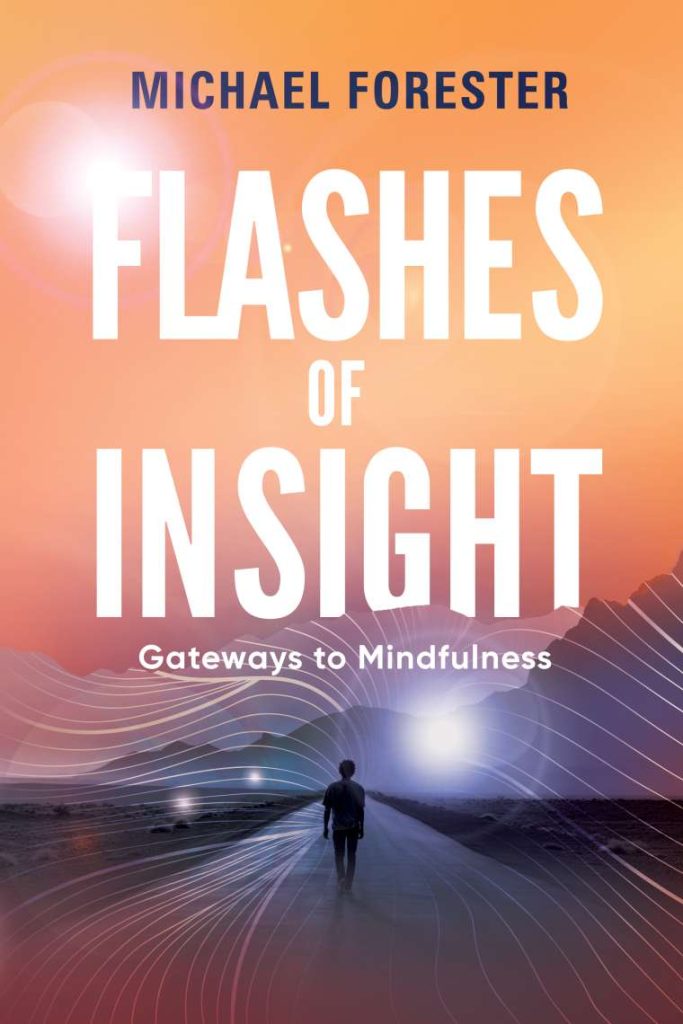
Flashes of Insight invites readers to experience mindfulness through brief yet profound reflections designed for a fast-paced, distracted world. How do you reconcile the tension between the brevity of these “flashes” and the depth traditionally associated with mindfulness practice, and what does this say about the evolving ways contemporary readers engage with spiritual or reflective literature?
A two part question, which I shall try to answer in two parts.
Firstly, I do not see any tension between brevity and depth. There are innumerable stories in the Buddhist traditions of enlightenment being transmitted from master to pupil in a moment, perhaps we might say, in a flash of insight. Sometimes it is spoken of as occurring when a master strikes a pupil, sometimes when a pupil stubs his toe on a rock. Sometimes in the long study of koans (also sometimes called gong-ans) a moment arrives when awareness is gained in a flash. We might say that the light dawns, the darkness is extinguished and we see what always was. In all these circumstances nothing changes except perception.
The phrase also comes to mind, ‘When the pupil is ready, the teacher will appear.’ Years spent readying the apparent self, either consciously or unconsciously, bring us to the moment of realisation. In that moment, when the pupil is at last ready, awareness is gained in a flash.
This is the role played by Flashes of Insight – to act as a pivotal moment on the journey when something is seen that was not seen or understood before. When a corner is turned and the panorama appears. When years of preparation are fulfilled in the brevity of a few moments redeemed on a bus or a train, lying in bed before sleep, walking and pondering in the solitude of a crowd. These are the moments of our flashes of insight.
I remember reading a statement some 15-20 years ago by the British novelist Ian McEwan, that in the new millennium novels should never be more than 50,000 words long. That’s a length that used to be regarded as a novella – a fictional work too short to be called a novel.
As authors, we do well to remain aware of our readers’ attention spans. Our world of podcasts and social media scrolling has apparently given rise to diminished attention spans. This applies to readers of spiritual/inspirational material as much as readers of fiction. To adjust our presentation of material to align with reduced concentration spans does not mean we have to eschew depth – rather that we have to concentrate our message into the kernels that readers of the soundbite age are able to absorb. The greatest teachers of the past such as the Buddha and Jesus Christ were masters of this awareness, expressing the depths in metaphor and parable. We can do no better than seek to walk in their footsteps.
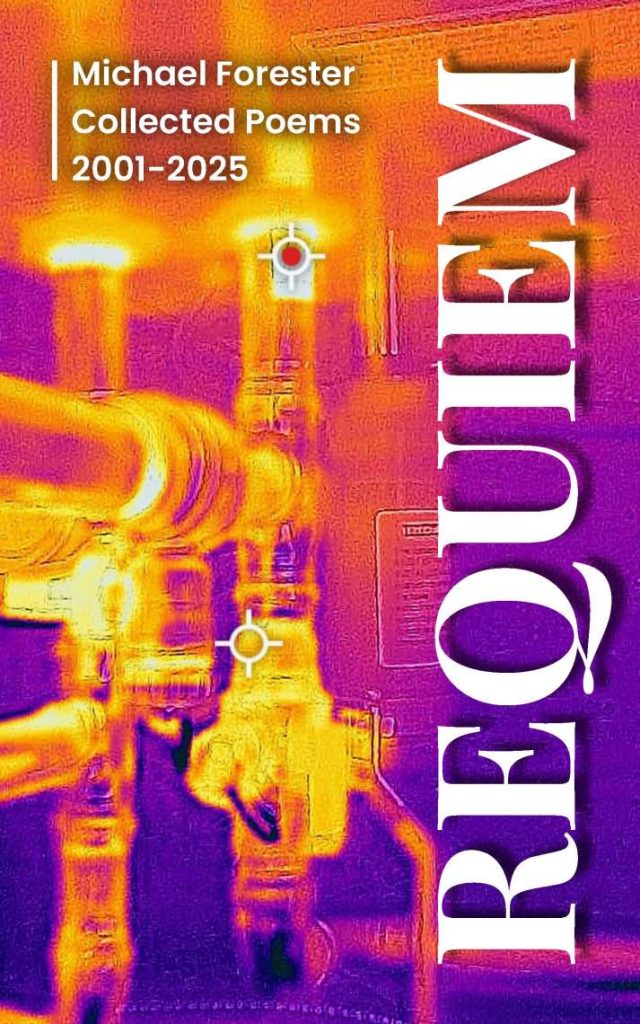
Requiem is described as a collection that moves through themes of memory, longing, and spiritual resilience, positioning poetry as both doorway and prayer. How do you conceive of the relationship between poetic language and the sacred in your work, and in what ways does Requiem transform personal experience into a form of collective or universal healing?
Once again a two part question.
I do not strive for poetic language, but for density of thought and means of expression that convey a deeper meaning. This is sometimes best achieved through the use of such tools as rhyme, metaphor and irony.
Often I will look back on what I have written to find assonance, alliteration and other literary tools that I was not aware I had been using. Then, on second to twelfth drafts, I will actively seek to create a whole piece that comprehensively conveys meaning and, I hope, impacts deeply enough to be memorable.
As for the sacred, I consider all as sacred and nothing as exceptionally sacred, since all that we are and all we perceive around us is an expression of what some have been pleased to call the Divine. My preoccupation is with that awareness and its expression progressively as my consciousness of it grows.
Some of Requiem is indeed deeply personal. However, much of it (for example Time’s Fool, Taking Refuge, Baby Sale and #A2) are not drawn from my personal experience, but from my awareness of and reactions to events as they unfold in the world around us. Where the work is indeed personal (for example, several poems on broken relationships and divorce) it can still address widely and commonly experienced themes and in so doing can resonate deeply with many.
For readers who share such experiences, I hope I can act as a voice for those who may find it difficult to give voice. Where the work is an emotional reaction of, say, sadness as in Baby Sale or anger as in The Times They Should Be A-Changing, I hope I am adding my voice to the crescendo of human compassion for suffering and resistance to the inhuman behaviour we see about us.
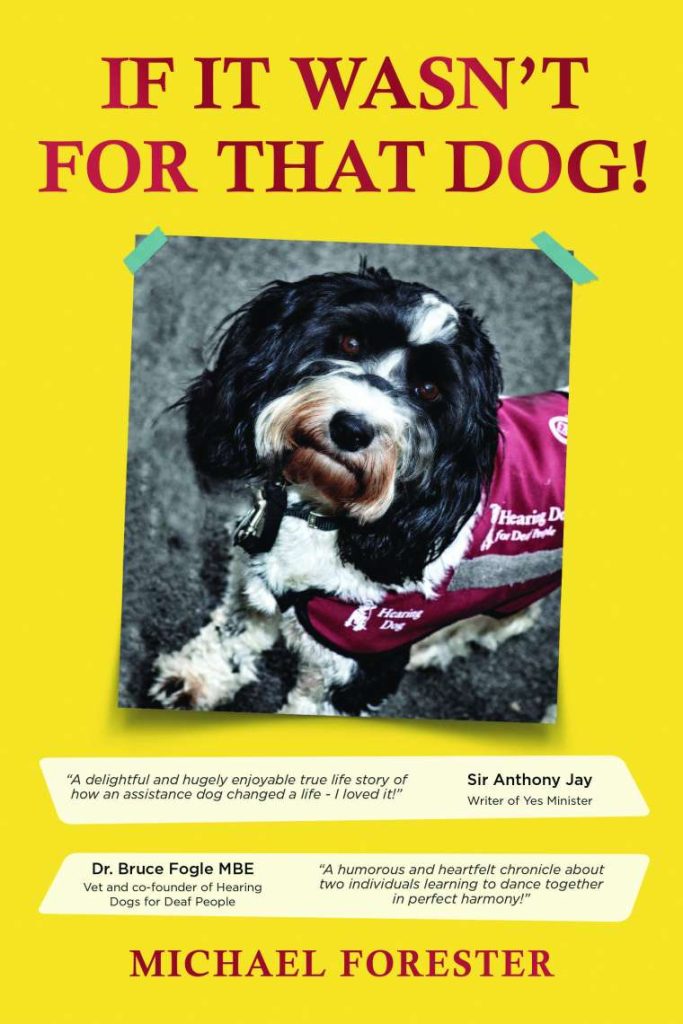
In If It Wasn’t For That Dog!, you weave humour, vulnerability, and autobiography to explore the transformative relationship between a person and an assistance animal. How do you see the bond between human and animal functioning not only as emotional companionship but also as a metaphor for adaptation, identity, and interdependence in the face of disability and change?
I suggest that the use of the term ‘metaphor’ is not quite right in this context.
If It Wasn’t For That Dog! tells the story of the evolving relationship between my hearing dog, Matt, and me. I have elsewhere described that relationship as almost symbiotic insofar as Matt was as aware of my dependence on him as I was of his dependence on me.
My life-long experience as deafened and now profoundly deaf person has indeed been a story of adaptation; adaptation to my own changing condition, adaptation to the slowly growing of awareness of disability amongst the non-disabled community (which still has many miles to travel on this journey), adaptation first to the coming of Matt and then to his absence after his passing. So yes, my life as a disabled person, including my time with Matt has been a process of adaptation to change.
But is that any more the case than the life experience of a non-disabled person? I think it likely not. All of our lives are stories of adaptation, more or less effectively, to change, for nothing ever stays the same for long for any of us. We do well not to grasp onto to anything when it is time for it to leave. We do well to hold all we have, possessions, relationships, identities, on an open palm and let them fly when their time is done. And yes, for me, though he was the love of my life, that very much includes my dearest Matt.
For such as this no metaphor is necessary. The literal story conveys the truth better than any linguistic tool I could ever contrive.
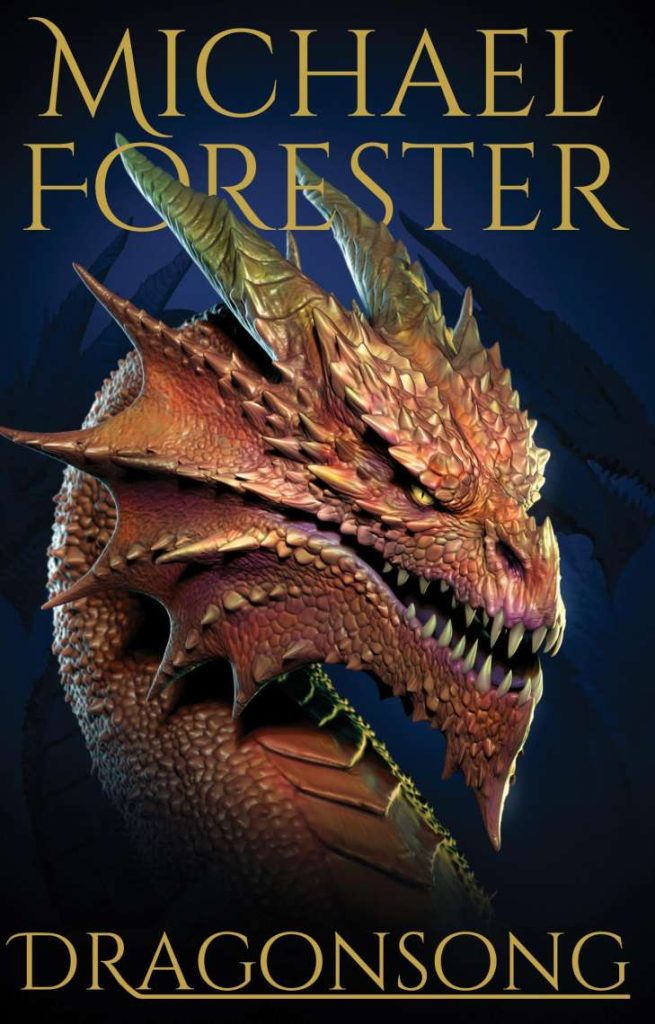
Dragonsong blends mythic traditions—from Arthurian legend to Norse cosmology—into a narrative charged with emotional intensity and moral complexity. How do you use myth and fantasy as a means of examining deeply human experiences such as grief, jealousy, and the struggle between good and evil, and in what ways does the musicality of your language serve to heighten the reader’s emotional and spiritual engagement with these themes?
Fantasy is a very flexible medium for an author, since it is possible to create any element desired, so long as the writer is consistent throughout the work with the world they have built. Perhaps this is the reason epic fantasy poetry is arguably the oldest literary tradition we have, stretching back at least three thousand years or so to The Epic of Gilgamesh and probably into verbal story telling traditions of the pre-writing epoch.
In Dragonsong, I have sought to weave mythological traditions from four main sources – Norse, Greco-Roman, Welsh and Arthurian (some would argue that the last two are the same).
My purpose, to the extent that there was any preplanning in the writing, was to create a vehicle that maximizes flexibility in the exploration of the power of human emotion. In such a flexible context we can look closely at the ever-present human emotions of jealousy, anger, love – requited and unrequited, hatred and so on. Once we have established the circumstances for those emotions we can virtually stand back and allow the characters and events to drive the story. How far reaching are the consequences when love is unrequited and yet passion still burns? When romantic love is thwarted by a death for which a once dear and revered person is seemingly responsible? What is the fallout for not just the main actors of the drama but also others who happen to find themselves coincidentally within the orbit of the emotionally elevated protagonist?
Add to this the cadence of rhyming verse that resonates to the natural rhythms of the human body and speech and we have a vehicle for the exploration of the emotional forces that all but define what it means to be human. The only question that remains is whether the reader is willing to accept the invitation to enter the fictional dream that is fantasy in order to discover the potential of their own nature.

Vicious intertwines punk rock subculture, religious mythology, and psychological instability to blur the boundaries between faith, delusion, and identity. How do you see the intersection of spiritual symbolism and countercultural rebellion functioning in the novel, and to what extent does the narrative use the chaos of punk and prophecy to comment on contemporary searches for meaning and transcendence?
I see Vicious largely as a novel about delusion and uncertainty and the way they impact on human behaviour. On the one hand we have Tolly, whose actions are at least consistent with ASPD (though despite the presence of a psychiatrist in the story, we never get a diagnosis per se). She finds her tribe in a marginalised subculture where she develops a belief that she has had a relationship with Sid Vicious (though historical inaccuracies in the story point to the truth lying elsewhere). Further, she is certain that this relationship has survived death into reincarnation. On the other hand we have Laura (Sister Serenity) who becomes convinced she is pregnant with the second coming of Christ. Bring these very powerful belief sets together and you get the novel that is Vicious. Yet throughout, and particularly as we approach the end of the novel, we are not quite certain that these beliefs are delusional after all. Could one or either actually be true? It is that uncertainty that allows us to go beyond the storyline and examine our own beliefs and how they drive us as our lives evolve. And even if we consider ourselves free agents in an age sophisticated enough not to be driven by belief, we cannot deny that it is belief that has driven humans for most of their known history – and still does.
The search for meaning is endemic to the human condition, for we are meaning-making creatures. We can, if we wish, conclude the story of Vicious and say, ah, that was just a novel, a mere story. But we are still left with the uneasiness of our condition. And should we chose to go on to read the sequel, Too, we confront head on the possibilities that arise when our beliefs are, against our will, reframed for us.
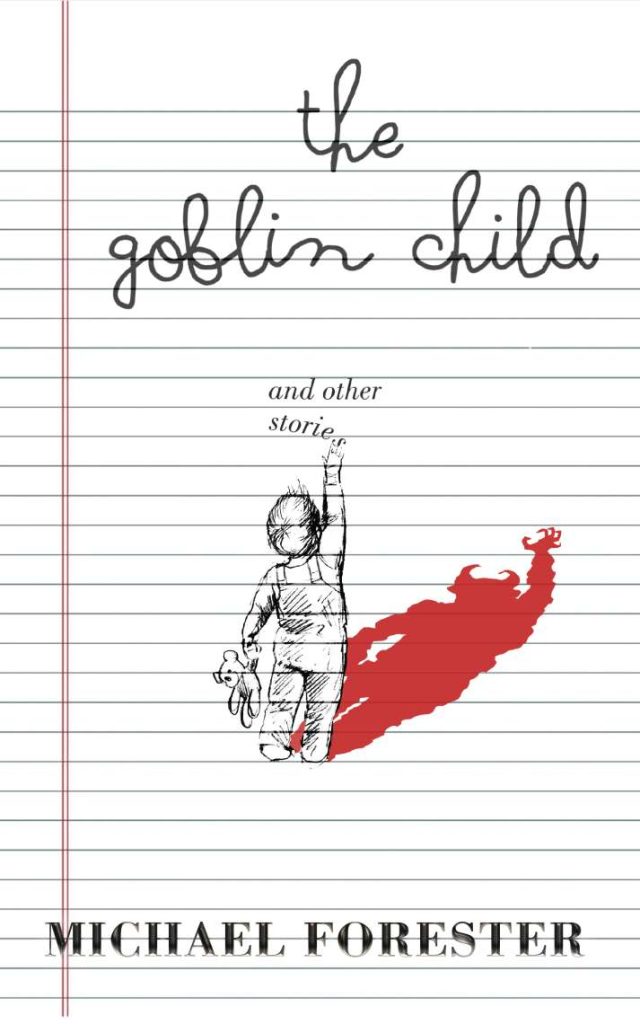
In The Goblin Child, your stories traverse genres and identities—from fantasy to realism, from the sacred to the secular—yet they ultimately converge on the theme of life’s circularity and interconnection. How do you use the short story form to reveal the hidden patterns that link human experience, and in what ways does the collection’s diversity of voice and theme reflect your understanding of the unity that underlies apparent difference?
This question puts me in mind of TS Eliot’s Four Quartets poem Little Gidding (1942) in which he says
We shall not cease from exploration
And the end of all our exploring
Will be to arrive where we started
And know the place for the first time.
And surely our life’s experience bears testament to this – do we not consistently find as we reflect on our life journey that we revisit, conceptually if not physically, the past and its lessons, realising that our growing awareness illuminates our past experience, enabling us to see the meaning that we did not previously understand was there.
In Windmills of Your Mind (1955), Michel Legrand points explicitly to this pattern being a feature of the human condition:
Round, like a circle in a spiral like a wheel within a wheel
Never ending or beginning on an ever-spinning reel
Like a snowball down a mountain or a carnival balloon
Like a carousel that’s turning running rings around the moon
Like a clock whose hands are sweeping past the minutes on its face
And the world is like an apple spinning silently in space
Like the circles that you find In the windmills of your mind.
The stories in The Goblin Child explore some of the patterns and lessons of the never ending circular journey that is our nature. The prime characteristic I have sought for is an underlying depth to each storyline, regardless of voice, theme, or presenting narrative, a revelation beyond the presenting story, an opportunity for the reader to find themselves and their experience on the printed page.
As I have suggested in an earlier answer, as my work has evolved my aim has increasingly been to point to and explore the singularity of the foundation that underpins the edifice of multiplicity that emerges from it. The Goblin Child and other stories can perhaps best be understood as a step on that journey.
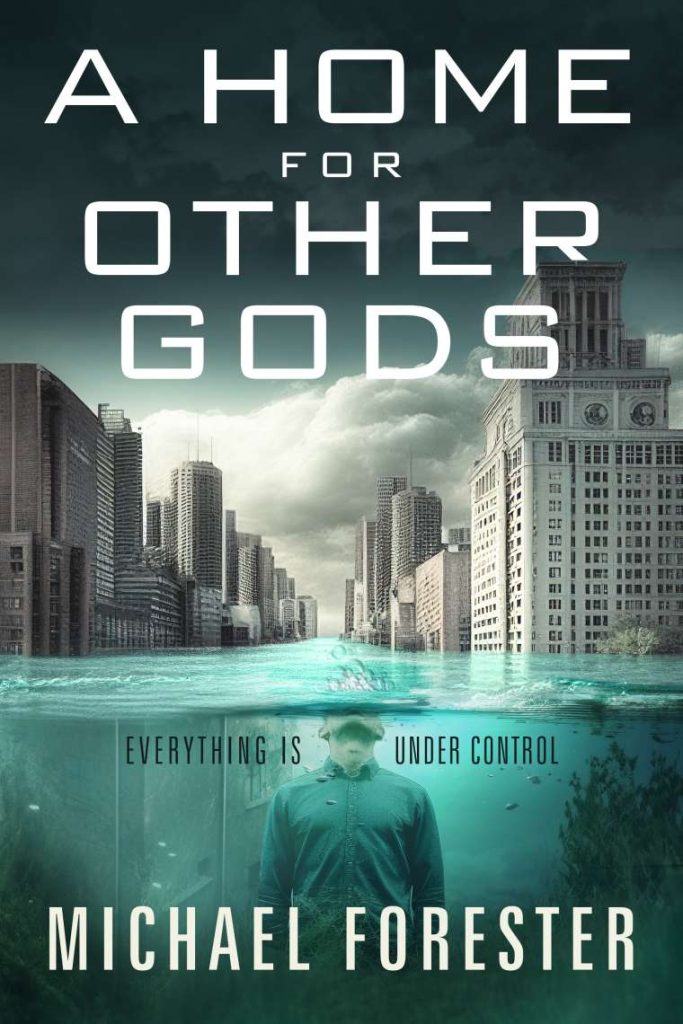
A Home for Other Gods envisions a dystopian future of total state control and spiritual emptiness, evoking echoes of Orwell while introducing strikingly original mythic imagery such as the “fish people.” How do you see the novella engaging with the tension between conformity and transcendence, and in what ways does the figure of the “other gods” suggest a reimagining of faith, individuality, and resistance in a technocratic age?
In Nineteen Eighty-Four, Orwell explores the question of how dictatorial elites control societies in the midst of poverty. The date he chose for the novel was simply a reversal of the numbers of the year in which he finished writing it – 1948. But that future setting gave a sense of perspective to the events of the novel that allowed readers a more objective exploration of the issues without immediately having to grapple with the truth – that the methodologies employed and events described were actually happening as they read the book.
I wrote A Home for Other Gods (‘HFOG’) in 2016, knowing it would be published the following year, employing a comparable perspective-enhancing device of setting the book 100 years hence in 2117.
The most common feedback from readers is that the conceptual setting of the book and the strategies employed to control societies of relative wealth are those in use now. And if that was true in 2017, how much more true has it become in the few intervening years up to 2025?
HFOG is an exploration not of what might happen if bureaucracies are left unchecked but of what is actually happening now. I thought I had employed a slight caricaturing of the truth, particularly in the example of the Fish People who spent their lives in a flurry of activity that achieved nothing, opening and closing their mouths soundlessly into unconnected telephones, downing pints of water under water. All it has taken for the caricature to merge into the literal is eight short years. For my country – and perhaps yours too – is ruled by a class whose primary preoccupation seems to blame someone else for comprehensive inadequacy and failure. That ruling class is seemingly supported by a bureaucratic army apparently intent on doing nothing and reporting repeatedly to their masters ‘No change, no change.’
Conformity and transience lie at the heart of the book. Conformity is taught as the norm from the earliest stages of childhood, maintained through suppression of undesirable subcultures and the elimination or censoring of every possible encouragement for defiance or disagreement. The climax to the book, the flooding of the city in the interests of the archetypical conformist ‘Fish People’ teach us that there is no length to which an unrestrained bureaucracy will go to protect itself. The final pages declare that that which such a society cannot control it will ultimately excommunicate. The self-styled ‘gods’ who rule remain in control. Dissenters who seek a metaphorical home for other gods fail to find it. They are Titans expelled and sailing away from a watery Olympus to an unknown and unknowable future.
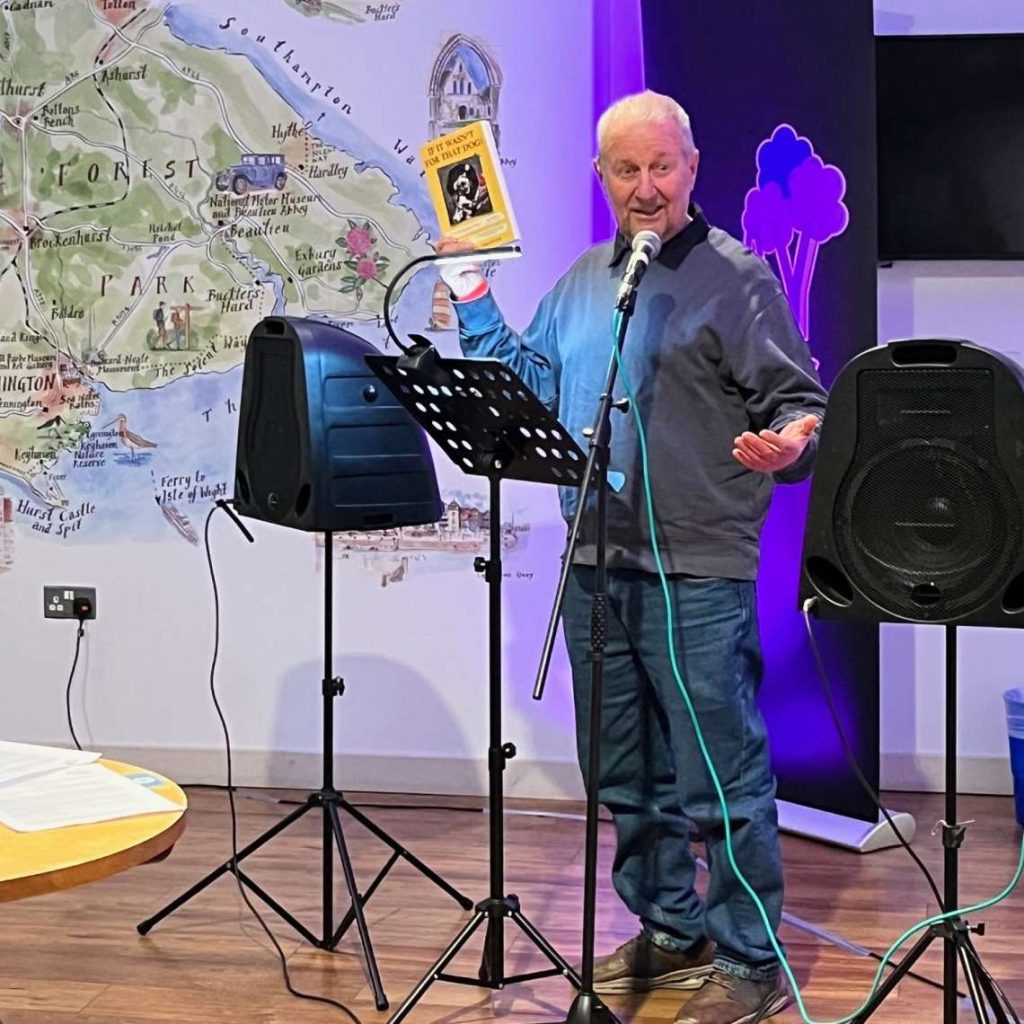
Is this an extreme view of modern societies? Increasingly, readers tell me that it is not. It is an accurate depiction.
I don’t see a reimaging of individuality here. That is something humans do in every age with any technology that is to hand. As regards reimagining of faith, in my opinion this is not the role played by ‘other gods,’ but by the state-supported composite god, JeKAllah. The only gods in this story are the bureaucrats themselves who have elevated their own status immeasurably above that of the rest of the population. Does that sound familiar? I certainly hope so!
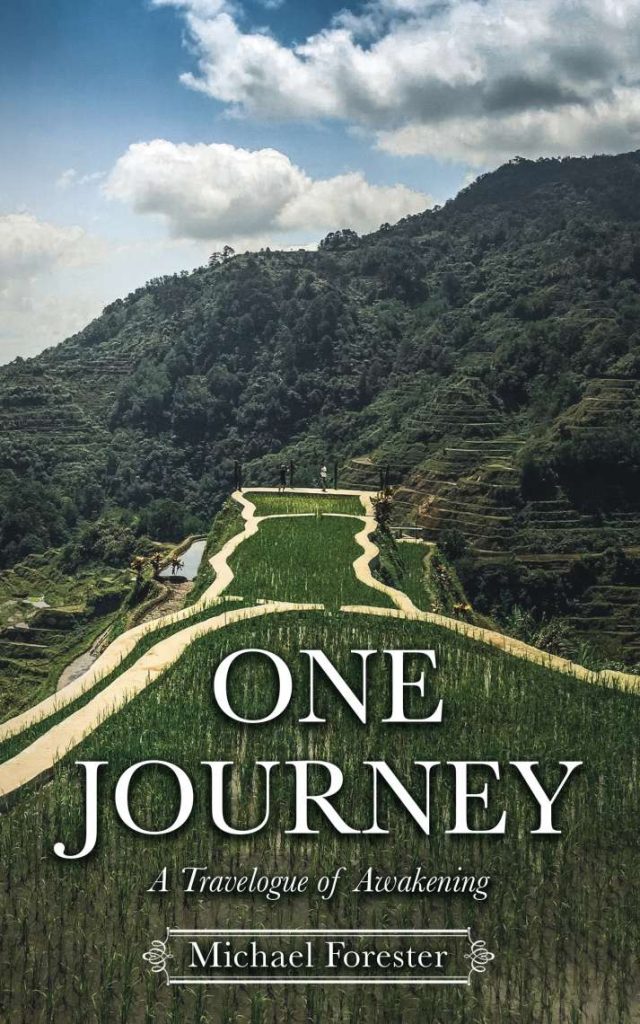
In One Journey: A Travelogue of Awakening, you frame external voyages—across the Amazon, South Africa, Nepal, and the Philippines—as mirrors of an internal journey toward self-awareness. How do you see the relationship between physical travel and spiritual transformation, and to what extent do you believe that encountering cultural and ecological ‘others’ is essential for understanding the self?
That ‘travel broadens the mind’ ranks among the ultimate truisms, perhaps even a cliche. Yet it seems to me that it is a truth that reaches beyond the statement’s familiarity. My personal experience of travel is that it has offered experiences that I could not have encountered had I stayed at home (some of which are covered in One Journey) and the deeper I have permitted such experiences to permeate, the more spiritually transformative I have found them to be.
And yet, in all such voyages the learning has come back to Eliot – we return to the place we started and know it as for the first time. How can it be otherwise? For having allowed ourselves to be touched by what we have met, we see the place we started with different eyes.
This in turn has led to an even deeper realisation that, as Master Xuansha Shibei put it (later explored by Dogen), ‘All ten directions are just one bright pearl’. Wherever we travel, whoever we meet, we find that human nature is the same for all the universe we encounter shares the same reality.
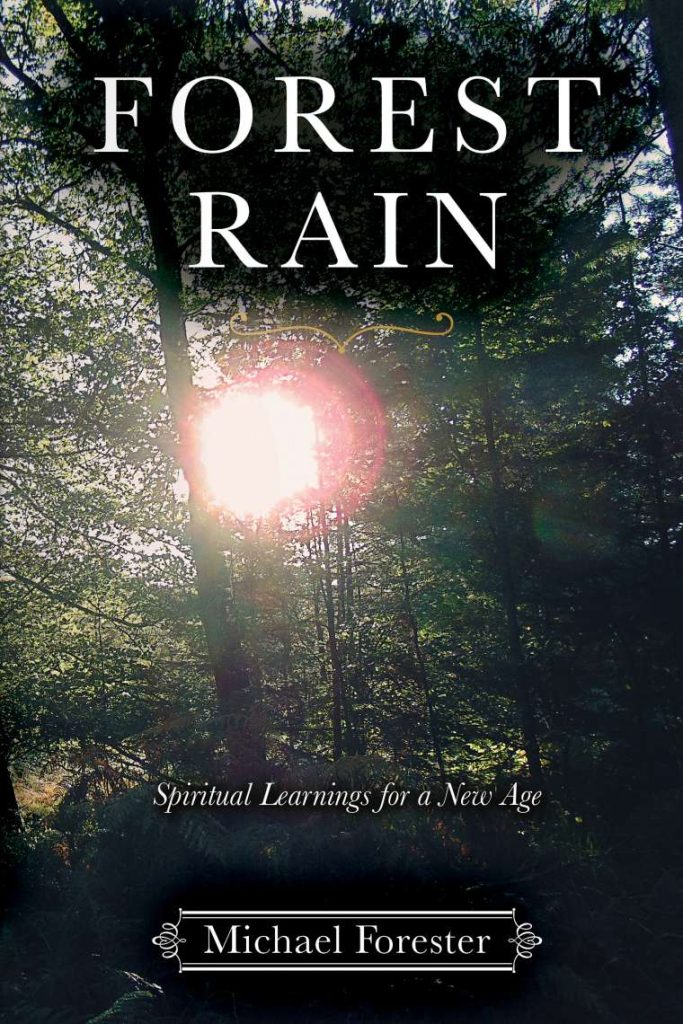
In Forest Rain, you invite readers to ‘seek you not in the words, but in the spaces in between,’ suggesting that meaning resides as much in silence and intuition as in language itself. How do you see the interplay between language, silence, and transcendence in communicating spiritual experience—and do you think words can ever fully capture the essence of awakening and love that the book explores?
Whilst I wrote ‘Seeking Space’ in Forest Rain, I should not be taken to be the voice of the poem. That voice should be understood to be, for want of a better term, the Divine. My life, now almost 70 years expended, has been a search for what lies beyond the words themselves. Perhaps that is true of all our lives.
In this search it is crucial that we understand the relationship between the words and the spaces, both literal and metaphorical in our lives. Because we cannot remember a time when we did not have words we forget that they have not always been our tool for expressing our inner reality.
Consider, for example, Wordsworth’s ‘Ode on the Intimations of Immortality’ – ‘Our birth is but a sleep and a forgetting’ and ‘the things that I have seen I now can see no more.’ There is a pre linguistic space in us, an awareness that we carry, a ‘trailing of clouds of glory’ that at various times on our journey we might suppress or lose sight of but that never deserts us.
When we come to the end of what words are able to express for us we are left with the spaces in between. In these space we discover that it is the Emptiness (some prefer the term ‘Awareness’) that gives rise to all that we see solidified and crystalised around us (see also my poem ‘Emptiness’ in Requiem).
Words can and should be beautiful and edifying. They are highly important amongst the tools that we have which allow us to connect to one another. But we have to come to the point where we put away the words in favour of something more important. ‘When I was a child,’ says Saint Paul, ‘I spoke as a child. But when I became a man I put away childish things’ (1 Corinthians 13:11). Words will long form part of our journey. But we stutter in our progress towards enlightenment if we think they are all of the journey. Study that you might learn and grow and move forward on your journey. But remember that, as King Solomon reputedly puts it in Ecclesiastes 12:12, ‘Of the making of many books there is no end.’ I counsel you always remember that we study and utilise the words for the purpose of going beyond the words into that which they represent – the space(s) in between.
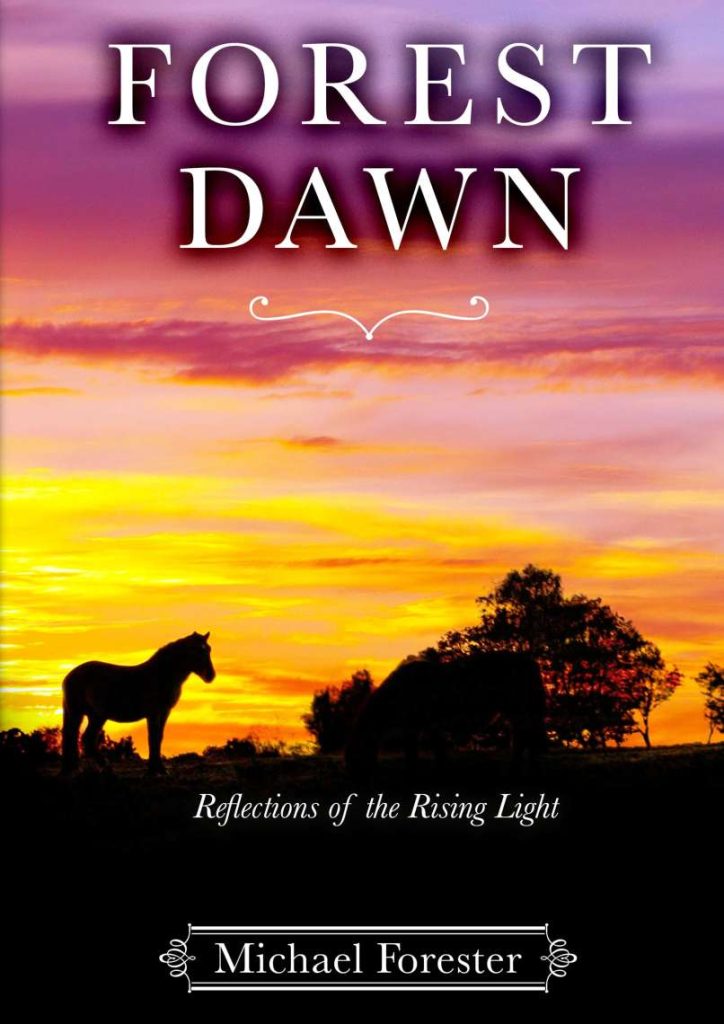
In Forest Dawn, you explore how profound truths often emerge from ordinary experiences—a child’s encounter with life’s fragility, the unexpected arrival of angels, or the lessons embedded in loss. How do you approach capturing the spiritual and emotional significance of everyday moments, and what role do you believe reflection and storytelling play in guiding readers toward self-discovery?
As my own literary and spiritual journeys have progressed, I have become decreasingly interested in entertaining and increasingly preoccupied with provoking self-exploration. The lessons are all around us if we are willing to develop the ability to see them and thus find ‘tongues in trees, books in the running brooks, sermons in stones, and good in everything.’ (Shakespeare, ‘As You Like It,’ Act II Scene 1).
I have come to learn that there is a voice that speaks from within, nudging us towards awareness. I can ignore that voice if I want to. I can allow the cacophony around me to drown it out. But if I prioritise it, take the time to listen carefully to what it is saying, if I can be patient enough not to shout it down with what I think it should be saying, then I am enabled to ‘harvest ears of slow emergent revelation from the grain fields of eternal lore’ (‘I Cannot Be a Poet,’ Requiem).
Words, storytelling, are ‘fingers pointing at the moon’. Reflection is where you will find the moon for yourself.